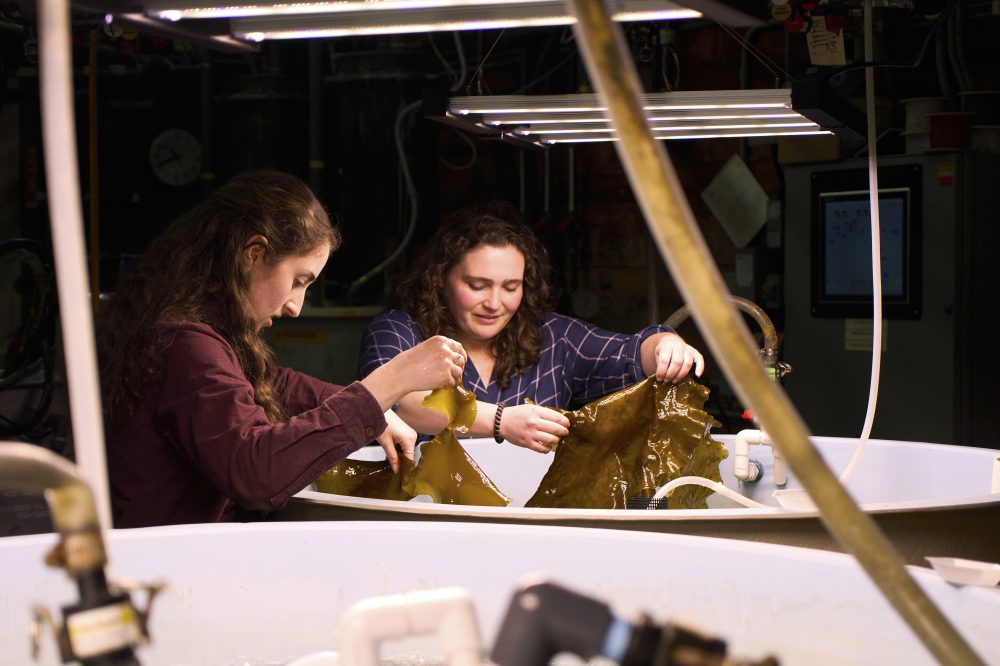

WOODS HOLE, Mass. — Inside a laboratory chamber bathed in red light, tiny green seaweed cells spin through bubbling water, driven by rotating blades. These microscopic organisms, known as gametophytes, represent the early stages of specially engineered kelp that could someday fuel aircraft and maritime vessels without using a drop of petroleum.
While electric power from renewable sources can operate automobiles, aviation and shipping industries continue depending on liquid fuels containing significant amounts of oil and gasoline. Burning these traditional fuels releases carbon dioxide, contributing to climate change. Scientists believe biofuel created from organic materials like plants or algae offers an alternative solution.
Kelp presents one promising biofuel source. Using a technique called hydrothermal liquefaction, which applies heat and pressure to convert organic matter into fuel, this marine plant could potentially power transportation without petroleum products.
“We need other sources of energy that are sustainable, we can’t just rely on petroleum,” explained Scott Lindell, a marine scientist at the Woods Hole Oceanographic Institution, located roughly 90 minutes south of Boston. “There’s hardly anything simpler, or anything that grows quite as fast and as sustainably, as seaweed.”
Current biofuels like corn-based ethanol mainly serve as gasoline supplements. Corn cultivation demands farmland, freshwater, and chemical pesticides, while kelp grows in ocean environments requiring minimal additional resources.
Though burning any bioethanol releases harmful compounds like acetaldehyde, these fuels generate fewer overall greenhouse gas emissions than petroleum alternatives.
Scientists including Lindell have developed kelp strains that sometimes yield three times more biomass than natural varieties. However, energy corporations remain cautious about investing in large-scale ocean farming without proven market demand, while farmers hesitate to expand operations without guaranteed purchasers, creating a stalemate that hampers industry growth.
Current aquaculture operations stay small, providing kelp mainly to restaurants, cosmetics manufacturers, and fertilizer companies. Hauke Kite-Powell, an engineer and economic analyst at Woods Hole, believes expanding kelp production for biofuel would require consistent government backing beyond private investment alone.
Although oil price fluctuations, partly caused by international conflicts like the war in Iran, periodically spark renewed interest in energy independence, U.S. government support for biofuel alternatives varies. In 2016, the Department of Energy launched a program to create tools for kelp-based biofuel development.
This initiative, called MARINER — Macroalgae Research Inspiring Novel Energy Resources — included projects from developing heat-tolerant kelp varieties for warming oceans to studying seaweed genetics. The Department of Energy typically funds exploratory, high-risk projects with potentially high rewards, and MARINER researchers reported making advances like boosting kelp production.
The program resembled an earlier feasibility study from the 1970s that ended abruptly when oil prices stabilized. Lindell’s laboratory, supported by MARINER funding, concentrated on improving harvest yields by selectively breeding kelp with beneficial traits — including sterile characteristics to prevent crossbreeding with wild populations — enabling future large-scale farming operations.
Lindell’s MARINER support continued for six years, concluding in 2024. Since then, federal research funding has become scarcer and delayed. However, the pressing need for sustainable energy persists, he noted. “I don’t think things have changed incredibly since the first oil crisis.”
Farmers describe challenges finding reliable kelp customers. Oliver Dixon, a shellfish farmer from Point Judith, Rhode Island, cultivates kelp to supplement his oyster operation during winter months. This month, he anticipates harvesting approximately 10,000 pounds of kelp, selling most to nearby restaurants and seafood vendors.
“The buyers come in and out, it’s pretty discouraging,” Dixon stated. His 9-acre operation is hundreds of times smaller than what biofuel production would require, and without demonstrated energy sector demand, he has no expansion plans.
Bren Smith, an ocean farmer and GreenWave nonprofit co-founder who supports marine farmers, contends the problem isn’t insufficient demand but rather economic viability: Kelp currently works better in cosmetics or food products rather than fuel, which remains among its lowest-value applications.
“We’ve made this mistake before, right?” Smith remarked, referencing previous large-scale kelp research investments focused on fuel production instead of the seaweed’s numerous other applications. “Competing with the most technically advanced, subsidized industry on the globe, the fossil fuel industry.”
Even with guaranteed buyers, expanding kelp farming would encounter regulatory obstacles, according to Kite-Powell. In America, coastal waters primarily serve recreation, fishing, and conservation purposes, making permits for major aquaculture projects difficult to obtain. Meanwhile, Asian countries often prioritize extensive seaweed farms that sometimes cover entire bays.
Currently, most U.S. operations remain small and near shorelines. Dixon explained he cannot secure permits to maintain his farm equipment year-round, forcing him to remove lines and anchors each spring and reinstall them in fall.
Relocating farms to deeper waters could enable larger operations but introduces engineering and environmental complications, including risks of entangling marine animals and potential competition between farmed kelp and other sea life for nutrients.
“We don’t yet have a full understanding of what all the ecological side effects of very large-scale ocean farming might be,” Kite-Powell observed.
Despite obstacles, scientists like Lindell remain optimistic their research will eventually support a biofuel industry. Surrounding Lindell’s laboratory are glass containers holding over 2,600 sugar kelp strains collected throughout New England, which he continues studying and selectively breeding while hoping the energy sector transitions to renewable sources. Volatile fuel costs and limited resources like oil suggest inevitable change to him.
“We’ll come to the realization that things have shifted in the marketplace,” Lindell predicted, “and we can’t squeeze any more oil out of the earth in 30 years’ time.”