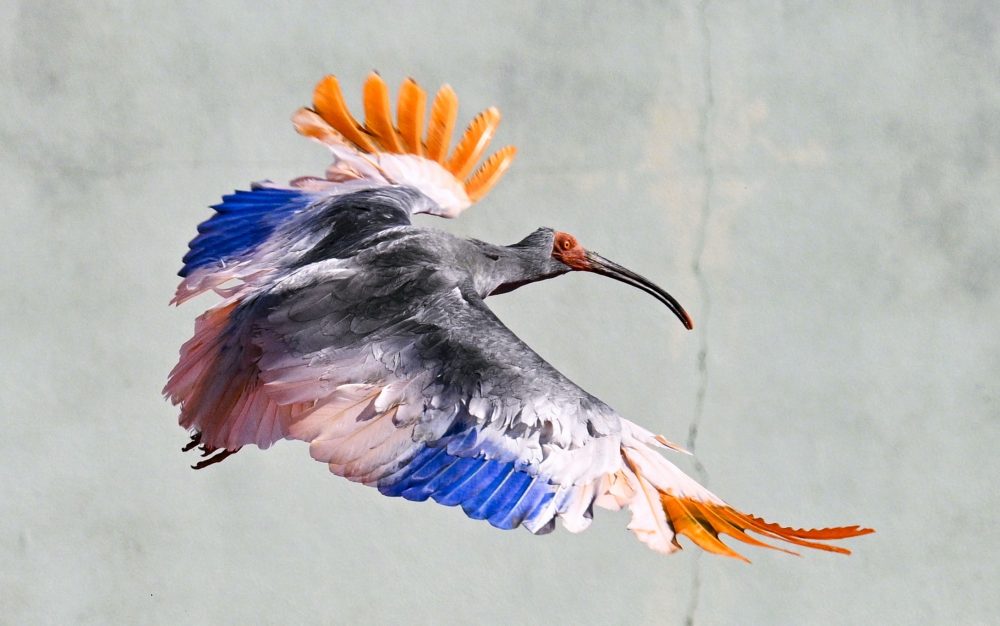

Eight crested ibises took flight in a Japanese town on Sunday, marking their return to an area where the species had vanished from the wild many years ago.
The endangered birds were set free from wooden enclosures during a ceremony in Hakui city, located in the Noto region where these creatures were previously spotted in their natural habitat.
Known locally as Toki, these white birds are indigenous to East Asia and are recognized for their distinctive orange-pink coloring beneath their wings and vibrant red markings surrounding their eyes.
Local residents celebrated as the birds flew skyward when Crown Prince Akishino, his wife Kiko, and other officials cut a ribbon around the wooden enclosures.
The species disappeared from the Honshu main island during the 1970s due to excessive hunting and habitat destruction. The final native Japanese ibis passed away in 2003 on Sado Island.
However, the species made a comeback through China’s assistance with breeding programs. According to the Environment Ministry, artificial breeding using a pair gifted from China resulted in the first Japanese crested ibis chick born in captivity in 1999.
These breeding and preservation initiatives have contributed to the species’ population recovery. The ministry reports that in 2008, 10 birds from the Sado conservation center were released on the island, where their numbers have now grown to approximately 500.
The release of these cherished birds was also viewed as a positive sign for the Noto region, which continues to rebuild following the devastating 2024 earthquake.
The eight birds were cared for and protected at a conservation facility on Sado in the adjacent Niigata prefecture. An additional ten birds are scheduled for future release.