
Private energy companies and their financial backers are taking charge of expanding shale oil development worldwide, while publicly traded American producers remain concentrated on maintaining financial discipline and their established domestic operations.
This development mirrors the early stages of America’s fracking revolution, when independent oil companies took initial risks to develop drilling and completion methods before major established energy corporations entered the market on a larger scale.
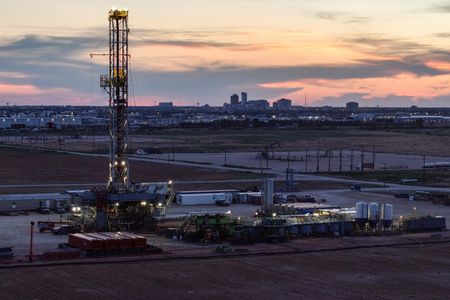
The fracking boom transformed the United States into the world’s top crude oil producer, and industry experts are confident that numerous international locations possess comparable shale oil resources. Energy consulting firm Wood Mackenzie projected in late 2024 that international shale production could reach 5-6 million barrels of oil equivalent daily by 2030, approaching the 6.6 million barrels per day currently extracted from America’s Permian basin region.
Within international markets, private companies are demonstrating greater readiness to take initial steps.
Continental Resources, led by Harold Hamm and known for pioneering hydraulic fracturing in North Dakota’s Bakken formation during the 1990s, has established agreements over the past year to develop emerging shale formations in Turkey and Argentina.
Formentera Partners, a private equity company co-established by former Parsley Energy leader Bryan Sheffield, has acquired holdings in Australia’s northern Beetaloo basin.
“We believe that the learnings from the U.S. shale plays are directly transferable to the shale play here in Argentina and we believe that there’s an extreme value proposition, not only for Argentina, but for the globe,” Doug Lawler, CEO of Continental Resources, told the CERAWeek conference in Houston this week.
Lawler stated last month that Argentina’s shale resources could rival those of the Permian basin.
The methods underlying American shale extraction are now well-understood, making much of the international growth focused on knowledge transfer to countries and national energy companies prepared to invest capital in developing local shale resources.
Middle Eastern nations including Kuwait, Saudi Arabia and the United Arab Emirates, already dominant in energy through conventional oil and gas industries, have expressed interest in shale development.
America’s fracking revolution took place within a country featuring stable regulations and extensive existing energy infrastructure, providing strong foundations for producers testing hydraulic fracturing methods. Some nations with promising shale resources, including Argentina and its celebrated Vaca Muerta formation, do not possess that regulatory and infrastructure stability.
These factors indicate that larger private companies with expertise and resources for overseas deployment will spearhead the expansion.
Quantum Capital Group has received outreach from several national oil companies within the last six months regarding potential partnerships with the Houston-based private equity firm for international shale projects, according to founder and CEO Wil VanLoh, who chose not to provide additional details.
VanLoh emphasized opportunities for American companies to develop premier international shale formations.
“Companies going abroad now can develop generational assets,” said VanLoh. “The window is now for U.S. shale players, and you maybe have five to seven years to get yourself positioned.”
Publicly traded American shale companies, however, are proceeding more cautiously.
Following years of concentrating their operations on select core regions while emphasizing returns to shareholders, many listed companies are hesitant to pursue international growth.
Significant overseas expansion could prompt difficult questions from investors regarding the quality and extent of their remaining American drilling locations, while also demanding new expenditures during a period of increased uncertainty in worldwide energy markets.
“International expansion must not compromise the capital discipline the industry has worked so hard to establish,” said Mark Viviano, managing partner at Kimmeridge Energy Engagement Partners.
“Investors will likely keep a short leash on companies that deviate from their proven areas of profitability.”
Nevertheless, some publicly traded shale producers have indicated willingness to consider international opportunities.
EOG Resources established partnerships with Abu Dhabi National Oil Company and Bahrain’s Bapco Energies last year for shale development collaboration. Ovintiv has been working to expand its Canadian operations through recent acquisitions, though Canada’s shale sector is already well-developed.
Most company leaders, however, have maintained careful approaches, stating they remain interested but disciplined until financial benefits clearly warrant the investment.
“We’ve clearly been interested in understanding the potential,” Devon Energy CEO Clay Gaspar said on an analyst call last month, when asked about international expansion.
“But I would tell you, those are long-dated investments, long-dated relationship builds, things that we need to evaluate over time.”