
Northern New Jersey residents will head to the polls Thursday in a special election that has the potential to further reduce the Republican Party’s narrow control of the U.S. House of Representatives as the November midterm elections approach.
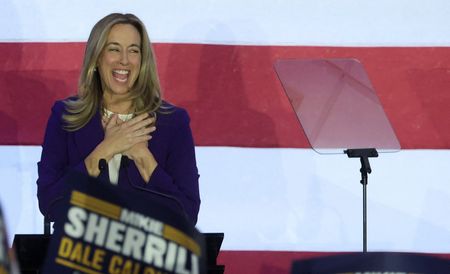
Democratic candidate Analilia Mejia, who previously served as national political director for Senator Bernie Sanders’ 2020 White House bid, holds the advantage over her Republican opponent Joe Hathaway, a Randolph Township councilman, in the race to replace former U.S. Representative Mikie Sherrill. Sherrill left her congressional position after winning the governor’s race in November.
This special election takes place just days following the announcements from two House members – California Democrat Eric Swalwell and Texas Republican Tony Gonzales – that they would step down amid separate sexual misconduct allegations. During the same period, Georgia Republican Clay Fuller was recently sworn into office.
Campaign finance records through March 27 reveal that Mejia has collected $1.1 million in contributions, significantly outpacing Hathaway’s fundraising total of $525,000. The financial reports indicate Mejia concluded the campaign’s final phase with three times the available cash compared to her opponent.
Mejia, running as a progressive candidate from outside the political establishment, emerged victorious from a competitive primary that saw millions in external expenditures from the American Israel Public Affairs Committee’s super PAC. Meanwhile, Hathaway faced no opposition in securing the Republican nomination.
In the 2024 election, former Vice President Kamala Harris captured the district with nearly a 9-point victory margin, while Sherrill secured reelection by approximately 15 percentage points. Sherrill maintained a comparable lead in the district during the 2025 gubernatorial contest, ultimately achieving a 14-point statewide victory.
Should Mejia win the election, Republicans in the House would maintain a 217-214 majority, with one independent member caucusing alongside Republicans and three vacant positions remaining to be filled later this year in Texas and California. These openings resulted from this week’s resignations and the passing of former Republican Representative Doug LaMalfa.
The United Democracy Project, a pro-Israel super PAC, has indicated plans to invest in supporting a different Democratic candidate against Mejia in the state’s June 2 primary election. The victor in that contest is expected to be strongly positioned for a full two-year term in November.
However, none of the top three contenders who challenged Mejia in the February 5 primary have submitted paperwork to run against her in June. The three individuals who have filed are Chatham Borough Councilman Justin Strickland, who received 2% of the February vote, former Morristown Mayor Donald Cresitello, and tech engineer Joseph Lewis.
Democratic candidates have exceeded their party’s 2024 presidential election performance by an average of 18 percentage points across six special congressional elections this cycle in Florida, Virginia, Arizona, Tennessee, and Georgia. A seventh special election in Texas involved two Democrats in a runoff situation.
Although the party has not successfully flipped any federal seats during this Congress, the consistent stronger-than-expected performance indicates increased Democratic enthusiasm. Democrats have unified around a message focused on affordability issues, arguing that President Donald Trump and congressional Republicans are driving up costs for American families.
Democrats initiated a historically lengthy government shutdown last year over expiring healthcare subsidies. When Congress failed to renew these subsidies, millions of Americans faced dramatically higher healthcare premiums. The president has subsequently launched coordinated military actions with Israel against Iran, creating international tensions that have impacted voters through increased gas prices.
According to a March 20-23 Reuters/Ipsos poll, Trump’s economic approval rating stood at just 29%, as Americans have reacted unfavorably to rising energy costs.
Democrats need to gain only a small number of seats in November to secure House control for Trump’s final two presidential years. While the president’s party typically loses ground in midterm elections, Trump has encouraged Republican state legislators to redraw congressional maps to overcome historical patterns. Democratic state legislators have responded by creating their own redistricting efforts to benefit Democrats in their respective states.