
New research shows that vaccination rates for hepatitis B in American newborns were already falling significantly before federal health officials officially changed their guidance last December.
A study published Monday in JAMA found that the percentage of babies receiving hepatitis B shots within their first month of life dropped by more than 10 percentage points from 2023 to 2025.
For decades, vaccination rates had been steadily increasing as the federal government supported giving newborns their first hepatitis B shot shortly after delivery. However, under Health Secretary Robert F. Kennedy Jr., the Centers for Disease Control and Prevention recently modified its recommendation, now only advising the vaccine when mothers are infected with the virus or their infection status is unclear.
Hepatitis B is a serious virus that damages the liver and represents the primary cause of liver cancer globally. While most adults can fight off the infection naturally, it becomes a lifelong condition in over 90% of infected babies and up to half of young children who contract it.
Government health records demonstrate that newborn vaccination reduced hepatitis B cases among American children by almost 90% following the 1991 recommendation for birth doses.
“If the rates of vaccination decline too significantly, we may see a resurgence in hepatitis B infections in infants and children,” said study leader Dr. Joshua Rothman, a pediatrician at the University of California, San Diego.
JULY 2023 TURNING POINT
The researchers found that vaccination rates began dropping in July 2023, a time that matched increased public discussion and news coverage about childhood immunizations.
During this timeframe, vaccine skeptic Kennedy appeared on a popular Joe Rogan Experience podcast episode that received widespread attention, according to the study authors.
Kennedy, President Donald Trump, and other prominent figures have made claims linking childhood vaccines to autism, despite scientific evidence showing no such connection. Federal authorities have withdrawn recommendations for six different childhood vaccines over the past year.
The study tracked vaccination data from 2002 through 2025, covering more than 12 million births through Epic Systems Corp records. From 2002 – three years before official guidelines recommended medically stable newborns receive the vaccine before leaving the hospital – until 2023, birth-dose vaccination rates climbed from approximately 21% to 83.5%.
By August 2025, that figure had decreased to 73.2%, the analysis showed.
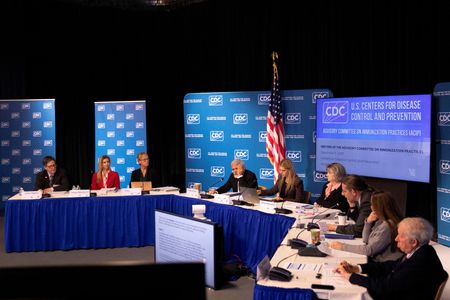
In December 2025, an advisory committee selected by Kennedy eliminated the long-standing recommendation. The panel determined that when mothers test negative for hepatitis B, parents should work with their physicians to decide if and when their children should receive hepatitis B vaccines.
The advisors, many sharing Kennedy’s vaccine-critical perspective, presented no new evidence of harm from the immunization. Instead, they contended that widespread vaccination was excessive given infection risks. The CDC, which Kennedy oversees, quickly adopted this position.
Medical experts have cautioned that this policy shift could undermine decades of public health achievements.
Rothman noted he hasn’t seen research yet documenting increased infection cases.
“The reason pediatricians and the American Academy of Pediatrics still recommend the birth dose for all newborns is that it serves as a safety net,” Rothman said.
“If the maternal test ends up being a false negative, if there’s an unexpected household or caregiver exposure, or if the infant’s follow-up is delayed, this birth dose provides early protection.”