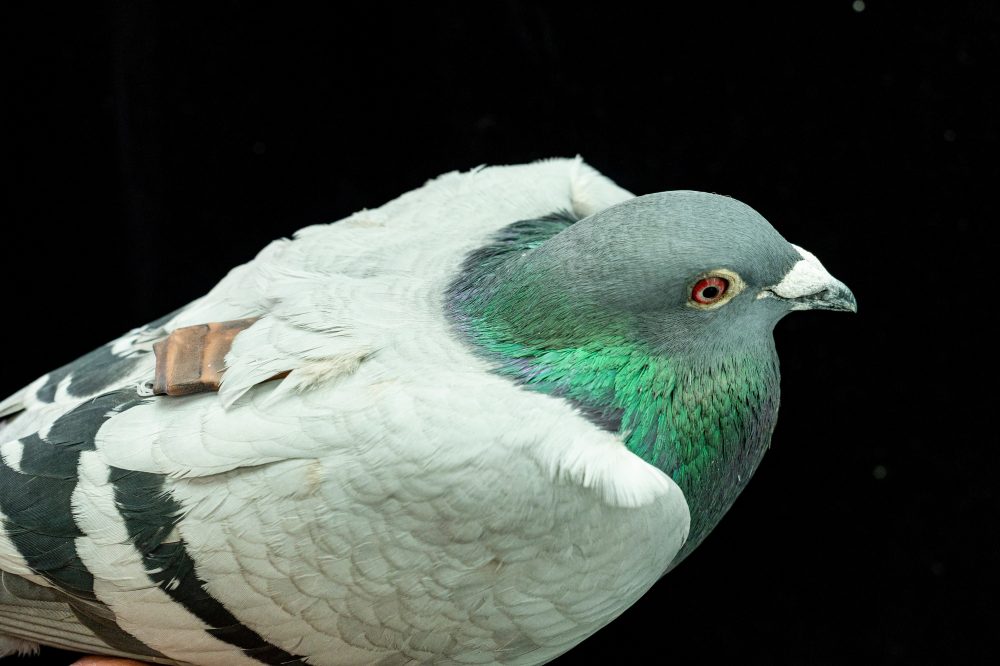

A recent scientific breakthrough may finally explain how pigeons manage to find their way home across vast distances without getting lost.
While animals employ different methods for navigation such as star patterns and landmark recognition, many birds, fish and sea turtles rely on Earth’s magnetic field for direction. However, the exact mechanism behind this ability has remained unclear to scientists.
These remarkable birds are capable of flying hundreds of miles in one day and have served humans for millennia as messengers carrying news, correspondence and wartime communications.
Researchers have spent decades attempting to solve the puzzle of pigeon navigation. Various theories have emerged, with some scientists proposing that birds sense magnetic signals through light-detecting molecules in their eyes, while others believe the process occurs in their beak or inner ear.
“The magnetic sense has been this mystery for almost 100 years,” explained Martin Wikelski from the Max Planck Institute of Animal Behavior in Germany.
In their latest research, Wikelski and his team set out to uncover the secrets behind pigeon navigation by examining the birds’ organs for magnetic indicators. Their investigation revealed a powerful signal in a surprising location: the liver.
The study found that specific immune cells within the pigeon’s liver process red blood cells and accumulate iron. When researchers temporarily removed these immune cells from pigeons before releasing them, the birds “just couldn’t find their way,” according to Christian Kurts from the University of Bonn in Germany. This finding indicates that these iron-containing liver cells may be essential for directional sensing.
Interestingly, the birds only lost their navigational abilities during cloudy conditions, as they can also rely on solar positioning for guidance.
While scientists had previously theorized about immune cells playing a role in magnetic detection, this research published Thursday in Science journal represents the first comprehensive explanation of the process.
“I would never have guessed it, but once it was explained to me, it makes sense,” commented behavioral ecologist Albert Kao from the University of Massachusetts Boston, who was not involved in the research.
These immune cells are positioned close to nerve pathways in the liver, which could explain how they relay magnetic information to the brain “and help the pigeons to navigate,” stated study co-author Clivia Lisowski from the University of Bonn.
The research team believes other birds and animals such as mice might use similar magnetic navigation systems. However, independent experts emphasize that additional research is required to confirm this navigational method and understand how these signals reach the brain. Although researchers discovered the strongest magnetic activity in pigeon livers, similar immune cells have been identified in other body parts including the beak and spleen.
The solution to this magnetic navigation mystery may not be singular, according to veterinary pathologist Simon Spiro and biologist Hal Drakesmith in their accompanying editorial. Birds might employ different magnetic sensing methods depending on their specific needs, whether for long-distance travel or locating precise destinations.
“Indeed, it could be prudent to have more than one way of getting home in the dark,” they noted.