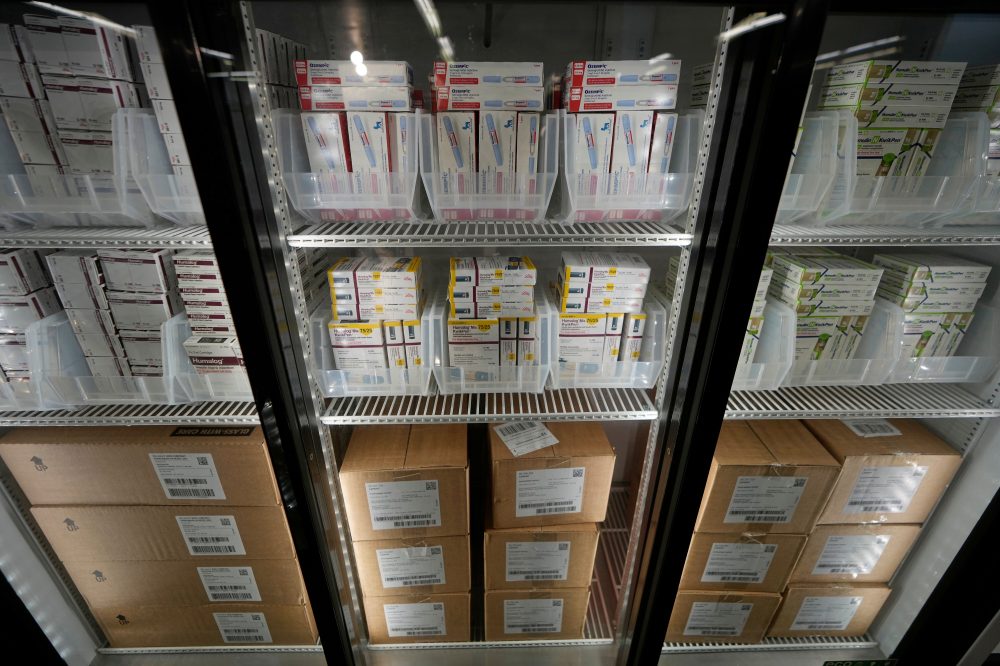

For families dealing with diabetes, the monthly cost of insulin can create significant financial stress. Two-year-old Bain Brandon from Mississippi requires insulin to survive due to Type 1 diabetes, and despite having health insurance, his family still faces substantial expenses.
His mother, 29-year-old Marlee Brandon, spent $194 last week on a one-month supply of insulin vials and a three-month supply of backup pens for her toddler. While they can manage the current costs, she expresses concern about what lies ahead.
“One day, Bain will be an adult, and he won’t be able to be on our insurance anymore,” she said. “I feel like a lot of people don’t realize how much and how expensive it is.”
Now, a bipartisan coalition of senators hopes to address this financial burden through the INSULIN Act, which would establish a $35 monthly cap on insulin costs for Americans carrying private insurance. Senators Jeanne Shaheen of Maine, Raphael Warnock of Georgia, Susan Collins of Maine, and John Kennedy of Louisiana introduced the legislation last week. The proposal would additionally launch a pilot initiative to deliver more affordable insulin to uninsured individuals across 10 states.
This effort builds on previous success from 2022, when similar legislation became part of the Inflation Reduction Act, successfully establishing a $35 monthly insulin cap for Medicare recipients.
The current proposal represents the latest attempt by lawmakers from both political parties to control insulin pricing, though it encounters several obstacles, including budget concerns and competing legislative priorities. However, with Trump returning to the White House and Republicans controlling Congress, the measure presents a potential opportunity for bipartisan cooperation on healthcare affordability during a time when medical costs concern voters across party lines.
According to the Centers for Disease Control and Prevention, approximately 8.1 million Americans depend on insulin. This includes over 2 million individuals with Type 1 diabetes who face life-threatening consequences without consistent insulin access. The medication also helps manage glucose levels for people with other diabetes types.
Insulin pricing varies dramatically across different insurance plans. While some privately insured patients pay minimal amounts or nothing, others face monthly costs reaching hundreds of dollars, in addition to expenses for diabetes pumps, blood glucose monitors, and other necessary supplies.
Beyond the 2022 Medicare legislation, more than half of U.S. states have enacted their own insulin copay limits, typically ranging from $25 to $100 monthly for patients with state-regulated insurance plans.
Major insulin manufacturers including Eli Lilly, Sanofi, and Novo Nordisk have implemented various cost-reduction measures, combining approaches such as lowering list prices, capping patient expenses, and expanding affordability programs.
However, coverage gaps remain significant. Matthew Fiedler, a senior fellow at the Brookings Institution’s Center on Health Policy, notes that approximately 57% of Americans with private insurance participate in self-insured plans that fall outside state regulation. This exempts them from state cost-cap legislation. Additional patients lack insurance entirely or struggle to access manufacturer savings programs.
“It puts the onus on the patient, I think, to try to navigate and get the cost down,” said Dr. Leslie Eiland, an adult endocrinologist at the University of Nebraska Medical Center, who supports the latest legislation through the Endocrine Society.
Oliver Bogillot, Sanofi’s head of general medicines for North America, stated that “no one should struggle to afford their insulin” while highlighting the company’s savings program that includes uninsured individuals. Novo Nordisk spokesperson Flavia Brakling emphasized that expanding affordable medicine access remains a priority and noted the company hasn’t increased list prices for its insulin products for 2026.
Chanse Jones, representing PhRMA, the leading pharmaceutical trade association, argued that pharmacy benefit managers and insurers create access and affordability obstacles for patients even as manufacturers work to expand availability.
“We look forward to working with policymakers to ensure middlemen don’t stand between patients and their medicines,” he said.
Despite bipartisan backing for the new INSULIN Act, similar legislation has previously appeared promising before ultimately failing. In 2022, the House approved a $35 monthly insulin cap for privately insured Americans, but the Senate didn’t pass the measure. Another attempt to include such provisions in that year’s Inflation Reduction Act failed when Republicans opposed it, citing Senate rule violations.
Breana Glover, a 23-year-old Houston restaurant server, relocated from California to Texas specifically to reduce living expenses and better afford the high medical costs associated with her Type 1 diabetes.
Managing payments for insulin and related supplies requires careful budgeting. To afford her $50 copay for four insulin vials, she restricts her carbohydrate consumption, allowing her to use less insulin daily and extend each supply.
Glover described a $35 monthly cap as a “small step towards everything becoming even more accessible,” which would also help her cover essentials like groceries and gasoline.
Manny Hernandez, CEO of The Diabetes Link, a national nonprofit serving young adults with diabetes, expects the legislation would particularly benefit younger patients who often struggle to obtain quality health insurance or any coverage when they cannot access plans through their parents.
Hernandez expressed encouragement following recent meetings with Republican Congress members from his home state of Florida, though he worries other priorities might overshadow the bill, as has occurred previously.
“There’s many distractions and there’s many important things going on,” he said. “But I don’t lose hope.”