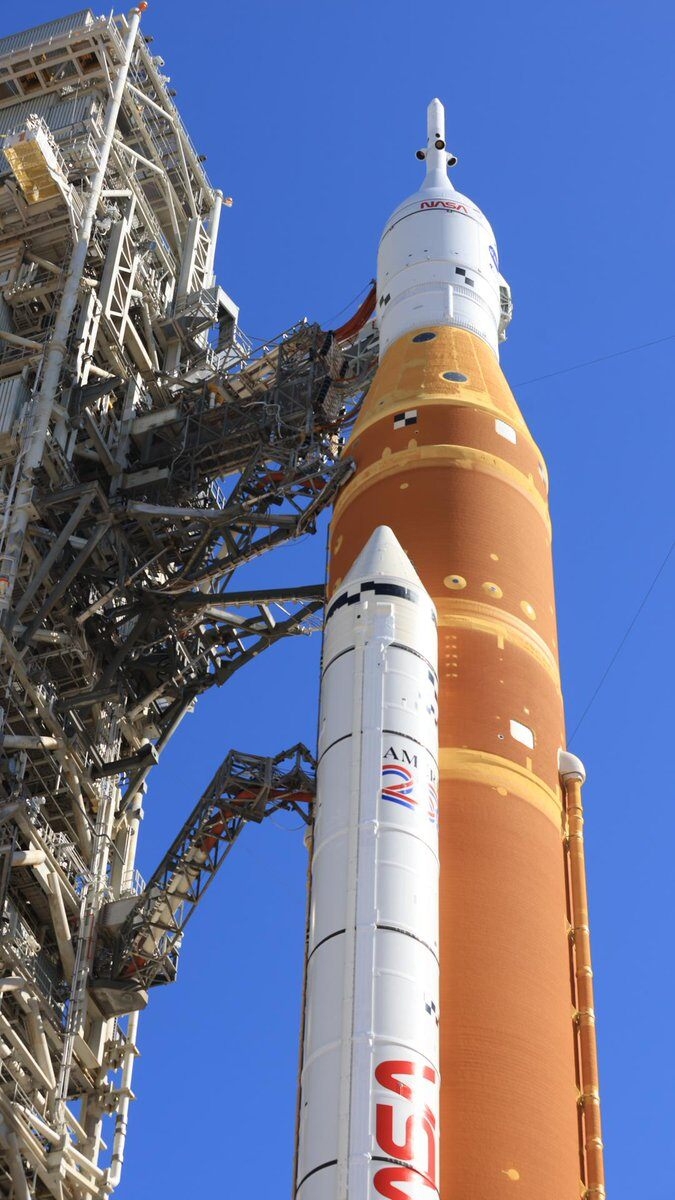

CAPE CANAVERAL, Fla. — NASA’s massive lunar rocket will be transported back to its hangar facility this week for additional technical work after encountering fresh mechanical issues that have postponed the mission until at least April.
The space agency announced Sunday that it plans to begin the slow, four-mile journey across Kennedy Space Center on Tuesday, depending on weather conditions.
Just as NASA completed a second fuel loading test on Thursday to verify that hazardous hydrogen leaks had been resolved, a new technical challenge emerged.
The rocket’s helium system experienced a breakdown, pushing back the first crewed lunar mission in more than five decades even further.
Technical teams had successfully addressed the hydrogen leak problems and established a March 6 launch target — already delayed by a month — when the helium malfunction occurred. The helium supply to the rocket’s second stage was interrupted; this gas is essential for cleaning the engines and maintaining proper pressure in fuel storage tanks.
“Returning to the Vehicle Assembly Building at Kennedy is required to determine the cause of the issue and fix it,” NASA said in a statement.
According to NASA, moving the rocket back quickly helps maintain the possibility of an April launch window, though officials emphasized this timeline depends entirely on repair progress. The agency has only limited launch opportunities each month to send the four-person crew on their lunar journey.
The mission crew — three American astronauts and one Canadian — continues waiting in Houston. These four individuals are set to become the first humans to travel to the moon since NASA’s Apollo missions, which transported 24 astronauts to lunar orbit between 1968 and 1972.