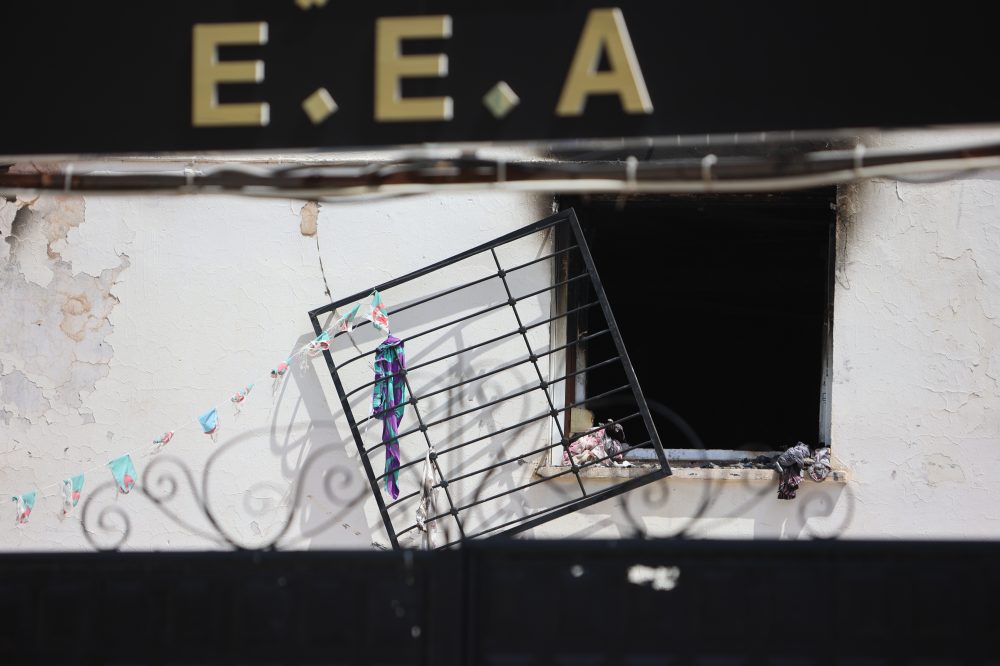

The polluted waterfront of Bagnoli on Naples’ western edge presents a stark contrast to the glamorous sailing competition it will host next year, as corroded industrial remnants overlook shores contaminated by generations of heavy manufacturing.
Construction crews are currently working around the clock to prepare for the America’s Cup, with dredging operations deepening the harbor floor for racing vessels, demolition teams dismantling an aging wharf, and workers establishing what officials describe as temporary facilities for the advanced carbon-fiber sailing craft.
Italy’s selection to host the prestigious sailing competition has ignited a heated debate about whether the event will serve as a catalyst for genuine environmental restoration of the Bagnoli coastline, or merely provide cover for concealing decades of industrial contamination.
Local officials argue the regatta represents a crucial opportunity to accelerate the rehabilitation of one of Italy’s most environmentally damaged coastal areas, which previously accommodated a polluting steel production facility, concrete manufacturing plant, and asbestos operation.
“I see the America’s Cup as a chance to speed up the environmental cleanup that was already planned, particularly offshore, where work wasn’t supposed to start until 2031,” said Enza Amato, the centre-left head of Naples City Council.
“For me, the most important thing is the chance to improve the water quality sooner and make the sea usable again,” Amato added.
However, numerous local residents, community advocates, and small business proprietors view the current construction efforts with skepticism, seeing familiar patterns of ambitious commitments made under the banner of development without assurance of lasting benefits.
Rather than delivering the long-awaited public shoreline and recreational space promised for this Mediterranean coastal section, opponents worry the America’s Cup could cement a future dominated by exclusive marinas, concrete structures, and supposedly “temporary” facilities that become permanent fixtures.
“The issue is not whether we host the America’s Cup or not. The issue is doing it properly,” former Naples Mayor Antonio Bassolino told Reuters. “Naples needs a large beach, because we don’t have one and here is the only place for us to create one.”
Adding to these concerns is Naples’ track record from hosting the America’s Cup previously in 2013, when a protective barrier constructed to shield the racing yachts was supposed to be removed following the competition but remains in place today due to prohibitive removal costs, according to municipal officials.
Opponents argue city leadership favors temporary solutions because Italian regulations allow them to bypass comprehensive environmental impact studies that can require months or years to complete.
“Unfortunately in Naples, temporary projects have the habit of becoming permanent,” Bassolino said.
Italy’s competitive hopes for next year center on Luna Rossa, the sailing team sponsored by Prada executive Patrizio Bertelli, as they seek to earn the right to challenge defending America’s Cup champions New Zealand.
The more pressing concern currently involves onshore construction activities, particularly addressing a coastal waste site containing approximately one million cubic meters of industrial refuse left behind when the final factories shuttered in 1992.
Original remediation proposals called for complete removal of the contaminated material to ensure long-term safety for future generations in Bagnoli, an area situated in a volcanically active region experiencing hundreds of seismic events annually.
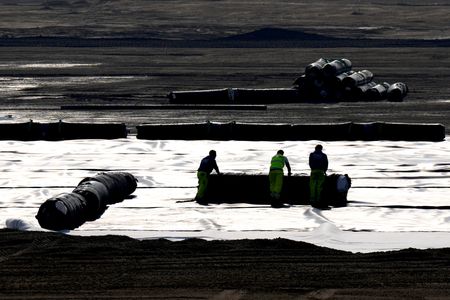
Instead, authorities have chosen to extract only a small portion of the industrial slag while covering the remainder with extensive protective membrane barriers to contain the pollution before constructing team facilities and workshops.
“The cleanup is a sham,” said Ines Clemente, a Bagnoli bar owner who has organised a petition against the works. “It’s just covering everything up and sweeping it under a rug.”
Despite not completely emptying the contaminated site, workers are removing surface layers of waste material and extracting thousands of tons of polluted sediment and debris from the ocean floor to establish a level foundation for the marina.
Much of this contaminated material travels through Bagnoli via truck convoys, disrupting what was once an elegant resort community before industrial development transformed it during the mid-1900s.
Clemente reports her establishment is now constantly covered in dust particles, while street closures and heavy vehicle traffic have deterred customers from visiting.
“In the evening I find my bar empty,” she said. “I’m constantly cleaning the shelves and tables, but people feel uncomfortable. It’s as if they can taste the dust.”
Earlier this month, community demonstrators confronted riot police during protests where neighborhood organizations displayed signs reading “Stop the work of shame” and “Naples is not for sale.”
During a recent visit to Italy, Grant Dalton, chief executive of America’s Cup Partnership, praised the construction progress at Bagnoli, noting that similar projects might require years to complete in other locations. While acknowledging the community opposition, he emphasized the goal of revitalizing the deteriorated neighborhood and making it central to the competition.
While Clemente remains hopeful her business will rebound after redevelopment concludes, fellow Bagnoli resident Paola Minieri fears she may lose her family home due to the project.
Through a municipal improvement initiative that predates the America’s Cup agreement, her residence has been designated for demolition as part of area upgrades.
Minieri’s family has resided in Borgo Coroglio, a collection of historic waterfront dwellings next to the planned America’s Cup harbor, for over a century. City officials have declared the neighborhood must be cleared for the “public good” but have not revealed specific plans for future development, beyond confirming new housing units will be constructed.
Such prime beachfront property, offering panoramic views of Ischia and Procida islands, would command substantial market prices.
“Just because we’re poor doesn’t mean we should have to leave and make way for the rich,” said Minieri, a clothes saleswoman. “We agree with the cleanup, we agree with the America’s Cup, we are not the people who say ‘no’. But this place must first and foremost be for local people.”
Residing in Bagnoli has exacted a heavy toll on many community members.
Minieri reported that 10 relatives in her extended family have succumbed to asbestos-related cancers that area physicians attribute to exposure to pollutants from the former industrial facilities.
“Maybe we should have left before, but we didn’t. Now that something good is finally happening, they want to send us packing,” she said.
City council leader Amato indicated no final determination has been reached regarding the residential displacement. “It is a very delicate situation,” she said.