
GLENDALE, Ariz. — Los Angeles Dodgers manager Dave Roberts believes he understands what’s happening to all the missing doubles and triples in Major League Baseball.
They’re sailing over the fence.
“I think that guys chase exit velocity and launch angle so that doesn’t lend itself to balls in the gap or down the lines,” Roberts explained. “So I think that’s the whole crux for me.”
Last season saw an uptick in singles and home runs throughout the majors, but doubles and triples continued their downward slide. Statistics from Sportradar show 7,745 doubles were recorded, dropping from 7,771 in 2024 and significantly down from 8,254 ten years earlier in 2016. Triples fell to just 628, compared with 697 in 2024 and 873 in 2016.
Baseball officials expanded base sizes as part of rule modifications before the 2023 season, hoping to generate more baserunning excitement. The change initially boosted doubles, triples and stolen bases that year, but the two-base and three-base hits have since returned to their declining pattern.
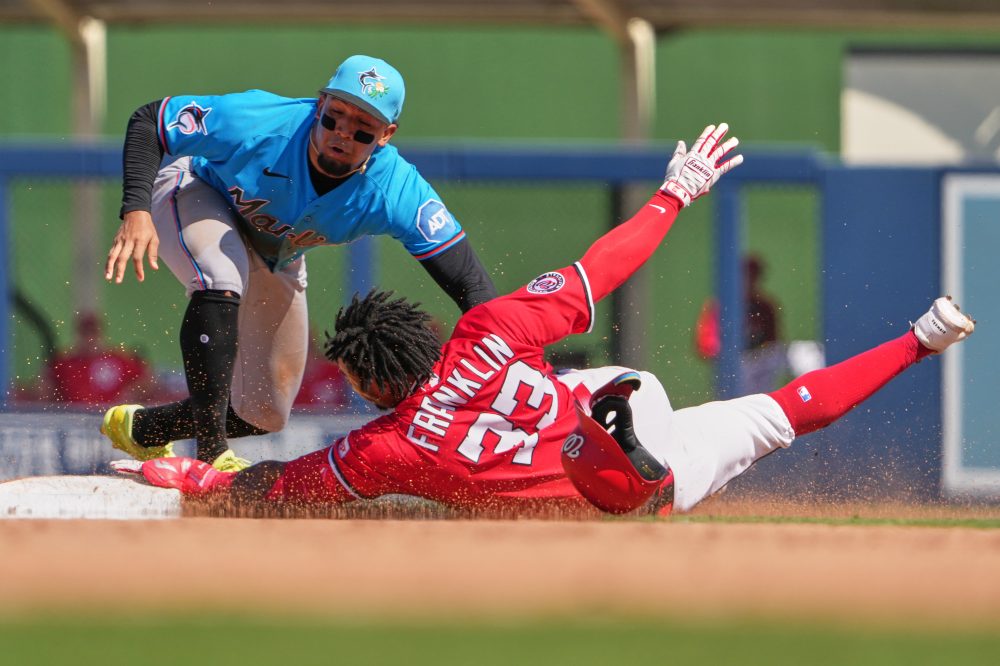
This trend means fewer of those thrilling baseball moments when fans rise from their seats, watching a runner race toward second or third base while a throw speeds his way.
“I guess you could say yeah, it loses something, but I think there’s also a gain in some other things,” Chicago White Sox outfielder Andrew Benintendi observed. “People like home runs and more stolen-base opportunities.”
Multiple factors contribute to the reduction in doubles and triples, starting with how teams position their defenders.
Although the 2023 rule changes limited infield shifting, no similar constraints exist for outfield positioning. Outfielders frequently play deeper to prevent extra-base hits, using reference cards tucked in their pockets that outline each batter’s hitting patterns.
“When I was playing, it was kind of, you want to play shallow to take away the singles,” Roberts said, drawing on his experience as a former major league outfielder, “but nowadays you’re playing for damage, and so outfields play considerably deeper than they used to.”
Nolan Arenado recalls the moment vividly. The eight-time All-Star was suiting up for St. Louis on May 23, 2022, when he achieved his career-best exit velocity of 111.4 mph on a line drive against Toronto right-hander José Berríos during the second inning. The ball cleared shortstop Bo Bichette’s head before center fielder Bradley Zimmer tracked it down.
“Yeah. Single,” said Arenado, who joined Arizona through a January trade. “And you know a few years back that probably would have been just an automatic double. … So that was the first time I really noticed it. The defense alignment, it changes everything. You know you really got to hit a ball in the gap or you got to hit it down the line to get doubles.”
Texas Rangers president of baseball operations Chris Young also highlighted the advancement in defensive positioning strategies.
“Every team has their own model and I think does a really good job of positioning,” said Young, a former major league pitcher.
Stadium configurations have also influenced this trend. The New York Mets have repeatedly modified Citi Field since its 2009 debut, pulling fences closer to favor hitters. Detroit Tigers restructured Comerica Park’s outfield before 2023, reducing wall heights and shortening distances in certain areas. The Kansas City Royals implemented similar modifications at Kauffman Stadium this year.
According to Statcast’s park factors rankings, Citi Field and Yankee Stadium, both opening in 2009, rank among the least favorable venues for doubles and triples. Globe Life Field, which began operations in 2020, also appears in the bottom ten for both categories over the past three seasons.
“Pitching is pretty good. I think maybe some of the outfields, they’re bringing fences in,” Cincinnati Reds manager Terry Francona noted. “You don’t hear anybody moving the fences back. So there’s a few ballparks, like Detroit, right-center. Kansas City was a big one. Now they moved them in. You’re not going to see a ton in our ballpark, just the way we’re configured. Right field’s not very big.”
Cincinnati’s Great American Ball Park measures 325 feet down the right field line. Yankee Stadium’s famous short porch in right sits just 314 feet from home plate. Tampa Bay’s Tropicana Field, returning to service this season, spans 315 feet along the left-field line and 322 feet to right.
Today’s major league outfielders also possess superior athleticism compared to previous generations, preventing balls that once rolled to the warning track and resulted in extra bases.
“Now, if you are a negative defensively, you have to hit at such a ridiculously high level in order to be even a starting player,” Chicago Cubs second baseman Nico Hoerner explained. “So there just aren’t many players out there that are negatives defensively at this point.”