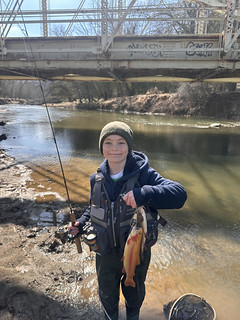

Spring fishing enthusiasts across Maryland are finding plenty of action on the water this week as the state’s catch-and-release striped bass season gets underway in Chesapeake Bay waters.
The recreational striped bass fishing season runs through April 30 in Maryland’s Chesapeake Bay waters from Abby Point to Worton Point in the northern bay down to the Virginia border, including the Potomac River. Starting May 1, fishermen will be allowed to keep one striped bass daily measuring between 19 and 24 inches.
According to this week’s fishing forecast from April 1-7, bay water temperatures have reached the low to mid-50s, with smaller waterways holding in the upper 50s. Sunny downwind areas in smaller streams may see temperatures approaching the low 60s, creating ideal conditions for white perch as they migrate from winter areas to prepare for spawning.
Striped bass are moving toward spawning grounds in low-salinity areas of the bay and tidal rivers. Fishing experts recommend focusing on channel edges where fish travel to these spawning locations.
During the catch-and-release period, trolling anglers must limit themselves to six lines using barbless hooks without stinger attachments. Cut bait requires non-offset circle hooks, and eel bait is prohibited. Most large female striped bass in the upper bay will be pre-spawn, requiring careful handling and quick release.
The upper bay offers catch-and-release striped bass fishing below the Abby Point to Worton Point line. Water temperatures in this region are holding around 50 degrees. Anglers can also target largemouth and smallmouth bass in the lower Susquehanna River, along with blue catfish and channel catfish using non-offset circle hooks.
White perch spawning runs are active throughout tidal rivers in the upper bay, including the North East, Sassafras, Bush, Gunpowder, Chester, and Magothy rivers. Popular techniques include small jig heads or shad darts with grass shrimp, minnow pieces, or bloodworms. Hickory shad have arrived in the Susquehanna River and at the mouths of Deer Creek and Octoraro Creek.
In the middle bay, anglers seeking striped bass are trolling along steep channel edges using barbless bucktails with chartreuse or white sassy shads. Large soft plastic jigs are also proving effective. The Choptank River and Tuckahoe Creek are producing excellent white perch action, with larger females now joining smaller males in the spawning run.
The lower bay presents perhaps the best opportunity for catch-and-release striped bass fishing, as all fish heading to spawning rivers must pass through these waters. The main Potomac River is also open for catch-and-release fishing. Hickory shad spawning runs have begun in the Potomac River near Fletcher’s and Little Falls, as well as the Mason Branch of Mattawoman Creek.
State hatchery crews continue stocking put-and-take trout waters for spring fishing. Stocking updates are posted on the state’s trout stocking website as they occur, typically by early afternoon on stocking days.
Largemouth bass are actively feeding throughout the day due to cool water temperatures and pre-spawning energy needs. Effective lures include crankbaits, jerkbaits, spinnerbaits, paddletails, and craw jigs near cover areas and emerging grass beds.
Spring crappie fishing is excellent, with fish schooling near structure including fallen trees, submerged brush, and marina docks. Small minnows under slip bobbers remain the most popular technique.
Blue catfish activity is strong throughout tidal rivers, with medium-sized fish in upper river sections and larger specimens in middle to lower areas. The Potomac, Patuxent, Nanticoke, Choptank, and Chester rivers hold the largest populations.
Along the Atlantic coast, surf anglers are watching for the season’s first black drum along Assateague beaches, though clearnose skates and dogfish are currently providing most of the action. The Ocean City fishing community awaits the first flounder reports from inside the inlet.
Striped bass are offering exciting catch-and-release opportunities at the Route 90 Bridge and Verrazano Bridge piers during evening hours. Anglers are using paddletails and soft plastic jigs near bridge structures and marsh banks. While most caught fish measure below the 28-inch minimum, some fall within the legal 28 to 31-inch slot.
Tautog fishing remains productive at offshore wreck and reef sites for boats able to reach these locations. As water temperatures rise this month, tautog are expected to move into Ocean City Inlet, providing opportunities for shore and small boat anglers.