
Major investment companies including KKR and Blackstone have discovered a surprising new opportunity in India’s booming cricket market.
The Indian Premier League has emerged as a financial powerhouse, with its total business worth reaching a record $18.5 billion in recent years according to investment bank Houlihan Lokey.
While still smaller than America’s NFL at $227 billion and NBA at $165 billion, the cricket league now ranks as the world’s second-most valuable sports competition on a per-game basis, trailing only professional football.
Banking industry sources reveal that KKR and Blackstone are exploring ownership positions in Royal Challengers Bengaluru, last season’s championship team. KKR is also examining a potential investment in the Rajasthan Royals franchise, while Switzerland-based Partners Group is evaluating at least one team opportunity.
The investment surge began after European private equity company CVC Capital completed a landmark transaction involving the Gujarat Titans. CVC’s sale of its controlling interest generated returns exceeding 350% in just four years, with the team valued at $900 million.
“India’s structural economic growth should continue to support long-term value creation,” explained Siddharth Patel, managing partner at CVC Capital.
“Combined with the scarcity of IPL franchises, it is clear why there is such intense investment interest from both industrial groups, family offices and private equity investors.”
Sports transaction expert Harsh Talikoti from Houlihan Lokey’s Mumbai office reports receiving numerous inquiries from American and European private equity firms since the CVC deal.
“The IPL model proved you can generate serious profit,” Talikoti noted.
Representatives from Blackstone, KKR, Partners Group and Royal Challengers Bengaluru declined to provide comments, while Rajasthan Royals did not respond to interview requests.
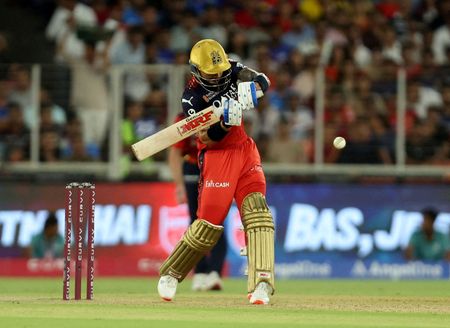
The league has transformed cricket in India, where star players often achieve celebrity status. Last year’s tournament attracted 1.19 billion viewers across streaming platforms and television, significantly surpassing NFL viewership numbers.
The annual competition features teams competing in cricket’s fast-paced 20-over format following a global player auction. The upcoming season launches March 26.
Several factors are driving investor enthusiasm, including broadcast rights values that doubled to over $6 billion in 2022’s auction, increasing team revenues, and the Indian cricket board’s centralized revenue distribution system.
Under this structure, the governing body collects media rights and sponsorship money, retains half for operations, then splits the remainder equally among all teams – creating more balanced finances than leagues like the NBA.
This approach ensures adequate funding for player acquisitions while maintaining competitive balance through regular auctions, according to CVC’s Patel. The system helps “maintain strong audience engagement and provides franchises with predictable economics through the media rights cycle.”
Punjab Kings co-owner Mohit Burman, who shares ownership with Bollywood actress Preity Zinta, reports 30% annual growth in sponsorship income. He identifies the revenue-sharing model as particularly attractive to private equity investors.
“The IPL can certainly rival – and in some cases outperform – U.S. leagues on investor returns, even if the absolute scale differs,” Burman stated.
Each franchise receives approximately $55 million annually from the league’s central fund, with ticket sales and additional sponsorships providing extra income.
“The asset class has clearly come of age,” Burman added.
Reliance and Disney combined their Indian operations in 2024, jointly controlling streaming and television broadcast rights through 2027 at a cost of $6.2 billion. Financial analysts at Jefferies calculate these rights make the league globally second-ranked by per-match value behind only the NFL.
However, investment risks exist. Similar cricket leagues are gaining popularity in South Africa, UAE and Australia, creating scheduling conflicts for players balancing franchise and international commitments.
The primary concern involves the Disney-Reliance partnership potentially reducing competition and lowering team payments in 2027’s broadcast auction.
Indian business magnate Sanjiv Goenka disagrees with pessimistic projections. He described his 2021 team purchase for $781 million as a “trophy business” and predicts broadcast rights will become more expensive.
Multiple investors, including Goenka’s organization and Mukesh Ambani’s Reliance, committed 500 million pounds last year to England and Wales Cricket Board’s hundred-ball competition.
The NFL began accepting private equity investment in 2024, while the NBA permits such involvement with strict ownership limitations. The Indian league imposes no similar restrictions, allowing greater private capital participation.
Team earnings growth and limited franchise availability create strong appeal. Only 10 teams compete in the league compared to the NFL’s 32 franchises.
Financial document analysis by Reuters showed at least five teams more than doubled revenues since 2022, with two also doubling profits. Three additional franchises doubled profits while maintaining steady revenue growth.
Kolkata Knight Riders, partially owned by Bollywood superstar Shah Rukh Khan, generated $76.8 million in 2023-24 revenue, representing 119% growth from the previous year. Net profits increased six-fold to $19.4 million.
Sumat Chopra, private equity director at consulting firm Kearney, anticipates continued growth as star players boost team revenues. Elite athletes including India’s Virat Kohli and Australia’s Pat Cummins participate in the league.
“IPL franchise valuations are likely to compound steadily over time, supported by rising media economics,” Chopra concluded.