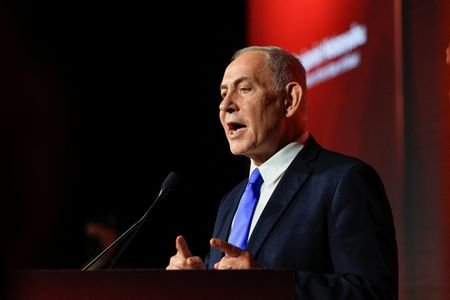

JERUSALEM — Prime Minister Benjamin Netanyahu’s government has declared it will resist a Supreme Court order concerning a media regulatory body, bringing back to the forefront a contentious legal and political battle that had deeply divided Israel in the period before Hamas launched its October 7, 2023 attack.
The move comes as the country prepares for a national election anticipated by late October.
What Did the Government Say?
In a statement issued Sunday, the government described a June 17 Supreme Court ruling on the makeup of the Second Authority for Television and Radio as a clear example of the judiciary overstepping its boundaries.
Justice Minister Yariv Levin and Communications Minister Shlomo Karhi both stated that their government would not comply with the ruling.
Levin was the driving force behind a 2023 effort to limit the Supreme Court’s authority — a push that triggered widespread protests across Israel before being set aside following Hamas’ attack. In recent months, however, Netanyahu’s nationalist-religious governing coalition has begun reviving portions of that controversial judicial reform plan.
What Does the Declaration Actually Mean?
In practical terms, the declaration is expected to have little direct effect on the media regulator itself. However, opponents argue the broader implications are serious, saying the move undermines the rule of law and the democratic foundations of the Israeli state. They also warn it could push the country toward chaos and a constitutional standoff between the executive and judicial branches.
“Apparently nothing really happened, but essentially something very dramatic did happen,” said Dina Zilber, Israel’s former deputy attorney general. Zilber said the government had, for the first time, used its formal executive authority to openly disregard a court order, calling it “a harsh blow to the rule of law and to the separation of powers.”
What Is the Political Background?
Israel is scheduled to hold elections by late October, though no specific date has been confirmed. Polling data suggests Netanyahu’s right-wing coalition is likely to lose that vote.
Netanyahu’s Likud party is expected to hold internal primaries ahead of the election, and ministers competing for favorable placement on the party list may be looking to appeal to their base by taking strong stances against the judiciary and media — both of which Netanyahu’s coalition has frequently labeled as left-wing elitist institutions.
Where Does Netanyahu Stand?
Netanyahu himself has not made any public comments on the government’s declaration.
His Cabinet Secretary Yossi Fuchs sought to soften the tone set by ministers Levin and Karhi, clarifying that the government statement did not call for outright disobedience of the court’s ruling, but rather expressed sharp criticism and pledged to pursue all available legal avenues to have the ruling overturned.
The issues of media and judicial power are particularly sensitive for Netanyahu, who is currently standing trial on corruption charges that he denies. Two of the three criminal cases against him involve alleged regulatory favors granted to media figures. Netanyahu has characterized his prosecution as a politically motivated left-wing effort to remove a democratically elected right-wing leader from power.
How Has the Public Responded?
Critics contend that the Netanyahu government is attacking democratic institutions while attempting to shift public focus away from the security failures surrounding the October 7 attack and the ongoing toll of more than two years of war in Gaza, Lebanon, and with Iran.
Israeli President Isaac Herzog, Opposition Leader Yair Lapid, and Attorney General Gali Baharav-Miara have each publicly spoken out against the government’s declaration.