
Health officials worldwide are facing a familiar challenge as a hantavirus outbreak aboard a cruise ship triggers memories of early pandemic fears and online panic.
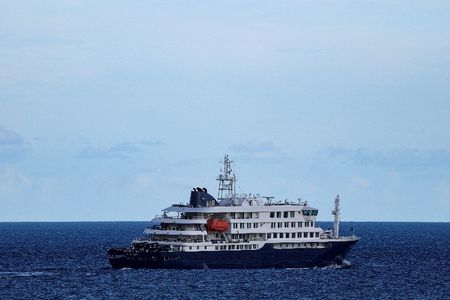
The virus, carried by rodents and known as the Andes strain, has infected passengers on a luxury cruise vessel quarantined in the Atlantic Ocean. Three fatalities have occurred among 11 confirmed cases, with dozens of other passengers now under monitoring as they return to approximately 20 different countries.
Public health authorities find themselves walking a tightrope between providing timely information about a virus that poses serious risks but is unlikely to spark a pandemic, while avoiding the spread of unnecessary fear.
The health department of Illinois state demonstrated this careful approach earlier this week when posting about an unrelated case. “Hantavirus thread incoming,” they wrote, “But you have to promise to read this whole thread before panic-texting your group chat. Deal?”
Multiple health officials interviewed said they are applying lessons learned from pandemic-era communication failures, emphasizing empathy while addressing uncertainties and combating false information.
“We spend half of our time discussing how we will communicate,” explained the emergencies lead at the EU’s European Centre for Disease Prevention and Control.
The pandemic exposed significant weaknesses in government response and public messaging. Many administrations reacted slowly or denied problems initially, delivered confusing and contradictory information, implemented varying policies worldwide, and allowed misinformation and political division to flourish.
These failures contributed to widespread institutional distrust. Research indicates that confidence in public health agencies dropped in 20 out of 27 EU nations between 2020 and 2022.
Current health communication efforts focus on balancing explanations of why this constitutes a serious global health situation with reassurances about low public risk levels, while maintaining honesty about remaining unknowns regarding a virus that has rarely transmitted between humans previously.
“There are people who say we are overdoing it, and on the other extreme, that we’re not doing enough,” the EU official noted. “We always base our messages on the evidence we have.”
Social media activity suggests these communication efforts remain challenging, with many individuals unnecessarily worrying about potential returns to lockdowns, social distancing requirements, and mask mandates.
“We have kind of lost perspective,” observed a professor at Icahn School of Medicine at Mount Sinai who specializes in hantavirus research and originates from Argentina.
He emphasized that disease outbreaks can represent major public health events requiring attention and action without necessarily becoming pandemics.
Online misinformation includes false claims presenting hantavirus as more dangerous than COVID, promoting unproven treatments like the anti-parasite medication ivermectin, vitamin D, and zinc. Conspiracy theories have also emerged, falsely linking the virus to vaccine side effects or pharmaceutical company profit schemes.
A psychology professor at England’s University of Cambridge who studies misinformation suggested the public requires better guidance on information interpretation, potentially including exposure to conspiracy theories they might encounter during outbreaks.
“We need to do more preparatory work to create resilience in the population,” he stated.
By Thursday, the outbreak had resulted in three deaths from 11 reported cases, all individuals who had traveled aboard the cruise vessel. Dozens of additional passengers remain under observation as they return home.
Unlike COVID, established protocols exist for controlling hantavirus transmission, officials noted. This particular strain has circulated in regions of Argentina and Chile for decades, and ship samples show no significant variation from that existing virus.
A former head of communications at the World Health Organization, who served until September last year, acknowledged improvements in current responses. “I’m definitely seeing improvements,” she said, particularly regarding sharing available information promptly.
“It seems like the public health community has absorbed crucial lessons, although not all of them.”
The WHO responded quickly to reassure the public, conducting regular press briefings, issuing alerts, and addressing misinformation through social media question-and-answer sessions since the outbreak became public on May 3.
The WHO chief took the unusual step of writing an open letter to residents of Tenerife, where the cruise ship docked on Sunday.
“But I need you to hear me clearly: this is not another COVID,” he wrote. “The current public health risk from hantavirus remains low. My colleagues and I have said this unequivocally, and I will say it again to you now.”
Some agencies began communications more slowly. The Centers for Disease Control and Prevention in the United States issued its first information on May 8, five days after news broke, but has since accelerated its communication pace.
“One of the things this is teaching us is a lesson we should have learned from COVID: What we say is really important,” said an infectious diseases expert at the University of Minnesota.
The cruise ship setting has complicated the narrative, echoing memories of the Diamond Princess outbreak during early COVID in 2020, where 14 people died and nearly 25% of the 3,000 passengers and crew became infected while docked off Japan.
“The whole cruise ship thing … is a very significant memory from the beginning of COVID,” explained an associate professor of medicine at the University of Texas Southwestern Medical Center.
“There’s an emotional reaction that is stirring people.”
The similarity was apparent to a 40-year-old Tenerife resident as passengers began disembarking under strict infection-control protocols at the week’s beginning.
Witnessing the WHO leader’s arrival on the island with Spanish officials to help oversee the response brought back memories.
“It gave me the impression that this isn’t just the flu – otherwise all these people wouldn’t be coming,” she said at a playground, while adding that she understood their involvement helped ensure appropriate measures were taken.