
PORT-AU-PRINCE, Haiti (AP) — For generations, Haitian soccer enthusiasts have crowded around televisions and radios to cheer for Brazil during every World Cup competition. This year marks a dramatic change.
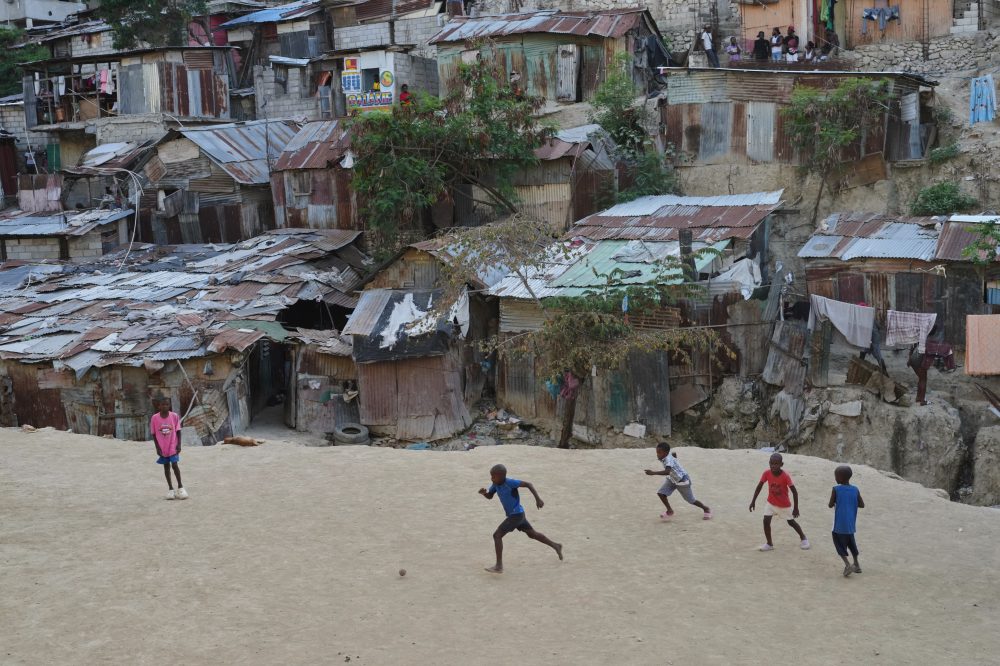
The Caribbean nation has earned its spot in the global competition for the first time in nearly five decades, creating unprecedented enthusiasm across the country. Impromptu matches are breaking out on vacant lots while vendors hawk jerseys featuring national team players at an increasing number of street locations.
The national squad — dubbed the ‘Grenadiers’ — enters the competition in Group C alongside Morocco, Scotland and Brazil. The team will meet its former soccer inspiration at Philadelphia Stadium on June 19.
“My favorite team is Brazil, but my country is in the World Cup. Brazil is on the sidelines,” Guerier Lima, 16, said with a grin. He recently played soccer on a potholed street in the capital, Port-au-Prince, wearing a sneaker on one foot and a plastic slide on the other, eager to score between rocks serving as goalposts.
Lima sported a Brazilian uniform displaying the number 10, matching jerseys worn by legendary players including Pelé, Neymar and Ronaldinho.
“I would like to be Duckens Nazon, representing Haiti in tournaments,” Lima said referring to Haiti’s top scorer. “My family can’t afford to send me to a club to pay for my training, but I’m working my way into a club somehow.”
The teenager expressed admiration for Kaká, a former Brazilian star, while naming Nazon, a striker with Iran’s Esteghlal Football Club, as his current favorite.
“Brazil is good,” Lima said, “but I’m going to stand by my Haitian brothers.”
The nation’s ongoing struggles with food insecurity, persistent violence and escalating gang activity are being temporarily pushed aside as citizens rally behind their team.
Prophète Ismeus, a 52-year-old broker, examined replica jerseys being sold at a dusty street corner in Port-au-Prince. Unable to purchase a $13 shirt, he chose a $1 plastic wristband featuring Haiti’s red-and-blue national colors.
“I’m showing my support for Haiti in the best way I can,” he said. “I’m hoping Haiti will beat Brazil.”
Ismeus mentioned plans to return to the vendor when finances allow to purchase a small banner “so I can wave it in the air when Haiti scores against Brazil.”
Fitho Joseph, a street merchant selling replica uniforms, explained he abandoned his Brazil loyalty once Haiti secured qualification.
“Even if a family has 10 people, everyone should wear a jersey,” he said.
Wilkerson Daromain, 33, shared similar sentiments.
“Wearing the jersey is a message of hope that I send to each of the Grenadiers who will fight for us and for Haiti — a message that there is still life here and that we must keep going,” he said. “We are living in very difficult circumstances, but the Grenadiers have given us hope, and we, too, must give them hope.”
Haitian supporters chant “Grenadye, alaso!” — translating to “Troops, attack!” — a battle cry dating back to the revolutionary period when Haiti established itself as the world’s first Black republic.
Mario Etienne, 15, described this as his inaugural experience watching his homeland compete in the World Cup, given Haiti’s last appearance occurred in 1974.
“This is a national gathering,” he said. “If there’s no power, I will be somewhere on the street or at a friend’s house watching it.”
Claudy Denis, 14, plans similar viewing arrangements. “We can’t be in the stadium where they are, but we will watch them on TV,” he said with a wide smile. “Of the three games that they’re playing, I’m not going to miss a single one.”
The Brazilian team has commanded deep respect from Haitians for decades, with many fans’ devotion beginning during the 1982 World Cup, when captain Sócrates guided a squad featuring Zico, Falcão and Toninho Cerezo.
This admiration intensified in 2004 when Brazil headed a U.N. peacekeeping mission in Haiti. The force arranged a match to encourage peace in the Caribbean nation, which remained unstable following a violent uprising that removed former President Jean-Bertrand Aristide.
Thousands of Haitians ran alongside an armored convoy transporting Brazilian legends including Ronaldo and Roberto Carlos to a Port-au-Prince stadium.
“It was impressive how there were people the whole way from the airport to here, everybody chanting, ‘Brazil! Brazil!’” Roberto Carlos told The Associated Press that day.
Despite Haiti’s 6-0 defeat, the outcome didn’t dampen spirits. Haitian supporters displayed Brazilian banners and celebrated the occasion.
The match represented one of few encounters between the nations, with the South American powerhouse overwhelming the Caribbean team 7-1 during a 2016 Copa America contest.
Yvenson Luxama, a 34-year-old street vendor, predicted Haiti would assault Brazil “like a tiger.”
“I will watch the game, definitely,” he said, adding that he will still close his eyes whenever Brazil attacks Haiti.
However, the World Cup and Haiti’s scheduled matches hold little meaning for Jean-Paul Jean Pierre, a 29-year-old street merchant who recently started selling team apparel and banners. “I’m here to make a living, not love any teams,” he said.
Jean Pierre belongs to the more than 1.4 million Haitians forced from their homes by gang violence and resides in a crowded, temporary shelter with his partner and two children, whom he battles to feed.
“Making money, that’s what interests me,” he said. “I wish there was a World Cup every year, so that I can continue to survive.”