
The global economy handled the loss of more than one billion barrels of oil supply since the start of the Iran war far better than many had feared — but with strategic reserves now largely depleted and lasting peace still uncertain, the risk of future price surges remains very real.
When Tehran moved to choke off the Strait of Hormuz following U.S. and Israeli military strikes launched on February 28, the move sparked widespread alarm about a devastating worldwide energy shortage.
The four-month conflict that followed did produce the most severe energy disruption ever recorded, according to the International Energy Agency. At its peak, the supply shortfall reached 14 million barrels per day.
Despite those staggering figures, the nightmare scenario of empty fuel stations across Asia and Europe never came to pass. Benchmark Brent crude oil prices did climb sharply, reaching around $126 per barrel in April — though that remained roughly $20 short of the all-time record set in 2008. Prices have since fallen back below where they stood when the war first began.
“This suggests traders viewed the disruption as serious but manageable, reflecting confidence in today’s more resilient energy and economic systems,” said John Baffes, senior economist at the World Bank.
World Bank figures show that since the oil crisis of the 1970s, the role oil plays in driving economic activity has dropped by more than half in most developed nations and by about 20% in emerging and developing economies.
Three key factors helped prevent the worst outcomes during the Gulf crisis. Saudi Arabia and the UAE found new export routes around the blockage. China and other Asian nations cut back on oil purchases. And countries worldwide likely drew down roughly one billion barrels from their strategic reserves, including through a record-breaking coordinated release led by the IEA.
When the war erupted, China held nearly 1.4 billion barrels of oil in storage, according to the U.S. Energy Information Administration — more than the combined 1.2 billion barrels held by all 32 IEA member nations, including the United States’ 413 million barrels.
China’s rapid shift toward electric vehicles in recent years, along with its flexibility in oil and petrochemical production, also played a role, according to Ilia Bouchouev of the Oxford Institute for Energy Studies.
“They are managing the market a lot better than (the Organization of the Petroleum Exporting Countries) used to,” said Bouchouev, a former head of derivatives trading at Koch Global Partners.
China, the world’s largest oil importer, helped ease demand pressure globally. The IEA’s release of 400 million barrels of reserves provided additional relief at a time when U.S. President Donald Trump was repeatedly declaring that the war’s end was near.
“Traders always took the view this can’t go on much longer,” said Neil Atkinson, a former IEA official.
Analysts at Societe Generale noted that Washington’s messaging — that more oil supply was on the way — made hedge funds reluctant to place large bets on rising prices.
Following the signing last month of a preliminary peace agreement, markets have moved quickly back toward normal conditions.
“The market seems to have decided that this peace deal is for real,” Atkinson said.
Yet the situation remains far from what it was before the conflict began.
Saudi Arabia, Kuwait, Qatar, Iraq, and Bahrain are resuming production and exports, but repairing the damage Iranian attacks caused to their energy infrastructure could take years in some cases.
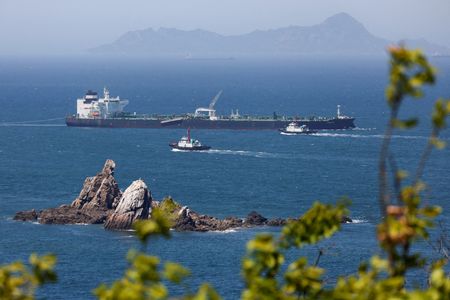
While oil prices suggest traders expect a swift return to pre-war supply levels, tanker traffic data through the Strait of Hormuz tells a more cautious story.
The current 60-day ceasefire between Washington and Tehran is also ticking down, with progress toward a permanent agreement moving slowly and major issues — including the future of Iran’s nuclear program — still unresolved.
On top of all that, the world faces the enormous challenge of restoring oil inventories. The global economy weathered the crisis by drawing down stockpiles at a record rate, according to IEA data, depleting the very safety cushions meant to guard against supply emergencies.
“It doesn’t mean we can’t operate without one, it just means that forward prices could be more prone to spikes,” Bouchouev said.
That kind of price volatility carries a heavy cost. Reuters calculations based on oil demand of 104 million barrels per day show that every $5 rise in oil prices adds approximately $190 billion in annual expenses to the global economy.
Refilling oil reserves was never inexpensive, and the war has likely made it more costly. Before the conflict, the European Central Bank had projected 2027-2028 oil prices at $63 to $64 per barrel. A June ECB report now puts that estimate at $65 to $75 per barrel on average.
At current Brent prices, replacing the reserves drawn down during the Iran war would likely cost upward of $70 billion.
Until that replenishment happens, the world is essentially operating without a financial safety net in a still-uncertain environment.
“The markets may be underestimating the risk of further oil flow disruptions,” said Saul Kavonic, head of research at MST Marquee. “Iran is likely to continue to find pretexts to stymie flows through the strait.”