
NEW YORK — Scientists examining fossilized teeth have uncovered fascinating evidence of romantic connections between different early human species that occurred hundreds of thousands of years ago, leaving genetic traces that persist in modern humans today.
Research published recently focuses on Homo erectus, an early human ancestor that emerged from Africa roughly 2 million years ago before migrating across the globe to Asia and potentially Europe.
Archaeological discoveries have unearthed H. erectus remains in multiple countries spanning Indonesia, Spain, China and Georgia. However, genetic material and proteins typically deteriorate over time, making it challenging for researchers to understand the biological characteristics of these ancient peoples.
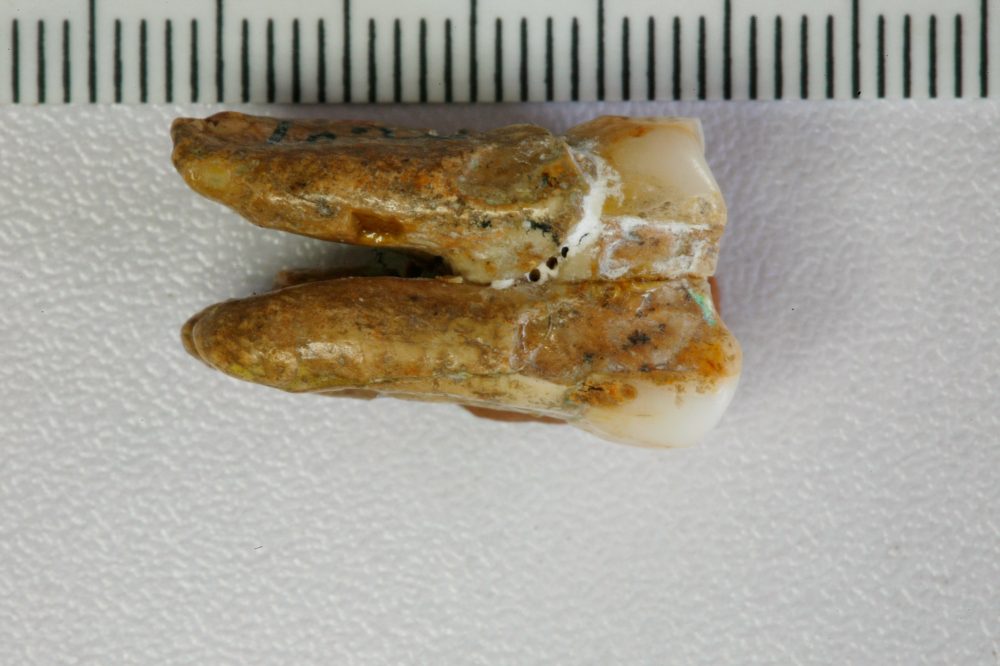
For this groundbreaking study, scientists extracted protein remnants from the tooth enamel of H. erectus specimens — five males and one female — discovered at various sites throughout China to investigate how these early humans may have interacted with other species.
The 400,000-year-old dental remains contained two significant mutations within an enamel protein. Researchers noted that one mutation appears to be previously unknown and might represent a distinctive genetic signature specific to East Asian H. erectus populations.
The second mutation proved more intriguing. Scientists discovered a genetic variant that exists both in a small percentage of contemporary humans and in Denisovans, an extinct human relative.
This finding suggests H. erectus may have reproduced with Denisovans, transferring genetic material between the species. Researchers believe this genetic information reached modern humans through later interbreeding between our ancestors and Denisovans.
“This traces who we are now back to our ancestors in a really cool and exciting way, using new methods,” said paleoanthropologist Ryan McRae with the Smithsonian National Museum of Natural History, who was not involved with the new research.
The precise evolutionary connections between these ancient human relatives remain somewhat unclear. McRae noted that H. erectus might simply be an ancestral species to Denisovans, who received these genes through inheritance over generations.
Solving this evolutionary mystery proves challenging given the extremely limited available evidence. Discovering additional fossils and analyzing scarce DNA remnants could help scientists piece together humanity’s evolutionary history more completely.
“We really need to get more DNA” and additional H. erectus specimens to determine how this ancient species “is exactly related to other humans,” said study author Qiaomei Fu with the Institute of Vertebrate Paleontology and Paleoanthropology in China.