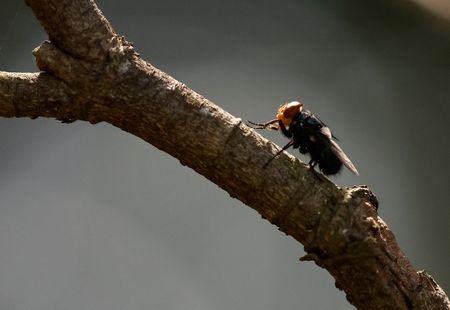

A dangerous flesh-eating parasite that devastates livestock has made its way into the United States, with officials confirming Wednesday that New World screwworm was found in a Texas calf. The destructive pest had been moving northward from Central America through Mexico, breaking through biological defenses that had successfully contained it for many years, according to experts.
Federal authorities have banned cattle imports from Mexico for the past year due to the parasite’s expanding presence in that country.
The import restriction has pushed already record-breaking beef prices even higher by reducing the number of calves entering the U.S. market, at a time when the nation’s cattle population has already dropped to its lowest level in decades. This first confirmed U.S. case during the current outbreak poses a significant threat to ranchers and may drive beef costs up further.
Understanding the New World Screwworm
These parasitic flies reproduce by having females deposit eggs in open wounds on any animal with warm blood. Farm animals and wildlife typically fall victim to these pests. After the eggs develop, hundreds of screwworm larvae utilize their razor-sharp mouths to tunnel through living tissue, consuming flesh, expanding wounds, and ultimately destroying their host without proper treatment.
When these parasites attack cattle, even minor scratches, fresh brands, or healing ear tag sites can rapidly transform into massive wounds filled with writhing maggots that threaten the entire herd with contamination. Scientists eliminated screwworms from the United States during the 1960s by deploying millions of sterilized male flies that would mate with wild females to create eggs that couldn’t hatch.
Impact on American Consumers
Mexico normally supplies more than one million cattle to the U.S. annually. The suspension of these imports has intensified beef price increases by restricting the available supply of cattle, which had already decreased after drought conditions forced ranchers to reduce their herds.
Cattle from Mexico typically spend five to six months being fed and prepared on American farms before processing, so reduced slaughter numbers can drive up meat prices.
A widespread outbreak across the U.S. would further restrict cattle availability and endanger other farm animals and family pets.
Dr. Timothy Goldsmith, a veterinary medicine professor at the University of Minnesota, explained that screwworms will attack humans when possible. Goldsmith noted that homeless individuals face particular danger from infestation since they sleep outdoors and have limited access to sanitation supplies and healthcare.
Current Control Efforts
A specialized facility in Panama that breeds and sterilizes screwworms currently releases 100 million sterile flies weekly, though experts believe additional factories would need rapid deployment to halt the parasite’s northern migration.
Texas won’t have its own sterile fly production facility operational until late 2027. Federal agriculture officials completed a distribution center for sterile flies in Texas this past February.
Sonja Swiger, an entomologist at Texas A&M University, explained that while screwworms can only fly about 12 miles independently, they can travel vast distances while embedded in their hosts. The flies have already moved through the most narrow land areas in Panama and Mexico, requiring exponentially larger releases of sterile flies to manage the outbreak.
The U.S. Department of Agriculture announced last year it would spend $21 million to modify a fruit fly facility in Mexico for sterile screwworm production.
Consequences for Cattle Ranchers
Federal agriculture officials estimate a screwworm outbreak would cost Texas $1.8 billion through livestock losses, labor expenses, and medication costs. Following decades without the pest, most cattle ranchers lack the knowledge or equipment to identify and address screwworm infestations. While treatable, the process requires extracting hundreds of larvae and completely sanitizing wounds, making it expensive, time-consuming, and labor-demanding.
“This is a pest we don’t want back. This is a bad thing,” said David Anderson, livestock economist at Texas A&M University. “I can’t imagine having to deal with that. It’s gross.”