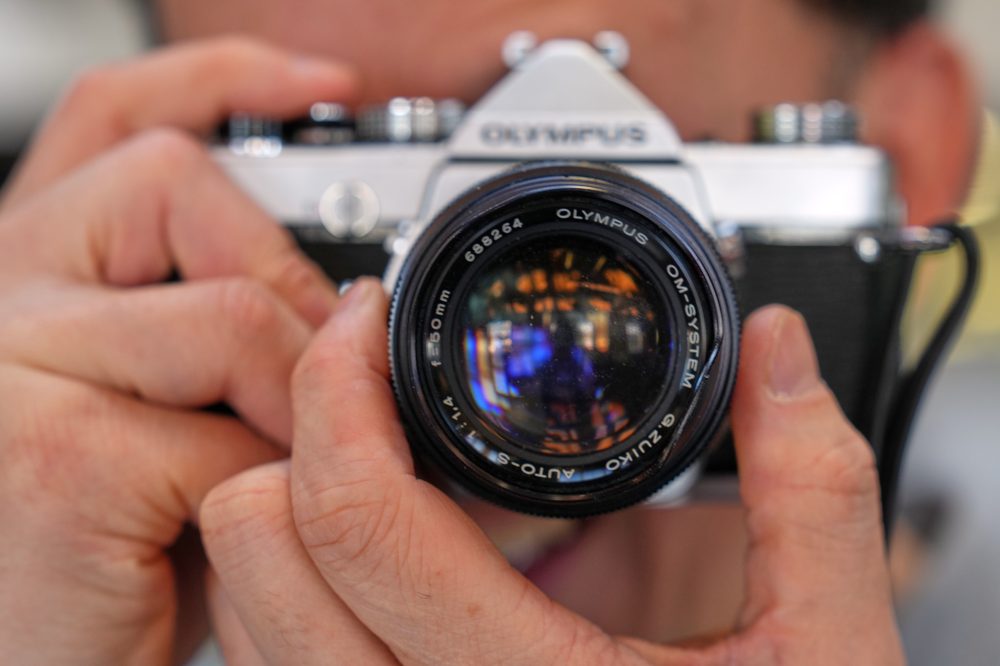

A photography revival is sweeping through younger generations, with Gen-Z and millennial photographers embracing the distinctive aesthetic and hands-on experience of film cameras.
However, those accustomed to digital photography face a learning curve when switching to analog equipment. Terms like ISO, f-stop, and aperture can confuse newcomers to traditional photography methods.
Associated Press photojournalist George Walker IV, working from Nashville, shared fundamental principles of analog photography for photographers interested in making the transition.
Walker, who became an AP staff member in 2023 following three decades at The Tennessean newspaper, believes film photography teaches essential skills because it “forces me to be patient and concentrate to make the pictures that matter.”
“You have a finite number of frames on a roll of 35 mm film, usually 24 or 36. And you should make those pictures count.”
Prior to digital camera technology emerging in the early 2000s, photographers depended on physical film rather than electronic storage devices.
Film consists of light-sensitive cellulose material designed for image creation. The silver-halide surface captures light through camera lenses, forming a latent image that becomes the basis for printed photographs.
This process produces images with characteristic grain and natural imperfections that appeal to photographers seeking alternatives to overly polished digital images. Many enthusiasts view film as a remedy for digital overwhelm and smartphone instant gratification, joining a wider trend toward traditional activities including vinyl collecting, handicrafts, and handwritten correspondence.
Various film formats exist, though 35mm remains the standard for consumer cameras, sold in small metal containers. Photography stores and online retailers stock film supplies, while some pharmacies offer limited selections.
Film purchases require attention to ISO ratings, which indicate light sensitivity levels. Higher numbers mean greater sensitivity to available light.
Indoor sports venues or nighttime events typically require ISO 1600 or higher ratings. Bright outdoor conditions work best with ISO 400 or lower speeds.
Newcomers should consider starting with black and white film, which offers more exposure forgiveness than color varieties and emphasizes composition and lighting fundamentals.
Contemporary film camera production focuses mainly on specialty point-and-shoot models or premium equipment.
Secondhand vintage cameras remain widely available through online marketplaces, camera retailers, or personal connections who may have forgotten equipment in storage.
Reliable options include models from five major manufacturers that dominated pre-digital photography: Canon, Nikon, Pentax, Olympus, and Minolta.
Point-and-shoot models offer portability and simplicity with minimal controls beyond flash activation switches.
Single-lens reflex (SLR) cameras provide complete manual control through various dials, settings, and interchangeable lenses for advanced image creation. Manual cameras offer learning opportunities and creative flexibility but require more experience and handling comfort due to their size and complexity.
For undecided buyers, remember that having any camera available beats owning the perfect one left at home.
Loading film requires different approaches depending on camera type.
Manual cameras need the back opened to insert the film leader into the right-side spool slot. The winding lever advances film to ensure proper attachment before closing the camera back. Correct loading makes the left rewind knob rotate during film advancement.
Point-and-shoot cameras typically feature automatic winding systems with interior labels showing proper film leader placement. Incorrect loading triggers error messages or prevents frame counter advancement.
Once loaded, keep the camera back sealed until completing all exposures and rewinding film completely, as opening prematurely destroys the entire roll.
Manual camera operation requires understanding exposure control through shutter speed and aperture (f-stop) adjustments, plus ISO setting selection.
Exposure works like filling a glass from a faucet. F-stops regulate light flow, with f/16 allowing minimal light like a trickle, while f/2.8 permits maximum light like a fire hose. Shutter speed determines how long light reaches the film.
F-stops also affect depth of field, controlling how much of the photograph appears sharp. Smaller f-stop numbers create greater focus range.
Shutter speed captures motion effectively. Fast speeds like 1/250 or 1/500 second freeze moving subjects such as racing vehicles or flying birds.
Manual cameras include viewfinder light meters showing proper exposure settings.
Manual focusing requires practice and concentration. For portraits, ensure eyes remain sharp. For landscapes and still life subjects, focus on the most important visual elements like flower details or mountain peaks.
Despite technological differences, core principles remain consistent. Fill the frame with desired subjects and study accomplished photographers including Gordon Parks, Henri Cartier-Bresson, and Ansel Adams.
Film processing services operate through pharmacies, photo shops, or mail-order laboratories. Some communities maintain shared darkroom facilities for photographer members.
Development costs and timeframes vary based on urgency, color versus black and white processing, frame counts, and additional services requested.
Processing returns negatives – the developed film strips. Previously, photographers saved these for future printing needs. Modern labs provide digital files alongside physical prints, though experienced photographers typically retain negatives for archival purposes.