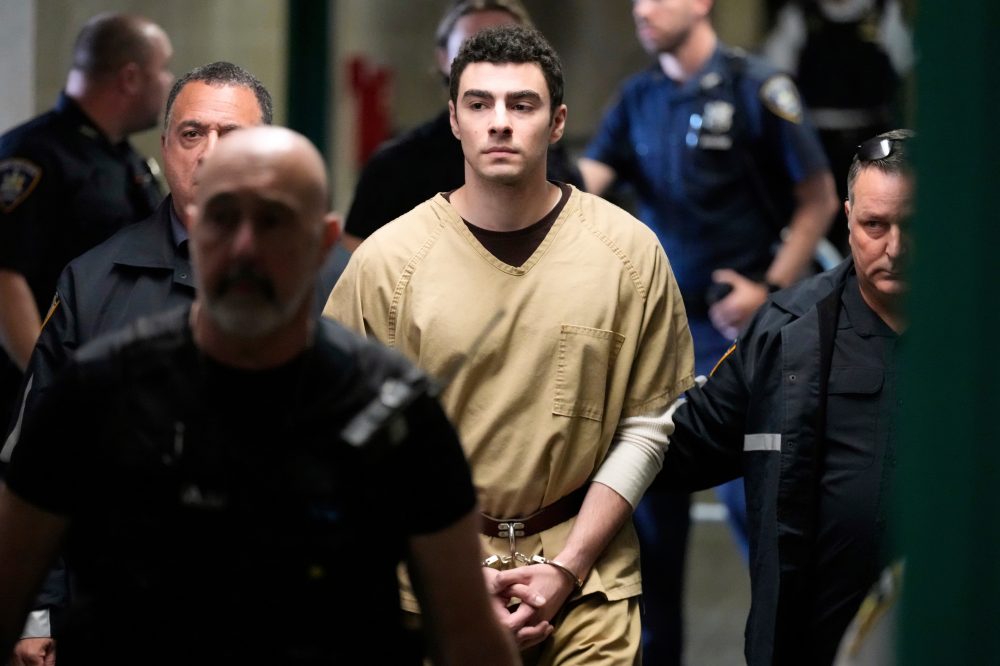

NEW YORK — A federal judge on Wednesday approved a modest postponement for Luigi Mangione’s trial in the fatal shooting of UnitedHealthcare CEO Brian Thompson, scheduling it for October rather than September, though defense attorneys had pushed for a delay until next year.
U.S. District Judge Margaret Garnett based her ruling on the timeline for Mangione’s state murder trial, which is slated to start June 8 and run four to six weeks. She turned down the defense team’s request to push the federal proceedings back to January or February 2027, which would have allowed them to seek a delay of the state case until September.
Defense lawyers contended that consecutive trials on such a tight schedule would infringe upon his constitutional protections. But Garnett noted their alternative plan to move the federal case to 2027 and reschedule the state case “doesn’t solve any of these problems because it shifts the very same problems from the summer to the fall.”
The federal case will now begin jury selection on Oct. 5 rather than Sept. 8, with opening arguments and witness testimony starting Oct. 26 instead of Oct. 13, according to Garnett. She noted the timeline could shift again if the state proceedings face delays.
The 27-year-old defendant has entered not guilty pleas and could receive life imprisonment if found guilty in either proceeding.
“There really is no way around taking into account the events in the state case,” Garnett stated during Wednesday’s hearing at Manhattan federal court. However, she added, “I am skeptical of moving the (federal) trial wholesale into 2027 when the state trial has not been adjourned. it is a little bit of a tail wagging the dog.”
Alongside setting the new court date, Garnett adjusted the timeline for federal jury selection preparations to avoid conflicts with the state trial, allowing Mangione additional time to examine questionnaires completed by hundreds of prospective jurors.
Judge Gregory Carro, who oversees the state case, had previously suggested moving the state trial to September — but only if federal prosecutors challenged Garnett’s decision preventing them from pursuing capital punishment. They chose not to appeal.
Wednesday’s ruling by Garnett gives Carro limited flexibility to postpone the state trial, and delaying it until after the federal case could create double jeopardy issues.
State double jeopardy protections take effect once a jury is sworn in during a previous prosecution, like a federal case, or if that prosecution concludes with a guilty plea. While the cases involve separate charges, they stem from the same alleged criminal conduct.
During a February court appearance, Mangione voiced opposition to facing two separate trials, stating to the judge: “It’s the same trial twice. One plus one is two. Double jeopardy by any commonsense definition.”
Thompson, age 50, was fatally shot on Dec. 4, 2024, while walking to a midtown Manhattan hotel for UnitedHealth Group’s yearly investor meeting. Security footage captured a masked shooter firing at him from behind.
Authorities report that the words “delay,” “deny” and “depose” were inscribed on the bullets, echoing language critics use to characterize how insurance companies evade claim payments.
Mangione, who graduated from the University of Pennsylvania and comes from an affluent Maryland family, was apprehended five days after the shooting when someone recognized him at a McDonald’s restaurant in Altoona, Pennsylvania, roughly 230 miles west of Manhattan.
His legal team has claimed that law enforcement compromised his case by turning his arrest into a “Marvel movie” spectacle, including having armed personnel escort him along a Manhattan pier after flying him to New York and publicly announcing their intention to pursue the death penalty before formal charges were filed.
In January, Garnett dropped a federal murder charge — murder through firearm use — that would have allowed prosecutors to seek execution, ruling it legally defective.
The judge, a former Manhattan federal prosecutor nominated to the bench by President Joe Biden, also dismissed a weapons charge but maintained stalking charges that carry a potential life sentence.