
A top Federal Reserve official suggested Tuesday that Americans could see multiple interest rate decreases throughout 2026, provided inflation continues its downward trajectory toward the central bank’s desired 2% goal.
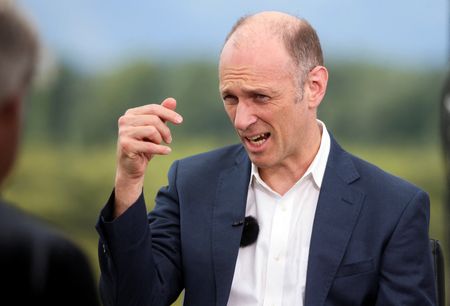
Austan Goolsbee, who serves as president of the Chicago Federal Reserve, made the comments during a television interview, though he emphasized the need for consistent economic data to support such moves.
January’s consumer price inflation came in at 2.4%, lower than many economists had anticipated. However, Goolsbee expressed caution about reading too much into this figure, noting that it was partly influenced by high inflation numbers from the previous year dropping out of calculations. More concerning, he said, was that services inflation remains “not tamed,” continuing to run at an elevated 3.2% annual pace.
“If we can show that we’re on path to 2% inflation, I still think there’s several more rate cuts that can happen in 2026,” Goolsbee stated during his CNBC appearance. “But we’ve got to see it” in upcoming economic reports.
The Fed official acknowledged the central bank’s current predicament, saying: “I think we’ve been basically stalled out around 3% with some positive signs, but also some warning signs.”
The Federal Reserve maintained its benchmark interest rate between 3.5% and 3.75% during its January 27-28 policy meeting, and market watchers anticipate no changes at the upcoming March 17-18 gathering.
Recent economic indicators have created a complex picture for policymakers. January employment figures showed robust job creation with 130,000 new positions added, while unemployment dipped slightly to 4.3%. These stronger-than-expected labor market results have reduced concerns about economic weakness but also diminished arguments for immediate rate reductions.
The challenge of bringing inflation back to the 2% target continues to occupy Fed officials’ attention. Many policymakers worry that persistent price pressures could become entrenched in the economy, providing justification for maintaining current interest rate levels.
Wednesday’s release of minutes from the Fed’s January meeting may offer additional insight into officials’ concerns as the central bank prepares for leadership changes. President Donald Trump has selected former Fed Governor Kevin Warsh to replace current Chair Jerome Powell when his term concludes in May. Financial markets currently don’t anticipate rate changes until the June 16-17 Fed session, which Warsh would oversee if the Senate confirms his nomination in time.
Both Powell and other Fed officials have expressed expectations that inflation will resume its decline toward 2% by mid-year, though many echo Goolsbee’s sentiment about needing clear confirmation in forthcoming data.
The Fed bases its inflation target on the Personal Consumption Expenditures price index, which differs from the Consumer Price Index and has remained around 2.8% since May through November’s latest available data. December PCE figures, scheduled for release Friday, are expected by Fed officials to show minimal improvement.
Should inflation demonstrate a clear path back to 2%, Goolsbee indicated he views a Fed policy rate near 3% as a “loose target” for a neutral interest rate level. Achieving this would require two to three quarter-point rate reductions from current levels.
The Fed will publish updated economic forecasts and rate projections following its March meeting. December’s median projection showed only one additional rate cut anticipated for this year, though the 19 policymakers were split, with eight supporting at least two quarter-point decreases.