
WASHINGTON — A federal judge has determined that former President Donald Trump cannot use immunity protections to avoid civil lawsuits claiming his rally speech sparked the January 6, 2021 Capitol attack.
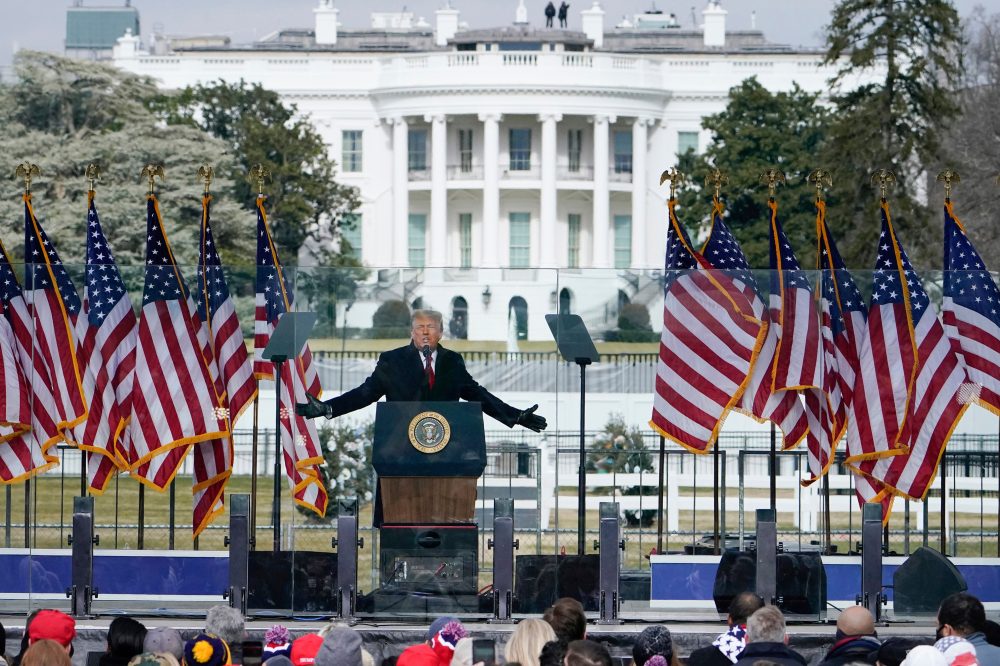
U.S. District Judge Amit Mehta issued his decision Tuesday, finding that Trump’s comments during his “Stop the Steal” gathering on the Ellipse near the White House before the Capitol siege “plausibly” constituted incitement that falls outside First Amendment protections.
According to the judge’s ruling, the Republican former president lacks immunity for most of his January 6 actions, including his rally address and numerous social media messages posted that day. However, Mehta determined Trump maintains protection for official presidential actions, such as his Rose Garden statements during the unrest and communications with Justice Department personnel.
“President Trump has not shown that the Speech reasonably can be understood as falling within the outer perimeter of his Presidential duties,” Mehta wrote. “The content of the Ellipse Speech confirms that it is not covered by official-acts immunity.”
This 79-page decision marks another court determination that Trump may face accountability for the Capitol violence, though appeals are expected. The ruling paves the way for a potential civil trial in the same federal courthouse where Trump previously faced criminal charges related to January 6 before his 2024 election victory ended that prosecution.
Mehta had earlier declined to throw out these claims in a February 2022 decision, ruling then that Trump lacked presidential immunity from lawsuits filed by Democratic Congress members and Capitol police officers who worked during the January 6 events. That earlier ruling also found Trump’s rally statements potentially amounted to incitement without First Amendment protection.
The matter came back to Mehta following an appellate court decision that supported his 2022 ruling. The judge noted Tuesday’s immunity determination applies a more “rigorous” legal framework at this advanced litigation phase.
Mehta, appointed by former Democratic President Barack Obama, emphasized his recent decision does not represent a “final pronouncement on immunity for any particular act.”
“President Trump remains free to reassert official-acts immunity as a defense at trial. But the burden will remain his and will be subject to a higher standard of proof,” the judge stated.
During the rally preceding the mob’s disruption of Congress’s certification of Democrat Joe Biden’s 2020 electoral win over Trump, the former president addressed his supporters. Trump concluded his remarks by declaring, “We fight. We fight like hell and if you don’t fight like hell, you’re not going to have a country anymore.”
Trump’s legal team maintained that his January 6 actions qualify for presidential immunity protection.
The lawsuit plaintiffs argued Trump cannot demonstrate he acted solely in his official presidential role rather than as a private citizen seeking office. They also cited Supreme Court precedent stating that office-seeking behavior exists beyond presidential immunity scope.
Representative Bennie Thompson, the Mississippi Democrat who previously chaired the House Homeland Security Committee, filed suit against Trump, his personal lawyer Rudolph Giuliani, and members of the Proud Boys and Oath Keepers extremist organizations regarding the January 6 riot. Additional Democratic Congress members subsequently joined this litigation, which was combined with the officers’ legal claims.
These civil lawsuits remained active despite Trump’s comprehensive clemency actions on his second term’s opening day, when he pardoned individuals, reduced sentences, and ordered dismissal of all 1,500-plus criminal cases connected to the Capitol siege. More than 100 law enforcement officers sustained injuries while protecting the Capitol from rioters.
The plaintiffs’ legal representation includes lawyers from the Lawyers’ Committee for Civil Rights Under Law. Damon Hewitt, the organization’s president and executive director, celebrated the ruling as a “monumental victory for the rule of law, affirming that no one, including the president of the United States, is above it.”
“The court rightly recognizes that President Trump’s actions leading to the January 6 insurrection fell outside the scope of presidential duties,” Hewitt said in a statement. “This ruling is an important step toward accountability for the violent attack on the Capitol and our democracy.”