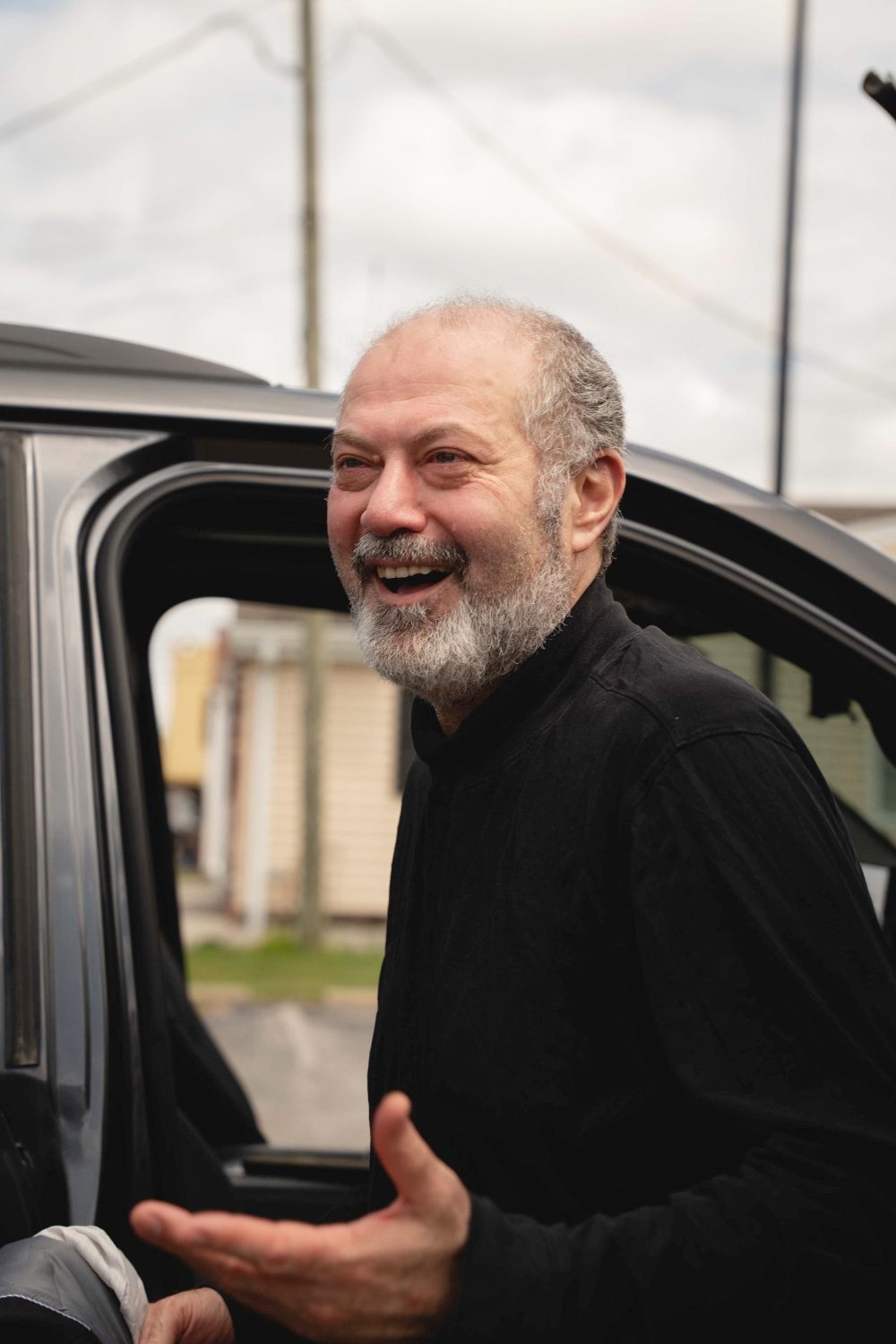

A federal judge has ordered immigration authorities to release the leader of Wisconsin’s largest mosque from custody, ruling Thursday that Salah Sarsour had presented a credible claim that his detention was retaliation for exercising his right to free speech in support of Palestinian rights.
Sarsour, a Palestinian-born legal permanent resident who has lived in the United States for decades, was taken into custody by U.S. Immigration and Customs Enforcement on March 30. While federal officials have described him as a foreign policy threat, his legal team argues he was targeted specifically because of his public statements against Israel.
U.S. District Judge James Patrick Hanlon — nominated to the bench by Trump in 2018 — ruled that attorneys representing ICE and the Department of Homeland Security failed to provide sufficient evidence to counter Sarsour’s retaliation claims. The judge also noted the government offered no explanation for why Sarsour was suddenly deemed a threat in 2026 after more than 30 years of legal residency.
“The mere invocation of foreign relations concerns does not automatically trump First Amendment rights,” Hanlon wrote in his decision. He ordered Sarsour freed from the Indiana county jail where he had been held and permitted to return to his Milwaukee home while his immigration case continues.
Sarsour walked free just a few hours after the ruling came down.
“I am so relieved to be with my family. For 80 days, I haven’t been able to step outside and breathe fresh air,” Sarsour said in a prepared statement. “This experience is a reminder to all of us that we must fight together for our right to be a voice for the silenced. I will never stop speaking for Palestine and humanity, wherever I am.”
Sarsour, who lives with Type 2 diabetes, lost more than 30 pounds — roughly 14 kilograms — during his time behind bars. His attorneys reported that his blood sugar was only being monitored once a month while incarcerated, a situation they said put him at serious risk of organ failure or death. Malak Saleh, communications manager for the Institute for Middle East Understanding, which assisted with the case, confirmed he was released Thursday afternoon.
Sarsour’s legal team expressed relief in a statement, saying he never should have been detained at all. They also warned that the case carries broader implications, writing that the ruling serves as “a sober reminder that, if the government can target Mr. Sarsour, everyone’s free speech rights are at risk.”
The Department of Homeland Security issued a statement calling Sarsour “a terrorist who was convicted of throwing Molotov cocktails” and denied that any ICE agents acted with discriminatory intent.
Sarsour has no criminal record in the United States. He was convicted by the Israeli Ramallah Military Court in 1989 for allegedly throwing a Molotov cocktail and stones at Israeli army forces, and again by the same court in 1995 on charges of attempting to possess weapons and ammunition. Sarsour has denied committing either offense. Israeli military courts have faced criticism over allegations of limited due process and unusually high conviction rates among Palestinians — claims Israel disputes.
Judge Hanlon noted that the U.S. government has been aware of those foreign convictions for 25 years and had reviewed them at least four times when considering Sarsour’s applications for citizenship. Despite that history, he was not arrested until 2026.
Government attorneys argued that Sarsour, as a non-citizen, does not hold the same First Amendment protections as U.S. citizens. Hanlon rejected that argument, writing that individuals who enter the country lawfully are entitled to the same constitutional rights as anyone within U.S. borders.
The judge also weighed Sarsour’s strong ties to his community, including his spouse, six children, and nine grandchildren — all U.S. citizens — as well as his deteriorating health, in deciding to order his release.
“We’re getting our dad back!” his son, Kareem Sarsour, said in a prepared statement. “This experience has been a nightmare to wake up to every day, with his health at risk in a cruel basement cell simply for speaking up for Palestine. But we know who my dad is, he’s a voice for the voiceless and the heart of our family and our community. I can’t wait to hug him, and I hope everyone like him will be released.”
A separate investigation by KFF Health News and the AP found that hundreds of immigration detainees across at least 33 states have filed federal lawsuits raising similar claims of medical neglect.