
DOSWELL—With meat prices hitting record levels and protein demand soaring, rural communities are set to benefit from a federal initiative designed to expand the nation’s smaller meat processing operations.
Virginia has the infrastructure to handle the 14,000 head of beef cattle produced annually within state borders, but farmers face significant challenges including long transportation requirements, workforce shortages, and extensive processing delays that impact both producers and consumers seeking locally-sourced products.
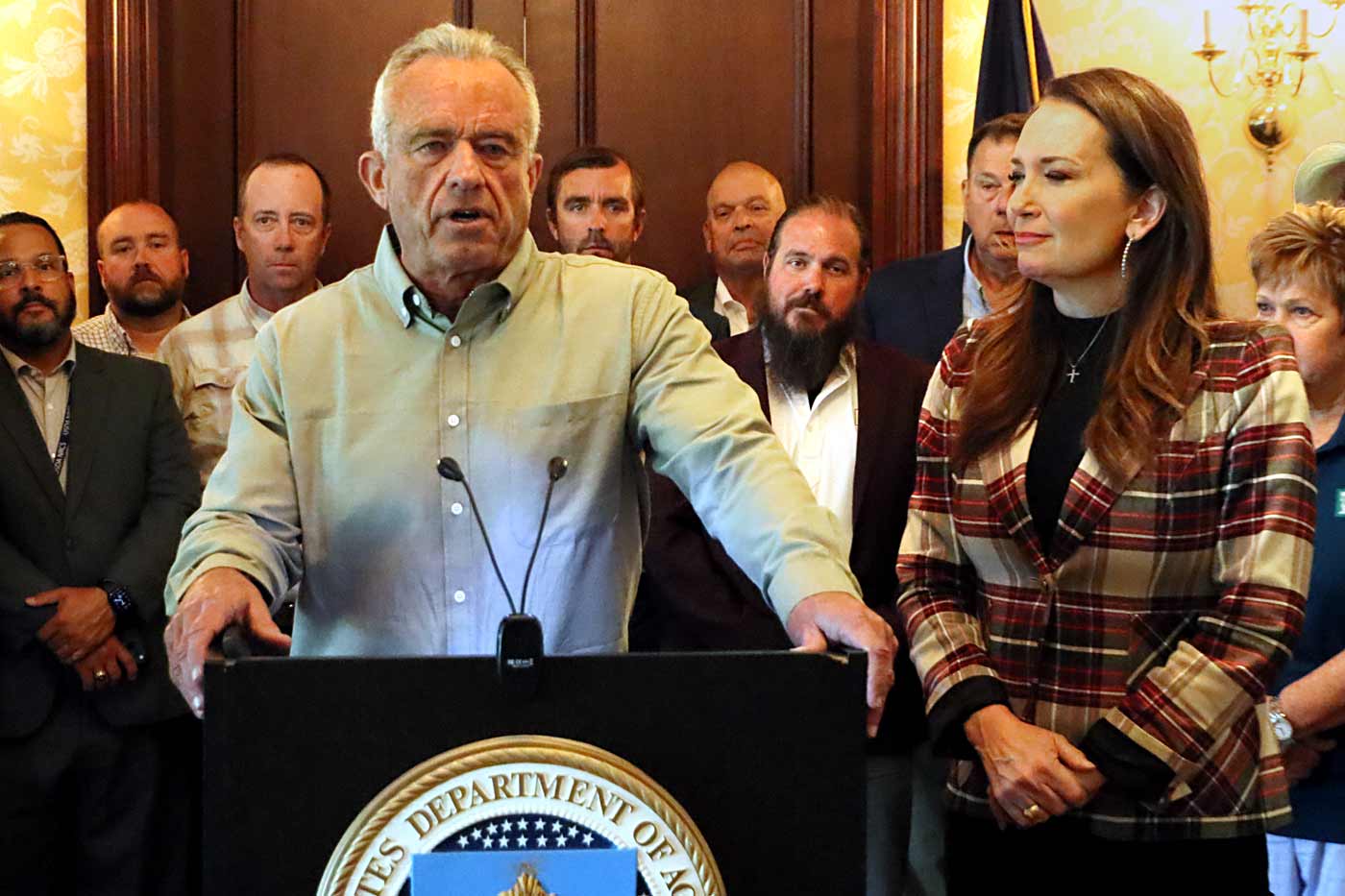
After hosting a June 3 discussion with 20 agricultural leaders at The Meadow Event Park in Caroline County, U.S. Secretary of Agriculture Brooke Rollins and Health and Human Services Secretary Robert F. Kennedy unveiled the new U.S. Department of Agriculture Small Processors Action Plan.
Rollins characterized the initiative as a crucial move toward increasing market competition, enhancing local accessibility, and maintaining livestock operations within regional boundaries.
“Why are we shipping these beautiful beef cattle from Virginia all the way to the middle of the country to get processed?” she asked.
Virginia Farm Bureau Federation state board member Barry Bates of Essex County explained that the shortage of local meat processing operations has generated significant scheduling challenges for agricultural producers, with processing appointments reserved months ahead of time.
Enhanced processing capabilities, he noted, “It would be a lot better logistically for the operators.”
The comprehensive package combines regulatory adjustments, service improvements, and financial support designed to help smaller meat and poultry facilities increase their operational capacity and better assist farmers. USDA officials said the plan will work alongside a fourth phase of the Meat and Poultry Processing Expansion Program, which provides an additional $60 million in funding for qualifying processors.
“We are building a food system that works not just for the biggest players, but also for the family farms and the small businesses across America,” Rollins said.
Trey Davis, president and CEO of the Virginia Agribusiness Council, expressed optimism about USDA’s commitment to supporting processors, noting the agency is demonstrating “there’s room for processors of every size.”
Rollins emphasized the program aims to bolster local food networks while maintaining existing safety protocols.
“This is about helping our small plants operate safely, compete fairly, and remain part of a strong local and regional food supply,” she said.
Kennedy connected the initiative to the administration’s wider food policy that prioritizes whole, nutrient-rich foods.
Agricultural leaders and supporters at the discussion, including VFBF President Scott Sink, said the announcement tackles a persistent industry challenge, though implementation will require patience.
The Virginia Foundation for Agriculture, Innovation and Rural Sustainability stands ready to assist farmers in understanding the action plan, which represents another valuable “tool in the toolbox,” according to Whitney Perkins, director of the nonprofit organization that provides technical support for value-added farming operations.
“We will be sure those tools are really working the way that they want them to, and that they’re adequately funded on top of that, because the demand is there,” she said. “We can help producers get connected and navigate the process.”
Visit vafairs.com to learn more.
Media: Contact Samuel Thomas Holcomb, USDA public affairs, at 771-233-3452; or Perkins at 804-290-1158.