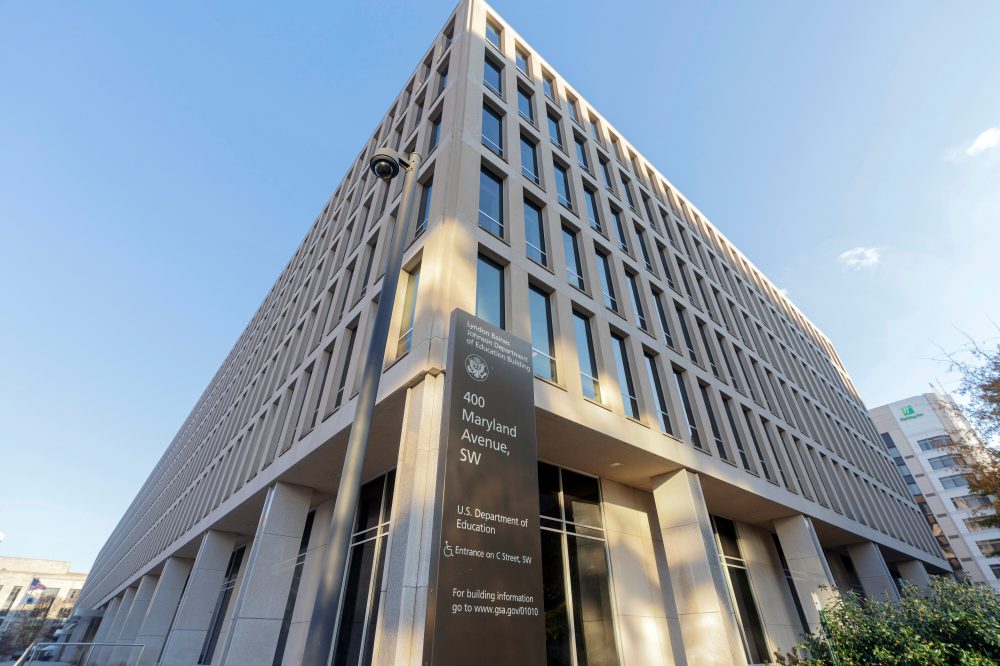

WASHINGTON — The U.S. Education Department has announced it will no longer treat school policies as discriminatory simply because they disproportionately harm a particular group of students. Going forward, officials say discrimination must be proven intentional — a significant departure from a standard that has guided civil rights enforcement for decades.
The change, announced Thursday, strips out disparate impact provisions from the department’s regulations connected to Title VI of the Civil Rights Act, a federal law that prohibits discrimination based on race or national origin.
One of the most prominent applications of the old standard involved school discipline. Nationwide data has consistently shown that Black students face higher rates of punishments that pull them out of the classroom — including suspensions, expulsions, and transfers to alternative schools.
Racial justice advocates have long pushed for reforms to reduce those disparities, but those efforts have met resistance from the Trump administration. A White House executive order issued last year directed the Education Department to issue new guidance on school discipline and called for a review of groups that had promoted policies aimed at closing discipline gaps.
In a written statement, the department argued that the disparate impact standard had pressured schools and universities into racial balancing out of fear of federal enforcement action.
“With these changes, schools will be empowered to address classroom issues without fearing the federal government will weaponize antidiscrimination laws,” said Assistant Secretary for Civil Rights Kimberly Richey.
Civil rights organizations fired back swiftly. A letter signed by 60 civil rights and education advocacy groups stressed that discrimination does not always come in explicit forms and that courts have upheld the disparate impact standard for many years.
“Today’s action has no basis in law or morality and is further evidence that this administration is determined to undermine our laws, abandon civil rights enforcement, and deny the existence of systemic discrimination,” the letter read.
The rule was published and went into effect immediately, bypassing the public comment process — an unusual move for a major regulatory change.
Michael Pillera, director of the Educational Opportunities Project at the Lawyers’ Committee for Civil Rights Under Law, said the change strips away a critical protection for students. He warned that school districts, knowing the Education Department will no longer investigate policies with discriminatory impacts, may feel freer to maintain those practices.
“The concept is you can’t create an unjust and unnecessary barrier that excludes folks on the basis of race. It has essentially the same impact as if you were doing it explicitly,” Pillera said. “That is what this is meant to stop.”
The Education Department’s move is part of a broader shift across the federal government. A White House executive order signed last April instructed all federal agencies to stop relying on disparate impact analysis when enforcing anti-discrimination laws. The Equal Employment Opportunity Commission, the Justice Department, and the Department of Energy all pulled back their disparate impact guidance last year.
In May, fair housing groups filed a lawsuit against the Consumer Financial Protection Bureau over similar changes to disparate impact rules, arguing the rollback would undo decades of lending protections for minority borrowers.
Advocates say the Education Department’s action compounds other recent changes that have weakened civil rights protections for students of color, including the downsizing and reorganization of the Office for Civil Rights and a shift toward investigating racial equity policies as potentially discriminatory against white students.
Hamida Labi, senior policy counsel at the NAACP Legal Defense Fund, said the ripple effects of these federal changes will be felt deeply in communities across the country.
“This is a part of the Trump administration’s broader overall attack on civil rights,” Labi said. “The schoolhouse doors in 2026 don’t have signs on it that say, ‘whites only,’ but discrimination is still very prevalent. Black students and other students of color are the ones who bear the brunt of that.”