
WASHINGTON — A federal court has issued an injunction preventing the Trump administration from implementing new Pentagon regulations that curtailed media access, following a successful legal challenge by The New York Times arguing the restrictions violated constitutional protections.
U.S. District Judge Paul Friedman in the nation’s capital ruled in favor of the publication on Friday, determining that the Defense Department’s credentialing requirements unlawfully targeted journalists who refused to accept the updated guidelines and left the Pentagon facility.
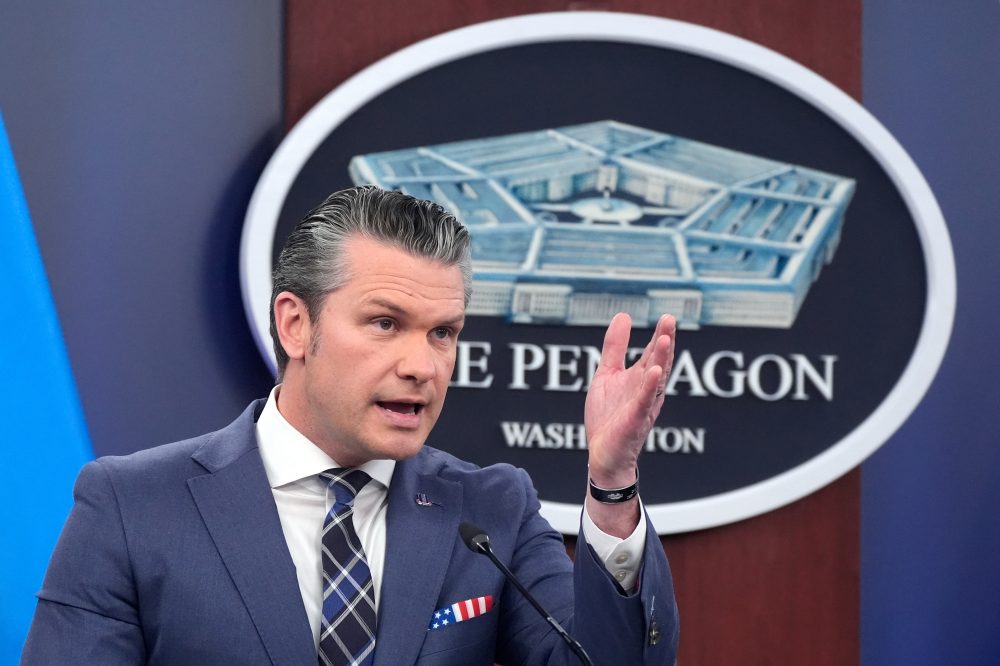
The newspaper filed suit against the Pentagon and Defense Secretary Pete Hegseth last December, contending the new credentialing system infringed upon reporters’ First Amendment free speech protections and Fifth Amendment due process guarantees.
Currently, the Pentagon’s press pool consists primarily of conservative media organizations that accepted the new requirements. News outlets that declined to follow the updated protocols, including The Associated Press, have maintained their military coverage from outside the building.
Judge Friedman, appointed during the Clinton administration, determined the regulations “fail to provide fair notice of what routine, lawful journalistic practices will result in the denial, suspension, or revocation” of Pentagon media credentials. His ruling found the policy breached both First and Fifth Amendment constitutional protections.
“Those who drafted the First Amendment believed that the nation’s security requires a free press and an informed people and that such security is endangered by governmental suppression of political speech. That principle has preserved the nation’s security for almost 250 years. It must not be abandoned now,” the judge wrote.
New York Times legal counsel Theodore Boutrous released a statement calling the court decision “a powerful rejection of the Pentagon’s effort to impede freedom of the press and the reporting of vital information to the American people during a time of war.”
Pentagon officials had not provided immediate response to requests for comment regarding the judicial decision.
Defense Department representatives have defended their approach as implementing “common sense” regulations designed to safeguard military operations from potential national security breaches.
“The goal of that process is to prevent those who pose a security risk from having broad access to American military headquarters,” government attorneys wrote.
Legal representatives for The Times maintain the policy was crafted to suppress critical media coverage of President Donald Trump’s administration.
“The First Amendment flatly prohibits the government from granting itself the unbridled power to restrict speech because the mere existence of such arbitrary authority can lead to self-censorship,” they wrote.
Judge Friedman acknowledged in his ruling that “national security must be protected, the security of our troops must be protected, and war plans must be protected.”
“But especially in light of the country’s recent incursion into Venezuela and its ongoing war with Iran, it is more important than ever that the public have access to information from a variety of perspectives about what its government is doing — so that the public can support government policies, if it wants to support them; protest, if it wants to protest; and decide based on full, complete, and open information who they are going to vote for in the next election,” Friedman wrote.
The judge cited “undisputed evidence” demonstrating the policy was structured to eliminate “disfavored journalists” while favoring those who are “on board and willing to serve” the government, constituting clear viewpoint discrimination.
“In sum, the Policy on its face makes any newsgathering and reporting not blessed by the Department a potential basis for the denial, suspension, or revocation of a journalist’s (credentials),” he wrote. “It provides no way for journalists to know how they may do their jobs without losing their credentials.”
Pentagon officials requested a one-week delay of the ruling to pursue an appeal, which Judge Friedman denied.
The court has mandated the Pentagon restore press credentials for seven New York Times reporters. However, Friedman specified his decision to invalidate the contested policy elements applies to “all regulated parties.” The Pentagon has one week to submit written documentation of its compliance with the order.