
BUNDIBUGYO, Uganda (AP) — Each time Ebola resurfaces, communities face a difficult divide: some of the sick head to the nearest medical facility, while others make their way to a traditional healer’s shrine — a choice that often proves fatal.
Across affected regions, many people interpret the onset of hemorrhagic fever as a spiritual problem rather than a medical one, turning to herbal remedies and prayer rather than hospital treatment. That dynamic is playing out right now in Congo, where the country’s seventeenth Ebola outbreak since 1976 is underway. The virus was first identified that year in the Congo Basin ecosystem.
Fifty years after its discovery, Ebola remains deeply misunderstood by many who fall ill, while religious figures have essentially become first responders in a life-or-death emergency. The current outbreak has claimed the lives of health workers who lacked protective equipment, as well as pastors and congregation members who gathered while the virus was actively spreading, according to humanitarian workers and others who spoke with The Associated Press.
The virus moves from person to person through close contact with the bodily fluids of someone who is sick or has died from the disease. The outbreak is particularly alarming in areas where residents are suspicious of health workers and refuse medical attention.
In Bunia, a town in Ituri province at the center of the outbreak, false information about how Ebola works has severely hampered containment efforts. The outbreak has killed at least 181 people so far. One piece of misinformation circulating in the area claims the virus is deliberately spread by people who drop magical charms attached to dollar bills into pit latrines.
“Some people still describe Ebola as something mysterious, spiritual, or brought by outsiders, rather than a disease that needs medical care,” said Onesphore Bangenza of the aid organization Mercy Corps, speaking from Bunia. “When people do not trust the health system, they often go first to traditional healers, faith leaders, or people they already know. The danger is that many only reach the hospital when they are already very sick.”
This outbreak is caused by the Bundibugyo virus, a rare Ebola strain for which no approved treatments or vaccines currently exist. It is unfolding in a remote part of Congo that is already dealing with armed rebel activity and population displacement. The disease adds another layer of suffering with symptoms that many compare to a modern-day plague.
Health officials confirmed the outbreak on May 15. Some specialists believe infections may have been occurring as far back as February, but early testing was focused on a different virus that also causes Ebola disease.
The World Health Organization quickly classified the situation as a public health emergency of international concern. The United States government has temporarily barred entry to non-U.S. passport holders who have recently traveled to Congo, Uganda, or South Sudan.
With so many community members seeking spiritual explanations for the illness, humanitarian organizations are calling on religious leaders to play an active role in fighting the outbreak.
A video circulating widely among residents of Ituri features a catechist leader from the Ebola hotspot of Mongbwalu who recently recovered from the disease and spoke openly about the choice that nearly cost him his life.
“I don’t usually rush to the hospital, so I decided to go to the fields,” said Deogratias Kasereka, who went on to explain that it was his children who ultimately persuaded him to seek medical care.
His symptoms included muscle weakness, headaches, and a high fever. In its later stages, Ebola can also cause both internal and external bleeding.
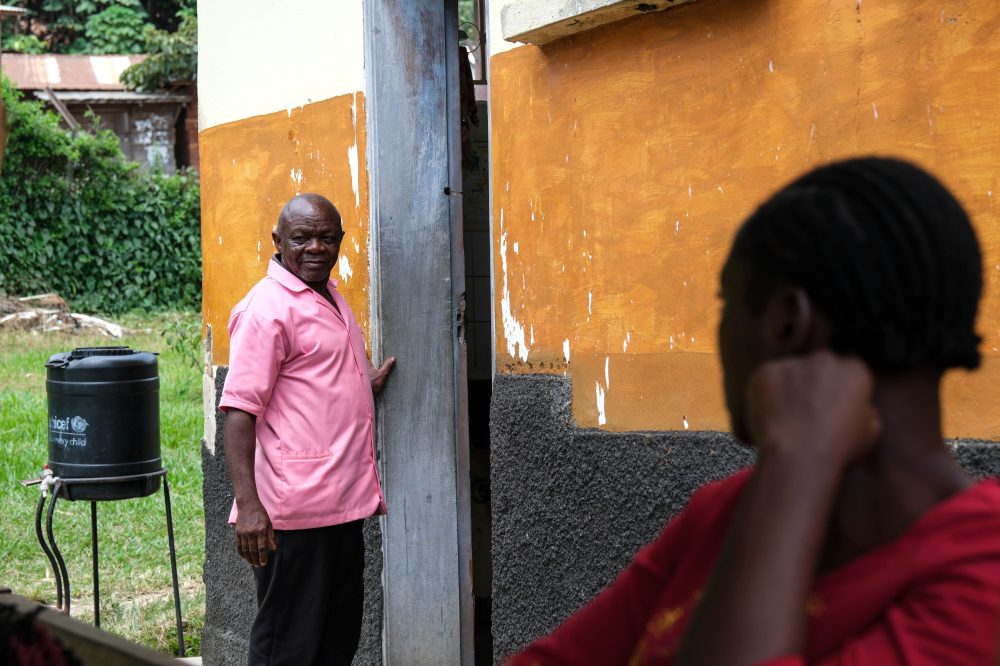
The symptoms are not only frightening but sometimes humiliating, which leads some patients to prefer the relative privacy of a traditional healer over a hospital setting, according to Vincent Isimbwa, an elder among Seventh-day Adventists in a Ugandan community that experienced the very first Bundibugyo outbreak back in 2007.
“They faced it so rough,” Isimbwa said. “The challenge with Ebola is that it is so bad that some people can believe that there are supernatural powers behind it.”
That 2007 outbreak killed at least 36 people and left lasting trauma on the community. Many residents also express regret that the Bundibugyo virus bears the name of their district — a mountainous home to roughly 200,000 people, most of whom work as farmers.
In Bundibugyo, a Ugandan nurse whose blood sample confirmed the 2007 outbreak recalled that his early symptoms puzzled medical staff. Some initially thought Samuel Kuule had food poisoning. While others in the community may have sought out traditional healers, Kuule was cared for in a small hospital room by a team of caregivers that included his pregnant wife, who never contracted the disease.
Kuule said his symptoms — peeling skin, bloodshot eyes, and a severe headache — were terrifying, yet they never shook his Seventh-day Adventist faith, as they might have for others who could have interpreted their illness as witchcraft.
“For those who are weak in faith, they may (think) that they are being bewitched,” he said. “Maybe they can believe it.”
Some community members recalled that one of the first victims of the 2007 outbreak was a woman carried down the mountains on a stretcher to a traditional healer’s shrine. That healer — an older man who survived the outbreak — lost three of his sons to Ebola. Speaking through his presumptive heir, Amon Balinda, the healer said he shifted from offering blessings and prayer to prescribing herbal remedies once he learned Ebola was spreading.
“For us in African traditional societies, in most cases when you fall sick and you go to the hospitals and they give you some injections and there is no improvement, there and then you switch to your neighbor, or anybody, and say maybe he is the one bewitching you,” he said. “Then you decide to go to the witch doctor.”
Scientists believe Ebola outbreaks typically begin when the virus jumps from an infected animal — such as a fruit bat — to a human host. These cross-species transmissions often occur when people handle or consume wild meat, according to experts.
The WHO is urging early testing and the isolation of anyone who may have been exposed in the current outbreak.
Both goals are difficult to achieve in communities with strong religious traditions, whether Christian or traditional. Many insist on following established burial customs, believing that departing from them could prevent the deceased from reaching the afterlife. Pastors whose standing depends on their ability to heal are expected to lay hands on the sick. Traditional healers face the same expectations.
These concerns prompted Ugandan President Yoweri Museveni to publicly criticize religious leaders in a recent televised address, telling them there was no need to physically touch the sick during an Ebola outbreak. He noted that the WHO chief, Tedros Adhanom Ghebreyesus, had told him during a visit to Uganda that many of the victims in Congo are people of faith.
“The pastors, the pastors, the pastors,” Museveni said, visibly frustrated. “The people of God — they are the ones who touch patients. … God is not deaf. You can pray without touching.”