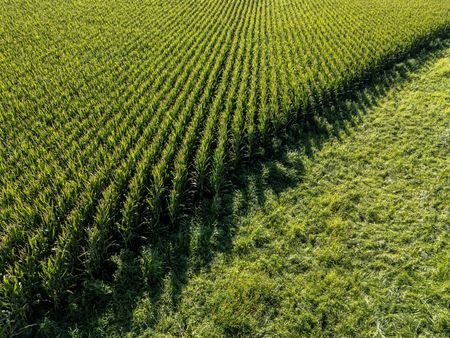

Agricultural producers in Delaware and surrounding areas are preparing for another challenging year as they finalize their 2026 planting strategies, with most planning to stick with corn despite ongoing financial pressures.
Following a record-breaking corn harvest in 2025 that flooded grain storage facilities and drove down commodity prices, farmers across the region face their fourth consecutive year of minimal profits or potential losses. Despite these challenges, corn remains the preferred choice for many growers.
Nebraska farmer Tim Gregerson explained the difficult economics facing producers today. “Right now, you absolutely cannot make money on beans,” Gregerson stated. “You can probably break even on corn, but you are going to have to have an extraordinary yield, or a price increase,” he added.
The preference for corn over soybeans stems from several market factors. While soybean production costs are lower, corn typically produces more than three times the grain volume per acre compared to soybeans. Additionally, soybeans face increased pressure from Brazil’s expanding production and ongoing trade uncertainties with China, the world’s largest soybean purchaser.
Agricultural economist Dan O’Brien from Kansas State University noted the political complexities affecting crop choices. “The soybean market is more of a political football than the corn market right now,” O’Brien observed.
Industry analysts surveyed by Reuters predict corn plantings will reach 94.9 million acres nationwide in 2026, representing a 4% decrease from 2025’s 89-year record high but still marking the second-largest corn acreage in 13 years. Soybean plantings are projected at 84.9 million acres, up from last year’s six-year low of 81 million acres.
The 2025 growing season produced the largest corn crop in U.S. history, totaling more than 17 billion bushels. However, strong export demand and robust usage by ethanol producers have helped stabilize prices somewhat.
Current December corn futures contracts, reflecting 2026 harvest expectations, are trading near $4.60 per bushel on the Chicago Board of Trade. This price level approaches break-even territory for most producers, even with rising input costs for seeds and fertilizers.
Frayne Olson, an agricultural economist at North Dakota State University, explained the market signals farmers are receiving. “The market is signaling, ‘We don’t want you to cut too many corn acres.’ We don’t need as many as last year, but with today’s demand base, it’s not like we need a huge drop,” Olson said.
The financial strain is forcing producers to make difficult operational decisions. Gregerson has stopped purchasing new equipment and reduced fertilizer applications. He’s also considering cutting herbicide treatments, though this would require constant field monitoring throughout the growing season.
“When you do that, you have live and die in a sprayer. You don’t go on vacation in the spring or the summer. You have got to be so timely on killing your weeds,” Gregerson explained.
In North Dakota, producer Phil Volk reports that area farmers are postponing equipment maintenance, eliminating optional seed treatments for soybeans, and concentrating their input investments on corn, which proved most profitable in 2025. Volk plans to increase his corn acreage by 15% this spring.
“They are going to cut as many expenses on soybeans (as possible) and pour all the juice to corn,” Volk said.
The challenging agricultural climate comes despite increased government assistance payments to farmers. Many producers continue struggling with solvency as they navigate volatile commodity markets and rising production expenses.
Trade relationships remain a critical factor in crop selection decisions. While China has purchased 12 million metric tons of U.S. soybeans since a late-October trade agreement, future export prospects remain uncertain ahead of planned diplomatic meetings between U.S. and Chinese leadership in April.
Meanwhile, Brazil’s record soybean harvest is expected to dominate global soy markets, adding additional competitive pressure for American producers.
These planting decisions, typically finalized during winter months, will ultimately determine grain production levels in the world’s largest corn exporting nation and second-largest soybean supplier.