
ARLINGTON, Va. — Delaware farmers will soon have access to cutting-edge artificial intelligence technology that can measure the nitrogen benefits from their cover crops, thanks to a major new conservation initiative.
The Nature Conservancy is leading this groundbreaking program that combines farmers, conservation organizations, agricultural businesses, universities, and government agencies to provide AI-powered data about cover crops and their nitrogen contributions to farming operations.
According to The Nature Conservancy, this initiative targets a significant information gap regarding nitrogen management for corn production that follows diverse cover crop plantings.
The organization anticipates the program will eliminate the need for 3 million pounds of nitrogen fertilizer that farmers would typically need to buy and spread on their land.
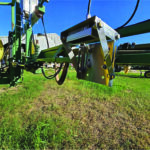
The technology relies on PlantMap3D, a system created by North Carolina State University. Agricultural service companies Willard Agri-Service and GROWMARK FS will install specialized cameras on spray equipment to capture detailed photographs of cover crops during spring herbicide treatments. Artificial intelligence software trained to recognize different cover crop species will then process these images.
The outcome will be detailed maps showing exactly where nitrogen from cover crops is present across each acre, giving farmers precise information to adjust their fertilizer applications and apply nutrients only where necessary.
“AI-powered camera systems are how we can finally bring precision and sustainable agriculture together,” explained Chris Reberg-Horton, a North Carolina State University professor working on the project. “We hope this program will help farmers reduce their costs while also improving environmental outcomes.”
This four-year conservation effort plans to encompass 150,000 acres throughout the Chesapeake Bay watershed, including 37,500 acres in Delaware, 92,500 acres in Maryland, and 20,000 acres in Pennsylvania. Implementation begins this spring growing season.
The USDA contributed $16 million in federal support through the USDA-NRCS Regional Conservation Partnership Program, while partner organizations provided an additional $11.3 million in funding.
The initiative seeks to help farmers better understand and modify their actual nitrogen requirements while preserving crop yields, preventing greenhouse gas emissions, and enhancing soil and water quality throughout the Chesapeake Bay watershed, according to The Nature Conservancy’s announcement.
“Knowledge is power, and this program arms TNC and our agricultural partners with unparalleled data that will boost biodiversity, water quality and farmers’ bottom lines in the Chesapeake Bay watershed, a globally important conservation landscape,” stated Amy Jacobs, Chesapeake Bay Director at The Nature Conservancy. “We are thrilled to be working with partners that are leaders in their field to deploy this new technology to support farmers with solutions that are both good for the environment and their businesses.”
Delaware farmers interested in joining this program can submit applications through February 28. Requirements and application details include:
• Location: Delaware farmers in all counties are eligible (New Castle, Kent, Sussex); Maryland farmers must be in Baltimore, Caroline, Carroll, Cecil, Dorchester, Harford, Kent, Talbot, Queen Anne’s or Wicomico counties; Pennsylvania farmers must be in Adams, Cumberland or York counties.
• Farms must currently use multi-species cover crops containing legumes, with plans to terminate them this spring (Spring 2026).
• To apply, contact Amanda Bunn, Applied Agricultural Conservationist at The Nature Conservancy, at [email protected].
Part of the project funding will assist Pennsylvania farmers in establishing mixed-species cover crops on their properties, since Pennsylvania lacks a centralized cover crop program similar to those in Maryland and Delaware, where cover crop adoption is more widespread.
“In partnership with the Pennsylvania and Delaware Maryland 4R Alliances, TNC, agribusinesses, and government agencies have been working to ensure that every application of fertilizer is guided by the 4Rs of nutrient management: using the right source, at the right time, in the right place, and applying the right amount,” Jacobs added.