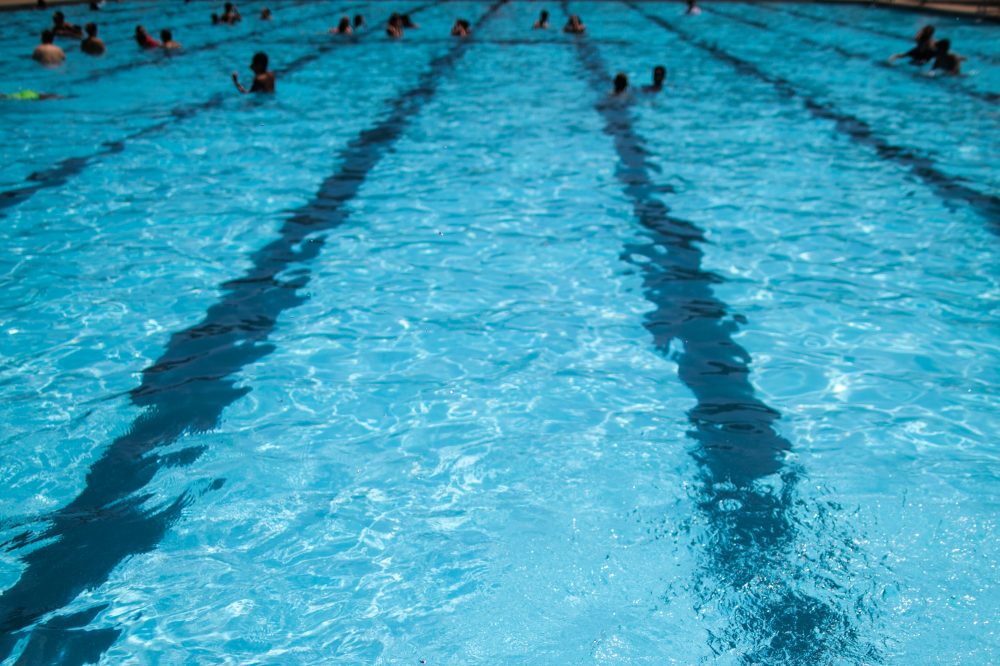

Medical experts are raising serious concerns about a troubling rise in child drowning deaths across the United States, warning that every second counts when a child ends up in the water.
“When drowning occurs, seconds matter,” said Dr. Rohit Shenoi, the lead author of a recent American Academy of Pediatrics alert. “Quick rescue and resuscitation can mean the difference between life, death and lifelong disability.”
Each year, between 4,000 and 5,000 Americans drown. The majority are adults who lose their lives in natural bodies of water like lakes, ponds, or the ocean. But for children, the risk is disproportionately severe — drowning is the number one cause of death among kids ages 1 to 4, and ranks among the top killers of children ages 5 to 14. The drowning rate is higher for white children in the younger age group, while Black, American Indian, and Alaska Native children face significantly higher rates in the older group.
Very young children sometimes drown in bathtubs, but swimming pools are the most common setting for these tragedies.
One grocery chain has made drowning prevention part of its identity. Inside several locations of the Stew Leonard’s grocery stores — known for a lively, theme-park-like atmosphere complete with animatronic characters like a dancing banana and singing avocados — shoppers will find an unexpected figure: a life-jacketed duck named Stewie who sings about water safety.
The duck honors the memory of the son of the chain’s chief executive. The boy was just 21 months old when he drowned during a family vacation on the island of St. Martin in 1989.
More than a dozen family members and friends had gathered for a birthday party celebrating Stewie’s older sister, who was turning 3. His father was outside hanging balloons while his mother was inside baking a cake.
“I saw Stewie outside and I assumed that he was watching him,” said his mother, Kim, explaining that other relatives were also nearby at the pool.
“We never communicated with each other; ‘You’ve got him?’” said Kim Leonard, now 65. “When everyone’s watching, nobody’s watching.”
“There were a couple of balloons floating in the water,” recalled Stew Leonard, now 71. “And you know after a few minutes, sort of everybody was like, ‘Where’s Stewie?’ Unfortunately I was the one who found him. He was face down in the pool.”
The couple responded to their son’s death by creating a foundation dedicated to funding children’s swimming lessons and raising awareness about drowning prevention.
For decades, the numbers were moving in the right direction. Unintentional child drowning deaths dropped from roughly 2,000 per year in the 1980s to fewer than 1,000 annually by the early 2000s, driven by public awareness efforts, greater access to swimming lessons, and new pool fencing laws. Between 2000 and 2019, health officials recorded a 38% decline.
Then the trend reversed. Child drowning deaths rose from 756 in 2019 to 865 in 2024 — the most recent year with complete data available. The majority of those deaths involved children under the age of 5. The child drowning death rate also ticked upward, from 1.1 to 1.2 per 100,000 children.
Experts point to several causes for the reversal. The COVID-19 pandemic disrupted swimming lessons and lifeguard training programs, contributing to a national shortage of lifeguards. At the same time, some data indicates an increase in swimming pool construction and a rise in unsupervised swimming, according to Tessa Clemens, the CDC Foundation’s senior director for drowning prevention initiatives.
Kym Roberts, who studies drowning trends in Australia — where child drowning deaths have remained level or declined in recent years — noted that “drowning in young children is often associated with falls into water and lapses in direct supervision.”
There may be some encouraging news on the horizon: early data suggests child drowning deaths dropped last year. However, Clemens cautioned that it remains unclear whether this signals a lasting trend, and the numbers are still higher than they were before the pandemic.
New technology has also entered the picture, with immersion alarms now available that sound an alert when a child’s wristband goes underwater. Manufacturers stress, however, that these devices are meant to serve as a backup warning system — not a primary safety measure.
The federal Centers for Disease Control and Prevention laid off Clemens and the rest of its drowning prevention team last year. Despite that setback, organizations including the CDC Foundation and the American Academy of Pediatrics continue to issue guidance and support prevention efforts.
A CDC Foundation program has provided basic swimming and water safety training to more than 35,000 students since 2024. The initiative operates in 11 states with elevated drowning rates: Alaska, Arizona, California, Florida, Georgia, Hawaii, Louisiana, Michigan, New York, Oklahoma, and Texas.
The American Academy of Pediatrics points to research showing that policies save lives — including lifeguard standards, life jacket regulations, and requirements that pools be fully enclosed by fences with self-closing, self-latching gates.
Stew Leonard stresses two priorities above all: swimming lessons for young children, and complete, undivided attention from caregivers whenever kids are near water.
“I mean, I love ballet. I love karate. I love tennis lessons. You know, all the activities that kids can do,” he said. “But the only thing you can do to save their life is put them in swimming lessons.”
His foundation has funded more than 250,000 swimming lessons for children and opened two swimming schools, including one directly across the street from the company’s headquarters in Norwalk, Connecticut.
He also had a pointed message for caregivers: “Shut your cellphones off when you’re around the pool, watching the kids. Don’t sit there reading a book. Don’t sit there talking to your friends, neglecting your child that’s near the water.”
“This happens in the blink of an eye,” he added.