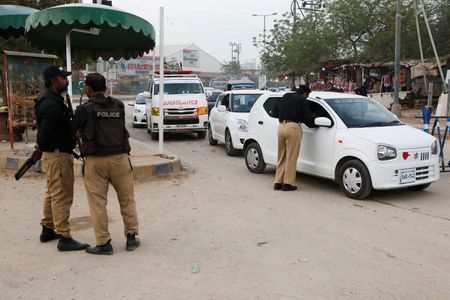

Military confrontations between Pakistani forces and Afghanistan’s Taliban government stretched into Saturday, marking the third consecutive day of warfare as global leaders expressed mounting alarm and urged immediate diplomatic intervention.
On Friday, Pakistani military strikes targeted Taliban installations and outposts across multiple locations, reaching as far as Kabul and Kandahar in what represents one of Pakistan’s most significant cross-border operations into Afghanistan in recent years, according to military sources.
The Pakistani government maintains that Taliban authorities are providing sanctuary to Tehreek-e-Taliban Pakistan (TTP) fighters, whom they accuse of conducting insurgent operations within Pakistan’s borders – allegations the Taliban government firmly rejects.
Pakistani officials characterized their military response as retaliation for cross-border attacks, while Afghan authorities condemned the strikes as violations of national sovereignty. Taliban leaders indicated willingness for negotiations but cautioned that expanded hostilities would bring severe repercussions.
The escalating violence threatens to spark extended warfare along the challenging 2,600-kilometer border region separating the two nations.
International mediation efforts accelerated Friday evening when Afghanistan announced that Foreign Minister Amir Khan Muttaqi conducted phone discussions with Saudi Prince Faisal bin Farhan regarding tension reduction and maintaining diplomatic communications.
European Union representatives demanded both nations step back from confrontation and pursue peaceful negotiations, while United Nations officials pressed for immediate cessation of military actions.
Russian authorities encouraged both governments to suspend fighting and resume diplomatic talks, as Chinese officials expressed serious concern and offered assistance in resolving tensions.
American officials backed Pakistan’s authority to defend against Taliban aggression, according to State Department representatives.
A U.S. government source, requesting anonymity, indicated Washington does not consider Pakistan the instigator in recent developments and acknowledged Islamabad faces significant security pressures, while expressing hopes the crisis won’t intensify.
Combat operations persisted throughout Friday night along border areas.
Pakistani military sources reported their ongoing mission, code-named “Ghazab Lil Haq,” had eliminated numerous Taliban positions and facilities across multiple sectors, though Reuters could not confirm these assertions.
Both militaries have claimed substantial enemy casualties with contradictory figures that remain unverified. Pakistani officials reported 12 of their personnel and 274 Taliban fighters killed, while Taliban sources claimed 13 of their forces and 55 Pakistani soldiers died.
Taliban deputy spokesperson Hamdullah Fitrat stated that 19 civilians perished and 26 sustained injuries in Khost and Paktika provinces, claims Reuters could not substantiate.
Pakistani Defense Minister Khawaja Muhammad Asif declared “our cup of patience has overflowed” and characterized the hostilities as “open war,” threatening retaliation against additional attacks.
Taliban Interior Minister Sirajuddin Haqqani warned during remarks in Khost province that the conflict “will be very costly,” noting that Afghan military units had not yet deployed beyond currently engaged forces.
Haqqani emphasized the Taliban had overcome “the world, not through technology, but through unity and solidarity,” achieved through “great patience and perseverance” rather than advanced military equipment.
Pakistan maintains vastly superior military resources compared to Afghanistan, fielding hundreds of thousands of active personnel and advanced aviation capabilities.
By comparison, Taliban forces lack conventional air power and depend primarily on lightweight arms and infantry units.
Nevertheless, the Islamist movement brings extensive combat experience from twenty years of guerrilla warfare against U.S.-led coalition forces before regaining control in 2021.