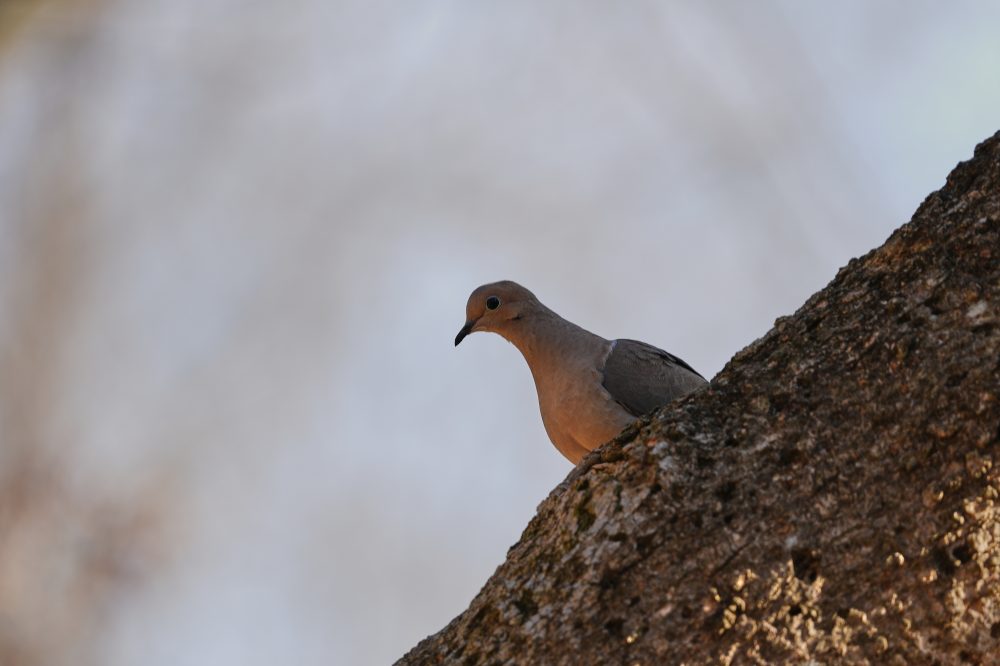

WASHINGTON — The skies above North America are becoming increasingly empty, with bird populations dropping at an accelerating rate due to intensive farming methods and rising global temperatures, according to groundbreaking research published this week.
Scientists examined 261 bird species and discovered that nearly half experienced statistically meaningful population declines, with more than half of those losses speeding up since 1987. The research, featured in Thursday’s Science journal, represents the first comprehensive analysis to track not just overall bird numbers but also the pace of decline and its underlying causes.
“Not only are we losing birds, we are losing them faster and faster from year to year,” explained study co-author Marta Jarzyna, an ecologist at Ohio State University. “Except for forest birds, almost every group is doing poorly. So we need to ask ourselves a question. How do we protect these groups of birds?”
Ironically, the species experiencing the most rapid decline include those with historically robust populations — European starlings, American crows, grackles, and house sparrows — meaning they’re not immediately facing extinction, noted lead researcher Francois Leroy, also from Ohio State.
“The thing is that species extinction, they start with a decline in abundance,” Leroy explained, warning that “the decline is somehow maybe giving a preview of what it could lead to in terms of species extinction.”
Cornell University conservation expert Kenneth Rosenberg, who didn’t participate in this research, emphasized the broader implications of these findings. The species showing the steepest declines “are often considered pests or ‘trash birds,’ but if our environment cannot support healthy populations of these extreme generalists and extremely adaptable species that are tolerant of humans, then that is a very strong indicator that the environment is also toxic to humans and all other life.”
Previous research by Rosenberg in 2019 documented that North America lost 3 billion birds since 1970, though that study didn’t examine changing decline rates or contributing factors.
The current study identified the Mid-Atlantic region, Midwest, and California as areas experiencing the most severe acceleration in bird population losses. Geographic patterns played a crucial role in understanding the causes behind these rapid declines.
While population decreases were more pronounced in southern regions — which researchers linked statistically to higher temperatures from human-driven climate change — the acceleration of these losses showed different geographic patterns tied to agricultural practices.
“In regions where temperatures increase the most, we are seeing strongest declines in populations,” Jarzyna observed. “On the other hand, the acceleration of those declines, that’s mostly driven by agricultural practices.”
The research team found statistical connections between faster decline rates and heavy fertilizer usage, extensive pesticide application, and large amounts of cropland, according to Leroy. While the scientists couldn’t definitively prove causation, the data strongly suggests agriculture plays a significant role.
“The stronger the agriculture, the faster we will lose birds,” Leroy stated.
Jarzyna noted a “strong interaction” between climate change and agricultural practices in their combined impact on bird populations.
“We found that agricultural intensification causes stronger accelerations of decline in regions where climate warmed the most,” Jarzyna said.
McGill University wildlife expert David Bird, who wasn’t involved in the study, praised the research methodology and findings. He explained that growing human populations drive agricultural intensification, converting bird habitats to farmland, while modern machinery destroys nests and eggs, and single-crop farming reduces food and nesting opportunities.
“The biggest impact of agricultural intensity though is our war on insects. Numerous recent studies have shown that insect populations in many places throughout the world, including the U.S., have crashed by well over 40 percent,” Bird wrote. “Many of the birds in this new study showing population declines depend heavily on insects for food.”
Richard Gregory, who heads monitoring conservation science at University College London and wasn’t part of the research team, called the study both “alarming” and “sobering” due to the massive scale of losses and the patterns of accelerating decline.
Cornell University ornithologist Andrew Farnsworth, also not involved in the research, said the findings demonstrate the need for people to modify their lifestyles to address human-caused warming and reduce agricultural intensity, crop monocultures, and widespread chemical use.
“Here is why this study is especially important. Birds do a lot for humans,” McGill’s Bird emphasized. “They feed us, clothe us, eat pests, pollinate our plants and crops, and warn us about impending environmental disasters. With their songs, colors, and variety, birds enrich our lives… and recent studies show that their immediate presence actually increases our well-being and happiness and can even prolong our lives! To me, a world without birds is simply unfathomable.”