
As the World Cup prepares to begin throughout North America, several host cities are using the 39-day soccer tournament as motivation to tackle homelessness issues.
Atlanta stands out among these cities, having unveiled an ambitious initiative last summer to eliminate encampments and street sleeping in the downtown area before the tournament begins. The program, known as Downtown Rising, reports providing housing for close to 500 individuals. Despite this progress, people still waiting outside downtown shelters demonstrate that these efforts haven’t reached all those in need.
Both Dallas and Seattle have implemented focused programs, with Dallas broadening efforts to provide housing for homeless individuals in the downtown area, while Seattle announced plans to secure housing for hundreds of people.
An Associated Press survey revealed that the majority of the 16 host cities, including New York, Boston, Philadelphia, Miami, Houston, Toronto, and Vancouver, British Columbia, are depending on current programs to tackle homelessness — most without additional World Cup-related funding.
Historically, numerous cities have viewed homeless populations as unsightly problems to eliminate before major sporting and political gatherings.
“These events provide a choice for communities,” said Ann Oliva, CEO of the National Alliance to End Homelessness. “They can do the easy thing and sweep people out of encampments and into jails or other neighborhoods, or they can do the harder work that will benefit everyone in the community — housed or unhoused.”
Key findings from the AP’s investigation include:
Atlanta has secured $185 million through state and city funding, corporate grants and other contributions toward their $235 million target, planning to house 3,900 people throughout the city by next year. Though the program has assisted hundreds in obtaining housing, some remain doubtful about its meaningful impact on downtown homelessness.
Dallas implemented a $30 million initiative starting in 2024 that decreased downtown street sleeping by 87% and moved approximately 2,000 people into permanent housing. However, advocates have condemned police methods that involved zip-tying and removing individuals who refused to leave after encampment clearances.
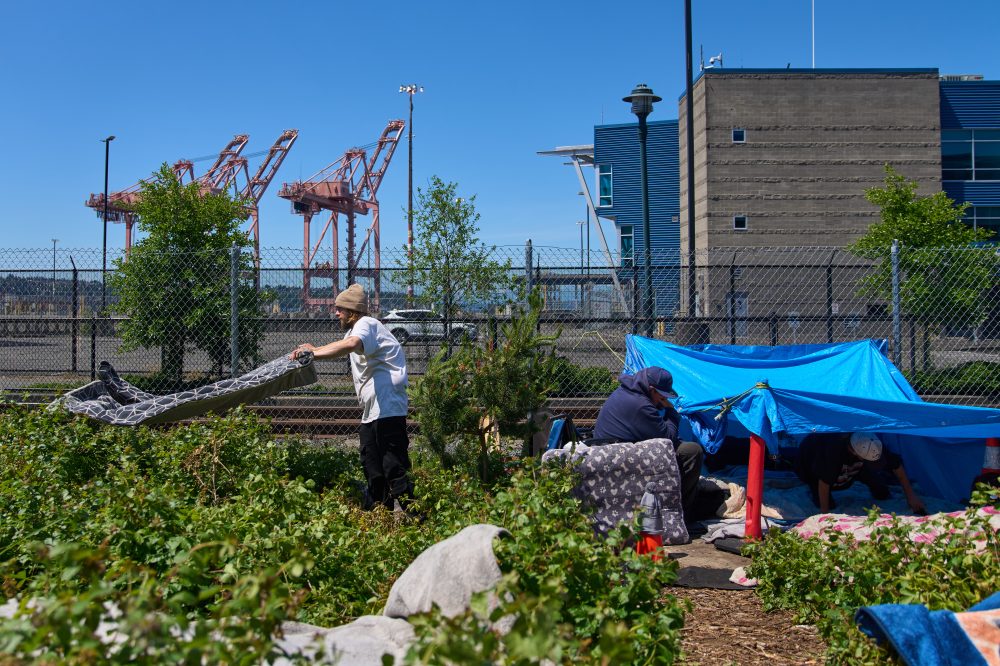
Seattle workers are completing 75 tiny homes equipped with beds, space heaters and air conditioners, set to open just before the World Cup. This housing significantly falls short of Mayor Katie Wilson’s ambitious goal to provide 500 new shelter units by the tournament’s start. A homeless individual camping near the stadium told reporters he was unaware of the city’s housing initiatives and worried that he and his wife would be forced to relocate.
In Inglewood, California, home to the city’s stadium near Los Angeles, Mayor James Butts told the AP, “There’s no homeless in Inglewood,” citing low local numbers. Yet, less than 2 miles from the stadium and beyond Inglewood’s boundaries, nonprofit organizations continue providing assistance, and LA County’s Homeless Services and Housing Department has arranged motel accommodations before the matches.
In Canada, Toronto and Vancouver indicated they would utilize their existing comprehensive services offering thousands of shelter beds and temporary housing units, plus outreach for street residents. Vancouver has also established centers for match viewing. Both cities stated no intentions to relocate homeless individuals before the games.
Nevertheless, advocates reported scattered incidents of crackdowns on homeless people, including transit police at Toronto’s main train station forcibly removing people from restrooms and verbally mistreating them last month. The city’s statement to the AP didn’t directly address these allegations but emphasized it doesn’t “tolerate, ignore, or condone discrimination or harassment.”
In Vancouver, hundreds of activists protested increased security measures ahead of the World Cup. One woman reported that the van she shared with her pet rabbits was towed last month.
This city is “sweeping the homeless people under the carpet for FIFA to make it look like a clean city,” she said.