
American tap water typically meets safety standards and maintains high quality, though taste and delivery can differ between locations and buildings.
This variability has driven significant growth in the water filtration industry, with products ranging from basic pitcher systems to expensive reverse osmosis units costing thousands. However, environmental specialists indicate that most American homes don’t require comprehensive water treatment systems. The key challenge lies in determining whether filtration is actually necessary for your situation.
Through the Safe Drinking Water Act, the EPA establishes health requirements for over 90 contaminants found in public water supplies, covering both chemical substances and microorganisms. Water companies use disinfectants such as chlorine to eliminate dangerous bacteria before distribution to residences. The majority of public water systems comply with these regulations, making tap water safe for most Americans.
Gregory Pierce, who directs the Human Right to Water Solutions Lab at UCLA, explained his perspective: “Unless you’re experiencing health impacts, you’ve got a notice from your water system or there’s a credible media story saying your water is unsafe, you shouldn’t feel the need to get a filter. You’re still welcome to because it might make your water taste a little bit better, but it shouldn’t be considered necessary to have a water filter in 90-plus percent of the United States.”
Understanding how to evaluate local water conditions, determining when water analysis is worthwhile, and selecting appropriate filtration that addresses specific issues without overspending are important considerations.
Begin by reviewing your water company’s yearly Consumer Confidence Report, which outlines discovered contaminants and compliance with federal requirements. These documents are usually found on municipal or utility websites, though you can also reach out to your provider for additional information. Water companies typically maintain responsibility only until water reaches private property lines, so quality can differ between buildings.
These reports may provide sufficient confidence for many consumers. However, some individuals seek additional assurance, particularly in aging structures.
Jess Goddard, who serves as chief science officer at environmental testing company SimpleLab, recommends: “You should probably test your water to identify if you have a risk that you need to treat.”
Private wells operate under different maintenance and safety requirements since they fall outside Safe Drinking Water Act regulations, making homeowners responsible for monitoring. The EPA provides resources specifically for private well owners.
Testing packages can range from several hundred dollars upward, depending on the contaminants being screened.
The testing process typically involves ordering a kit, collecting water samples according to provided instructions, and mailing them to certified laboratories. Labs examine samples for specific contaminants including PFAS chemicals, microplastics, metals, and disinfection byproducts before issuing reports.
When testing identifies serious problems, Pierce suggests contacting your water utility or state environmental agency for assistance. High contaminant levels may require solutions beyond household filtration, such as temporary bottled water use or infrastructure improvements like pipe replacement.
If issues don’t warrant such extreme measures, filtration systems may provide benefits.
Consumers should identify their filtration objectives and understand different filter capabilities. The EPA notes that many household uses like toilet flushing and laundry don’t require treatment, so cooking and drinking water are primary considerations.
Most filters receive certifications from nonprofit organizations NSF and the American National Standards Institute. Standard NSF/ANSI certifications include 42 for taste or odor issues, 53 for health-related effects, and 401 for emerging contaminants. An NSF database enables searches by product name or targeted compounds.
Sydney Evans, a science analyst who directed a water filter testing initiative at the Environmental Working Group, noted: “Not every filter is good for everything. And even if there’s a filter out there that does absolutely everything, maybe you don’t need it.”
Many families choose filters not for safety reasons, but to address taste or smell issues, “which really do impact people’s enjoyment or sense of confidence in their drinking water,” according to Goddard.
For these situations, basic carbon filters, including many standard pitcher models, can prove effective. Activated carbon removes chlorine and compounds created when chlorine interacts with natural organic materials in water.
These compounds are normal in treated water, explained Samantha Bear, a senior research analyst at SimpleLab. Even when levels remain below federal thresholds, she and her team filter their tap water not because it’s dangerous, but to minimize long-term exposure.
Even residents in areas without significant PFAS contamination may worry about these substances. PFAS stands for perfluoroalkyl and polyfluoroalkyl substances. The EPA states that filters can lower PFAS concentrations but encourages people to contact local water providers first when concerns arise.
Lead represents another contaminant that often exceeds filtration system capabilities. Since the EPA maintains that no lead level is safe, people may choose filters even where alternative water sources or pipe replacement aren’t recommended.
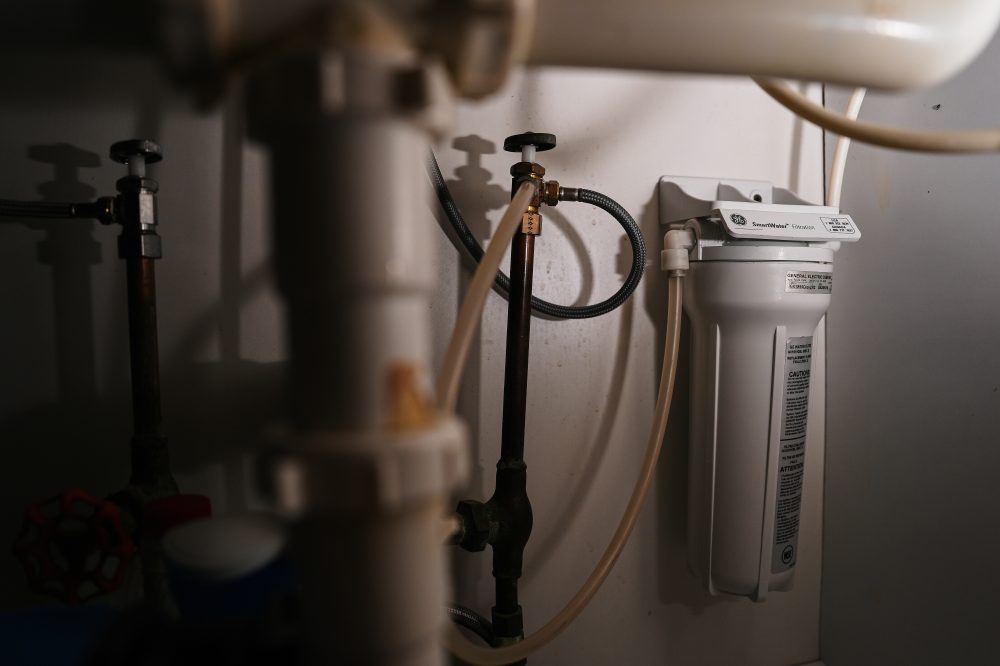
Pitcher systems, refrigerator filters, and faucet-mounted units process water at point of use locations where you drink or cook. Under-sink systems and reverse osmosis units also treat water at taps but may need professional installation.
Whole-house systems process water at entry points, filtering water before distribution throughout homes. These systems typically cost more and often require professional installation. They’re generally used for issues affecting all household water like hardness, elevated iron levels, or certain volatile compounds, rather than contaminants originating in plumbing.
Besides filtration systems, some homes use water softeners to reduce mineral presence that can accumulate and harm plumbing, though these systems don’t eliminate most other contaminants. Distillation systems, which boil water and condense steam to remove minerals and some contaminants, are less common in residential settings.
Most households don’t require whole-house or distillation systems unless addressing specific, documented problems, experts indicated.
Proper maintenance and filter replacement also matters, since cartridges can lose effectiveness or permit bacterial growth without following manufacturer replacement schedules.
“Otherwise they may do more harm than good,” warned Pierce, the UCLA researcher.