Tag: space

  • NOAA’s SWFO-L1 Space Weather Observatory Nears Final Orbital Position, Systems Reported Healthy

    NOAA’s SWFO-L1 Space Weather Observatory Nears Final Orbital Position, Systems Reported Healthy

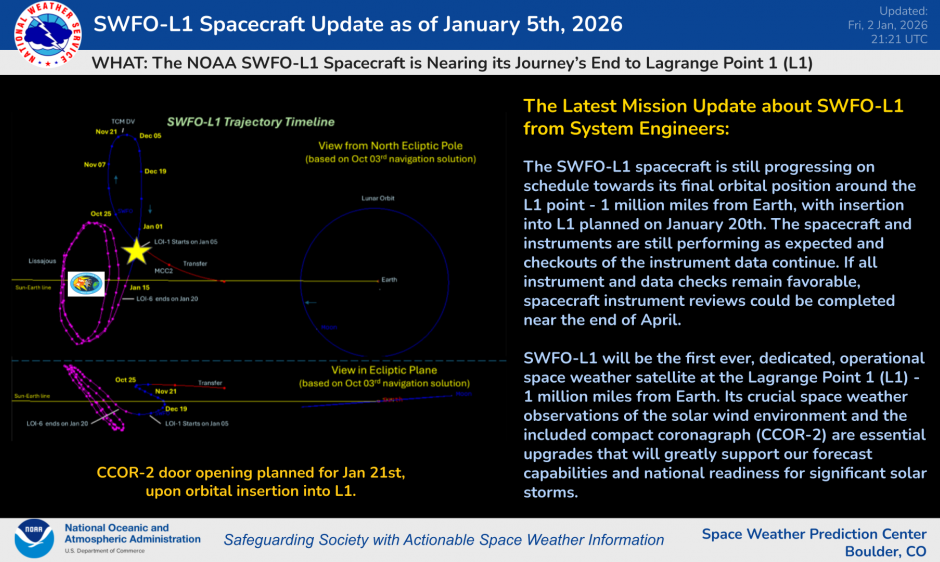
    January 6, 2026 — NOAA’s Space Weather Follow On-L1 (SWFO-L1) spacecraft is nearing the final stages of its journey to Lagrange Point 1 (L1), with orbital insertion scheduled for January 20, 2026. According to a NOAA Space Weather Prediction Center update, the mission’s instrumentation is performing as expected, and engineers report that the spacecraft continues to meet operational milestones as it approaches its final orbit.

    SWFO-L1 was launched on September 24, 2025 aboard a SpaceX Falcon 9 rocket and is designed to provide continuous, real-time monitoring of the solar environment upstream of Earth. Upon reaching the gravitationally stable L1 point—approximately 1 million miles from Earth—it will be renamed SOLAR-1 (Space weather Observations at L1 to Advance Readiness-1).

    Mission engineers are preparing to open the compact coronagraph (CCOR-2) door on January 21, the day after insertion, which will allow NOAA to begin evaluating imagery performance from this key instrument. Early tests of other sensor suites have already shown promising results.

    SWFO-L1 carries several advanced instruments, including a magnetometer, solar wind plasma sensor (SWiPS), and a supra-thermal ion sensor (STIS). These instruments will provide vital measurements of solar wind speed, density, and magnetic field characteristics that drive space weather disturbances. Previous early data from these sensors have already contributed to improved monitoring of solar wind and geomagnetic conditions during space weather events.

    Once commissioned in spring 2026, SOLAR-1’s data is expected to significantly enhance NOAA’s ability to forecast and issue warnings for geomagnetic storms, solar flares, and interplanetary shocks that can impact critical infrastructure such as power grids, communications, navigation systems, and satellites.

    With more accurate and timely space weather data, NOAA officials say the mission will help protect both space-based and ground-based technological systems that are increasingly vulnerable to solar activity—ensuring better preparedness for potentially disruptive solar events.
  • G3 Geomagnetic Storm Watch: Northern Lights Possible Over Delmarva Thursday Night

    G3 Geomagnetic Storm Watch: Northern Lights Possible Over Delmarva Thursday Night

    The northern lights may make a rare appearance over Delmarva Thursday night into early Friday, thanks to a strong solar storm heading toward Earth.

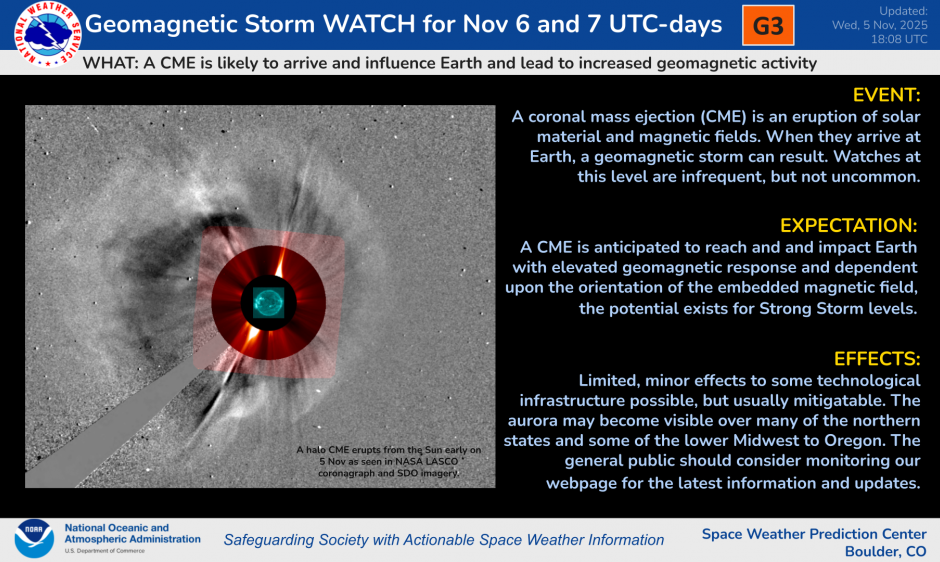
    NOAA’s Space Weather Prediction Center has issued a G3 (Strong) Geomagnetic Storm Watch for November 6–7 UTC days, which covers Thursday evening into Friday morning here on the East Coast. This watch was issued because a coronal mass ejection (CME) a large burst of solar material and magnetic energy is currently racing toward Earth.

    When could we see it?

    Forecasters say the CME may arrive as early as Thursday evening or as late as Friday morning. If it hits with the right strength and magnetic alignment, the northern lights could become visible much farther south than usual, including here on the Delmarva Peninsula.

    What determines visibility?

    Even with a strong watch issued, scientists won’t know the full impact until the CME reaches a spacecraft positioned between the Sun and Earth at Lagrange Point 1, about 1 million miles away. Once that happens, experts will get real-time details on:

    • The CME’s actual speed
    • The strength of its magnetic field
    • The direction that magnetic field is pointing

    If the magnetic field is oriented opposite Earth’s, auroras can dramatically intensify.

    What we might see

    If geomagnetic conditions strengthen after the initial arrival:

    • Faint auroras may appear low on the northern horizon
    • Colors could include greens, pinks, or purples
    • Views improve in dark locations away from city lights

    Cloud cover and bright moonlight can limit visibility, so clear skies will be key.

    Any risks?

    NOAA notes only minor impacts are expected to technology and infrastructure, things like temporary radio or GPS disruptions. For the general public, this is mainly an exciting sky-watching opportunity.


    How to watch

    • Look north toward the horizon
    • Find a dark, open area away from streetlights
    • Check NOAA’s aurora forecasts for real-time updates

    We’ll continue to follow this solar storm closely and update you if aurora visibility increases for our region. Stay tuned, we could be in for a beautiful show from the Sun!

  • Delmarva Skywatchers: Comet Lemmon to Illuminate The Skies Northwest After Sunset

    Delmarva Skywatchers: Comet Lemmon to Illuminate The Skies Northwest After Sunset

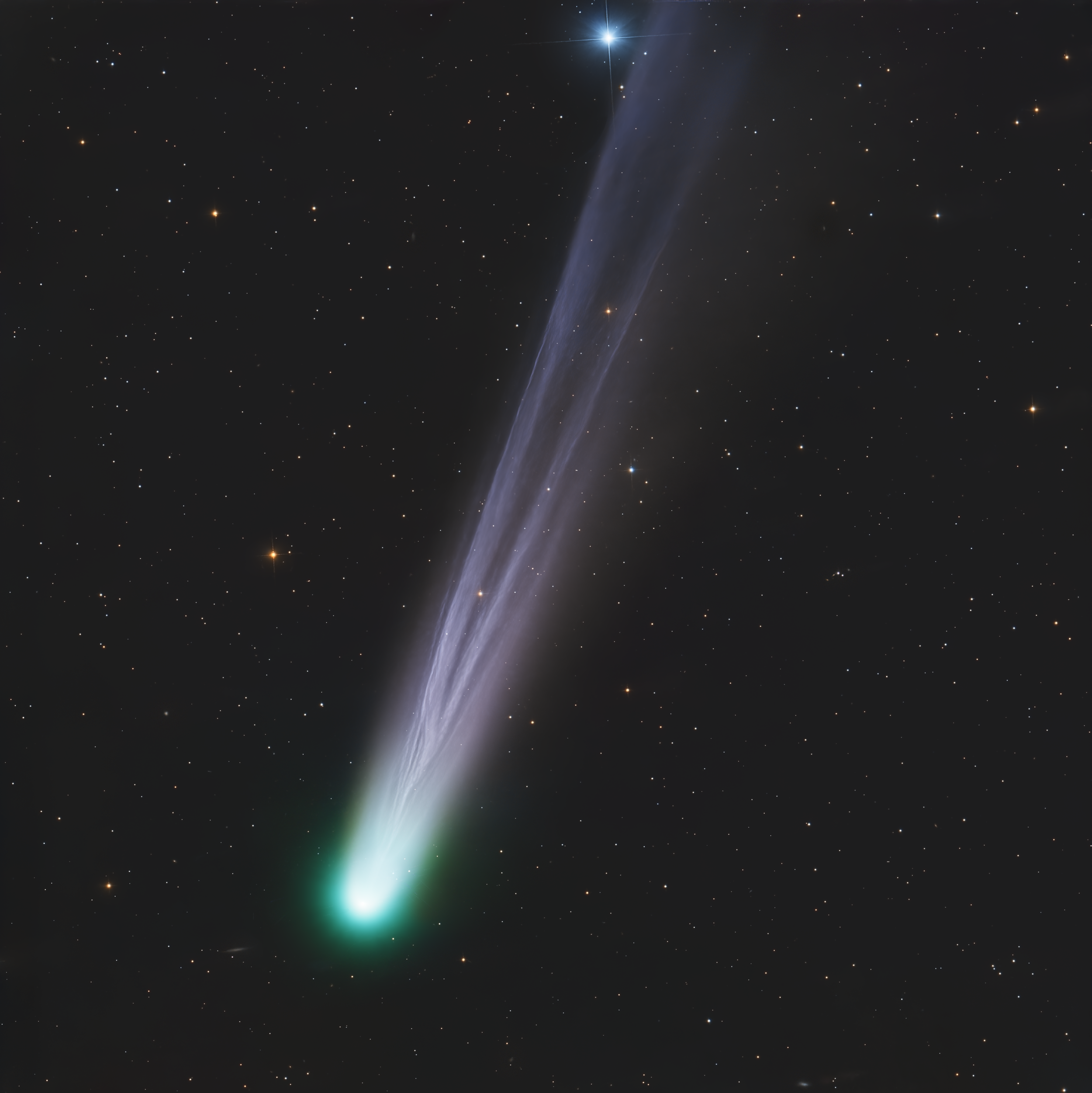
    If you’re looking for a celestial treat in the coming nights, keep your eyes on the northwest sky just after sunset — Comet C/2025 A6 (Lemmon) is making its way into evening visibility, and Delmarva is in a prime spot to catch it.

    Discovered in January 2025 by the Mount Lemmon Survey, Comet Lemmon has become one of the most talked-about comets of the year. Originally expected to remain faint, the comet has surprised astronomers by brightening faster than forecast.

    Lemmon will make its closest approach to Earth on October 21, 2025, at about 0.596 AU (roughly 89 million km) away. It reaches perihelion (its closest point to the Sun) on November 8, 2025.

    Currently, the comet is estimated to be around magnitude 5 to 6, making it not quite prominent to the naked eye in most skies — but definitely within reach of binoculars or small telescopes in a dark location. Some predictions are more optimistic, suggesting it might brighten to magnitude ~4 around late October, which would make it more noticeable even to unaided eyes under favorable conditions.

    One of the exciting features now is that Lemmon will be about 42° away from the Sun during its closest approach — meaning it should be visible low in the western sky about an hour after sunset. The star Arcturus (in the constellation Boötes) and the double star Izar are being cited as useful reference points to help find it.

    By mid-to-late October, it should shift from being a dawn object into the evening sky, which greatly improves viewing opportunities for observers who aren’t night-owls.

    Photo: Chuck Ayoub

    What Delmarva Observers Need to Know

    When & Where to Look

    • The comet will be best seen just after nautical twilight, once the sky is fairly dark but before it sinks too close to the horizon.
    • Start scanning the northwest to west-northwest horizon — the comet will be relatively low.
    • Use a low horizon (free from trees or buildings) to maximize your view.
    • For timing, expect prime viewing windows roughly 30 to 90 minutes after sunset, though this will shift slightly each evening as the comet’s position changes.

    Sky Conditions

    • Fortunately, forecasts suggest clear skies are likely — ideal conditions for comet watching.
    • Minimize light pollution: try to get to a darker spot (away from street lights or heavy urban glow) to boost your chances of spotting Lemmon.
    • Use apps like Stellarium, SkySafari, or TheSkyLive to track its nightly position against the background stars.

    Tips for Viewing & Photographing Comet Lemmon

    For Visual Observers (Binoculars / Telescopes)

    • Start with 10×50 or 10×60 binoculars — these will likely pick up the comet before your eyes can.
    • Use a low-power eyepiece in a telescope (e.g. 40–60×) to get a wider field of view and more context.
    • Try averted vision (looking slightly to the side of the comet) — your peripheral vision is better at detecting faint objects.
    • Take time to let your eyes acclimate to the dark (about 20–30 minutes).

    For Astrophotographers

    • Use a wide-field lens (e.g. 24–50 mm) on a full-frame or APS-C camera, or a modest focal length if using a telescope.
    • Aim for exposures of 30–120 seconds, depending on your tracking capability and sky conditions.
    • Use a star-track mount or equatorial tracker if possible, so you can lengthen exposure without the stars trailing.
    • Stack multiple frames in post-processing to improve signal-to-noise and bring out tail structure.
    • Consider taking sequences over several nights — the comet’s movement will allow you to show motion or tail changes.
    • Use dark, flat, and bias calibration frames to clean up the images.

    Caution / Tips

    • Because the comet is low, atmospheric extinction and scattering may dim it. Give yourself some margin.
    • Watch for fog, haze, or humidity near the horizon, which could obscure faint details.
    • Be patient — the comet’s brightness can vary, and fainter comets often require persistence and ideal conditions.

    Why This Is a Special Opportunity

    Comet Lemmon is not a frequently returning visitor — its inbound orbital period is estimated at about 1,350 years, and after its perihelion passage that period may shorten to around 1,150 years. It last visited Earth’s vicinity more than a millennium ago, and this may be our best chance to glimpse it in our lifetime.

    If conditions hold, Lemmon could become the brightest comet of 2025 — a rare and beautiful sight in the autumn sky.

    So, clear your evening calendar (or at least a half hour), pack your binoculars or camera gear, and look northwest after sunset over Delmarva. With luck and clear skies, you may witness a stunning visitor from the outer reaches of the solar system.

  • Tonight: NASA’s TOMEX+ Mission Could Light Up Delmarva Skies

    Tonight: NASA’s TOMEX+ Mission Could Light Up Delmarva Skies

    Launch Window: Between 10 p.m. tonight and 3 a.m. tomorrow
    Mission: TOMEX+ (Turbulent Oxygen Mixing Experiment Plus)

    What to Expect

    NASA is launching a series of three sounding rockets from Wallops Island tonight as part of the TOMEX+ mission. Its goal? To explore the mesopause, one of the most turbulent atmospheric zones located around 56 miles above Earth, where a layer of atomic sodium resides—created by tiny meteors burning up in the sky

    • First Two Rockets: They’ll release vibrant vapor tracers—colorful clouds that you can photograph from the ground. These tracers help scientists visualize and map wind patterns in the upper atmosphere.
    • Third Rocket (Launching ~5 Minutes Later): Equipped with a lidar instrument, it will emit short pulses of light to precisely measure atmospheric density and movement over time

    Together, this trio offers scientists a uniquely detailed 3D view of turbulence at the edge of space, shedding light on high-altitude cloud formation, satellite drag, and even atmospheric behavior on other planets

    Viewing Tips for Region Residents

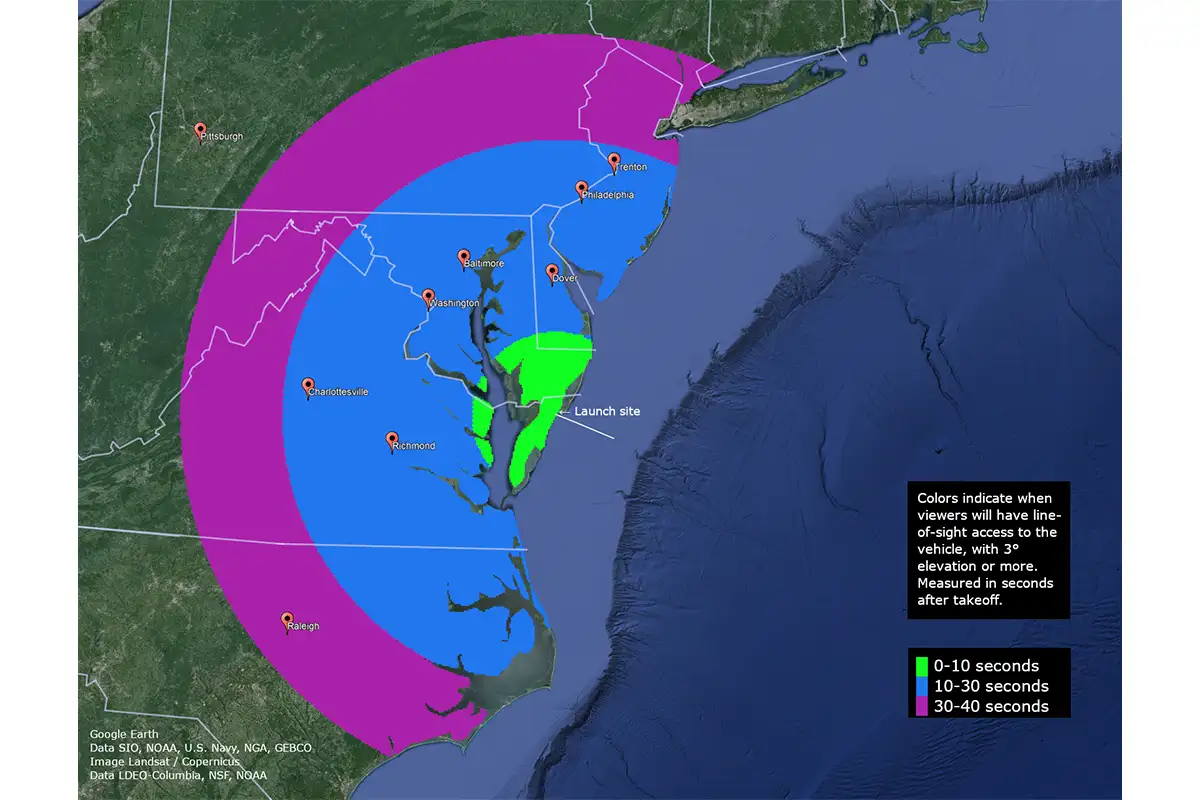
    If the skies are clear, residents of Northern Virginia and nearby metro areas like Washington, D.C., Baltimore, and Philadelphia may catch the spectacle:

    • Within 10 seconds of launch: expect visibility closest to Wallops Island.
    • In Northern Virginia and similar zones, visibility may occur 10–30 seconds after liftoff.
    • Western Virginia and parts of Pennsylvania may see it 30–40 seconds post-launch

    A livestream and live mission updates will begin approximately five minutes before each rocket’s launch on NASA’s social media channels


  • Lyrid Meteor Shower 2025: When, Where, and How to See This Spring’s Fiery Display

    Lyrid Meteor Shower 2025: When, Where, and How to See This Spring’s Fiery Display

    Get ready for a springtime sky show! The Lyrid meteor shower is set to peak this week, offering skywatchers across the Northern Hemisphere a chance to witness one of the oldest and most reliable annual meteor showers.

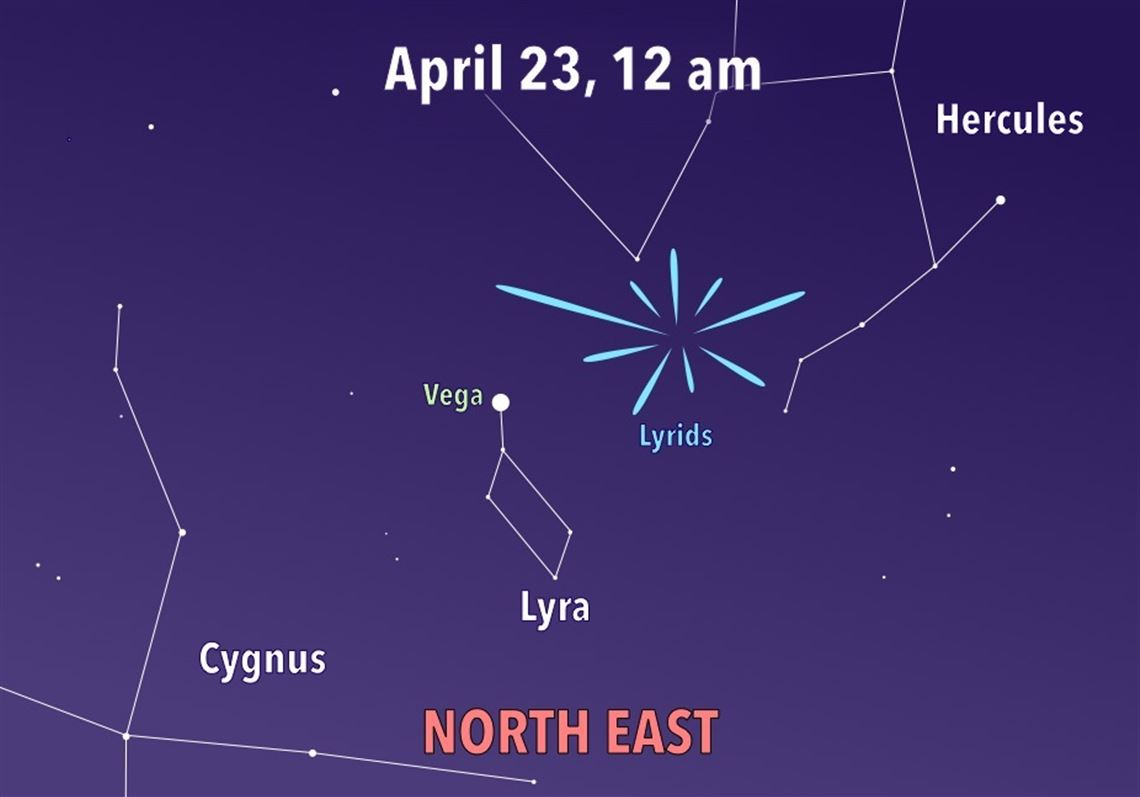
    The 2025 Lyrids will reach their peak overnight Tuesday, April 22 into the early morning hours of Wednesday, April 23. Under dark, clear skies, observers can expect to see 15 to 20 meteors per hour, with some leaving glowing, persistent trails that hang in the sky for seconds at a time.

    When and Where to Watch

    The best time to look for Lyrids is after midnight local time, when the radiant point—located near the bright star Vega in the constellation Lyra—climbs higher into the sky. The higher Vega rises, the better your chances of spotting meteors streaking across the heavens.

    For the best view, head to a dark-sky location away from city lights. Lie back, give your eyes 20 to 30 minutes to adjust, and look up—you don’t need a telescope or binoculars.

    Will the Moon Interfere?

    The first quarter Moon sets before the peak viewing window opens, which means conditions will be much darker in the early morning hours of April 23—perfect for spotting fainter meteors that might otherwise be washed out by moonlight.

    A Shower with Deep Roots

    The Lyrids are caused by debris from Comet C/1861 G1 Thatcher, which last passed through the inner solar system over 160 years ago. First recorded by Chinese astronomers in 687 BCE, the Lyrids have been lighting up Earth’s skies for over 2,700 years, earning a reputation for occasional bursts of intense activity.

    While this year’s shower isn’t expected to produce an outburst, unexpected surges can’t be ruled out—making every meteor you catch feel just a little more magical.

    Weather Outlook

    As always, the weather plays a key role in visibility. Clear skies will offer the best opportunity to catch the show, so check your local forecast in advance. For those under clouds, several astronomy organizations will host livestreams of the event.

    Tips for the Best Experience

    • Go dark: Find a spot away from artificial light for the best contrast.
    • Get comfy: A reclining chair or blanket will help you look straight up without neck strain.
    • Dress warmly: Even in April, nighttime temperatures can dip, especially in open areas.
    • Be patient: It can take time for your eyes to adjust and for the meteors to start putting on a show.

    The Lyrid meteor shower may not be the year’s flashiest, but its long history and crisp spring timing make it a fan favorite. Make a wish—or a dozen—and enjoy one of nature’s best nighttime displays.

  • GOES-19 Goes Operational Across The US

    GOES-19 Goes Operational Across The US

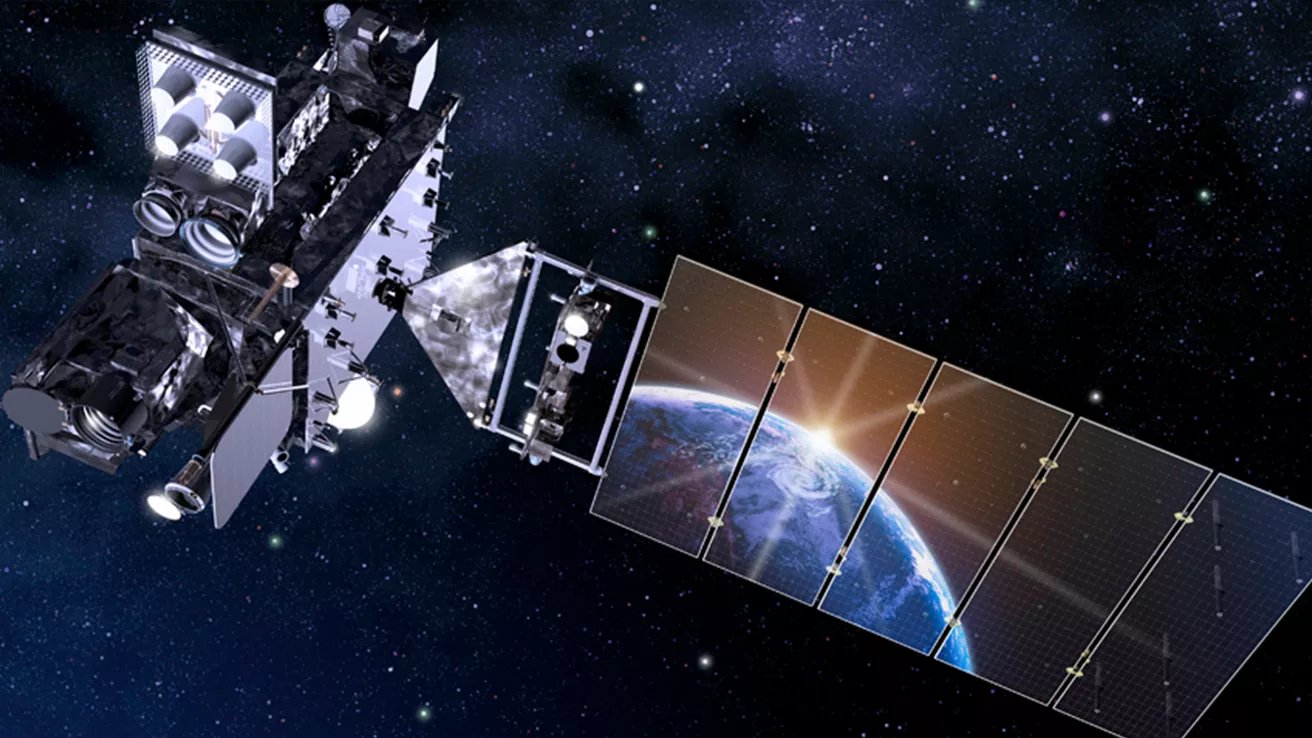
    A very exciting day in the weather world. Welcome to GOES-19, the brand new updated satellite covering the United States is now in operation!

    GOES-19, formerly known as GOES-U, introduces significant enhancements over its predecessor, GOES-16, particularly in space weather monitoring. A notable addition is the Compact Coronagraph-1 (CCOR-1), the nation’s first operational coronagraph, designed to observe the solar corona and detect coronal mass ejections (CMEs). This instrument provides imagery within 30 minutes of acquisition, a substantial improvement over the previous system’s eight-hour delay, thereby enhancing space weather forecasting capabilities.

    GOES-19 continues the high-temporal resolution imaging capabilities introduced with the GOES-R series but maintains and enhances rapid updates for weather monitoring.

    • Full-Disk Updates Every 5 Minutes: GOES-19 can scan the entire Earth every five minutes, providing near-real-time global coverage to track weather systems, storms, and environmental changes. This allows meteorologists to monitor rapidly developing weather patterns with high-frequency updates.
    • Mesoscale Region Updates Every 30 Seconds: In high-impact weather events, GOES-19 can focus on two mesoscale sectors simultaneously, delivering images every 30 seconds per region. This is crucial for tracking severe thunderstorms, hurricanes, wildfires, and other rapidly evolving atmospheric phenomena, offering nearly real-time updates for forecasters.

    These rapid update capabilities, combined with its advanced instruments like the Advanced Baseline Imager (ABI) and Geostationary Lightning Mapper (GLM), allow GOES-19 to provide even more detailed and timely data, improving short-term forecasting, severe weather warnings, and disaster response efforts.

    ​GOES-19, previously known as GOES-U, introduces several advanced features over its predecessor, GOES-16, enhancing both Earth and space weather monitoring capabilities.​

    Enhanced Magnetometer (GMAG): GOES-19 is equipped with an upgraded magnetometer that offers improved measurements of Earth’s magnetic field compared to earlier GOES-R series satellites.

    These advancements position GOES-19 as a critical asset in NOAA’s mission to provide timely and accurate environmental data, ensuring improved forecasting and preparedness for both terrestrial and space weather phenomena.

  • Astronomers discover rapid radio bursts from distant ‘dead’ galaxy

    Astronomers discover rapid radio bursts from distant ‘dead’ galaxy

    Astronomers have detected fast-repeating radio bursts from a distant “dead” galaxy, challenging existing theories about such phenomena. The discovery was reported on January 24, 2025.

    Fast radio bursts (FRBs) are intense, millisecond-long pulses of radio waves originating from distant galaxies. While some FRBs have been traced to galaxies with active star formation, the recent detection from a quiescent, or “dead,” galaxy—where star formation has ceased—raises questions about the mechanisms producing these bursts.

    The identification of repeating FRBs from a galaxy previously thought incapable of generating such high-energy phenomena suggests that our understanding of the environments and conditions necessary for FRB production is incomplete. Further research is needed to determine the exact sources and processes responsible for these enigmatic signals.

    The latest bursts were traced to a massive elliptical galaxy located billions of light-years away. This galaxy is classified as “quiescent,” meaning it has not formed new stars for billions of years. Such galaxies are typically considered inhospitable to the high-energy processes thought to produce FRBs, making the discovery especially surprising.

    The Case for Magnetars
    Magnetars, formed from the collapse of massive stars, are leading candidates for the origin of repeating FRBs. Their intense magnetic fields can produce bursts of radio waves during periods of instability. In active galaxies, magnetars can arise from recent supernova explosions, but their presence in a quiescent galaxy indicates they might also be formed by less conventional means, such as mergers of old stellar remnants.

    This finding underscores the importance of continued observation and study of FRBs across diverse galactic environments to unravel the mysteries surrounding their origins.

  • New Brilliant Comet On The Way? Comet C/2024 S1

    New Brilliant Comet On The Way? Comet C/2024 S1

    Comet C/2024 S1 (ATLAS): What to Expect

    Comet C/2024 S1 (ATLAS) is an exciting new discovery in the sky. Found on September 27, 2024, by the ATLAS system, this comet belongs to a special group called Kreutz sungrazers. These comets come incredibly close to the Sun, sometimes within 1.5 million kilometers (900,000 miles)—about the size of the Sun itself.

    While sungrazers have given us spectacular shows in the past, like the Great Comet of 1882 and Ikeya-Seki in 1965, C/2024 S1’s fate remains uncertain. Though originally anticipated to brighten as it nears the Sun, recent data suggest it might be disintegrating.

    Why Is This Comet Special?

    Kreutz sungrazers are particularly intriguing because their close encounters with the Sun make them unpredictable. Sometimes, they light up the sky as they heat up, but other times they disintegrate before they get the chance. C/2024 S1 is set to reach its closest point (perihelion) to the Sun on October 28, 2024. If it survives, there’s potential for it to become bright, possibly visible near sunrise. However, the latest observations show it’s starting to fade, suggesting it may break apart.

    What Does This Mean for Observers?

    If the comet brightens, it will only be for a short time around October 28, but it might be visible near sunrise in the Southern Hemisphere. On October 30 and 31, a thin waning crescent Moon will be in the sky, close to where the comet is expected to appear. While there’s still a chance for a brief show, the disintegration could mean we see very little.

    Warning: Never look directly at the Sun, especially with binoculars or telescopes, as it can cause severe and permanent eye damage.

    Monitoring Efforts

    The Comet Chasers project, involving schoolchildren and research telescopes, has been helping to observe the comet. Scientists are gathering more data to confirm whether C/2024 S1 will survive or disintegrate. Although the early signs are discouraging, comets can change rapidly, and astronomers are keeping a close watch.

    Stay tuned as we learn more in the days leading up to its closest approach!

  • Delmarva’s New Astronomical Hosting Event In Several Years!

    Delmarva’s New Astronomical Hosting Event In Several Years!

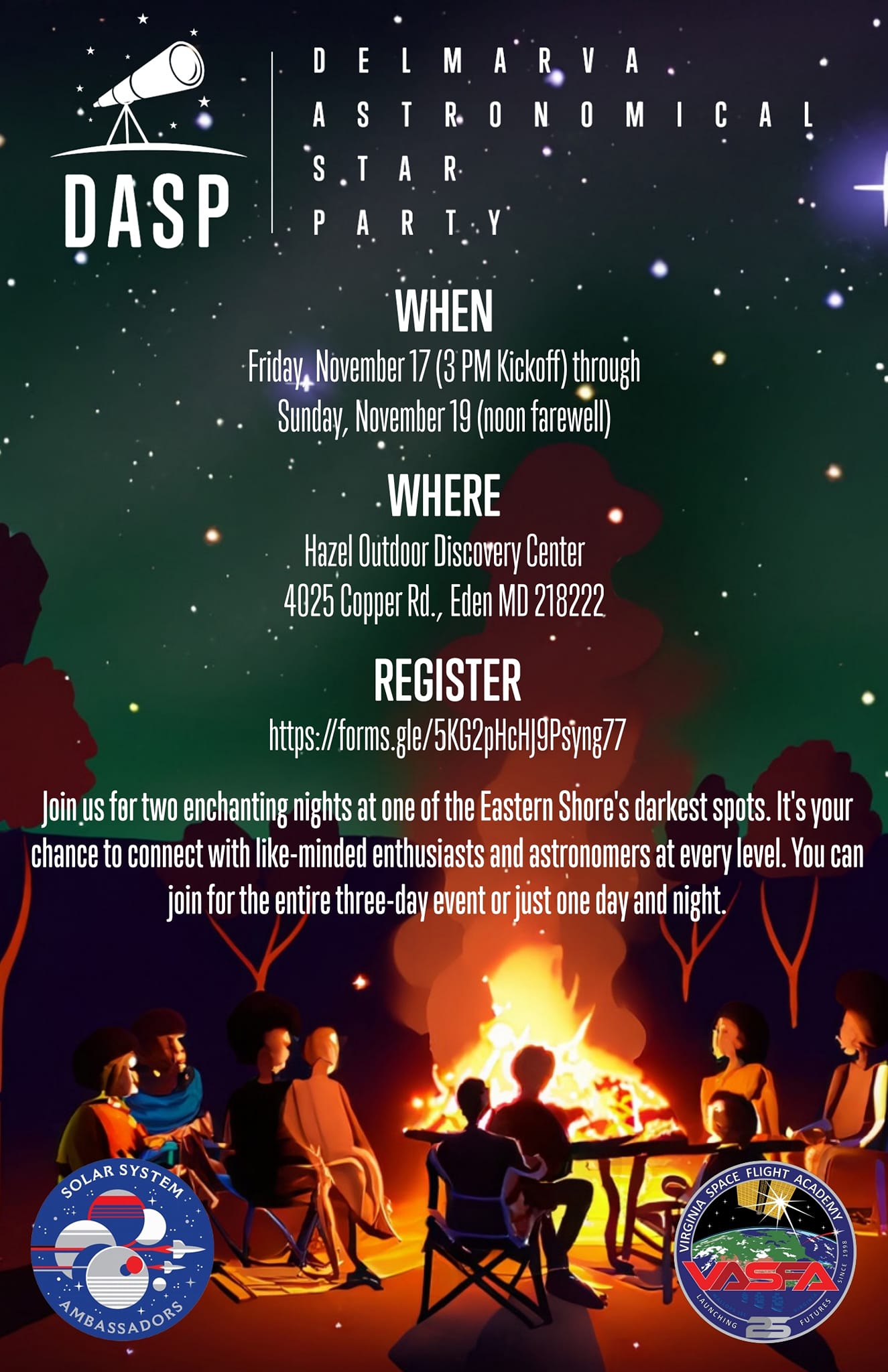
    We are thrilled to invite you to an unforgettable celestial adventure at the Delmarva Astronomical Star Party (DASP), where the night sky comes alive in all its splendor. Join us for two enchanting nights at one of the Eastern Shore’s darkest spots. Whether you’re a seasoned astronomer or just starting your journey into stargazing, this event aims to create a community to support, nurture, and share all levels of astronomical passion. It’s your chance to connect with like-minded enthusiasts and astronomers at every level. You can join for the entire three-day event or just one day and night.

    Registration Link –> https://docs.google.com/forms/d/e/1FAIpQLSc7W5ag5Kl_xN0tiCTkmzBBhepzC3oo8Ei0xlW7QwSlZgDDSQ/viewform

    Event Highlights: ✨ Starry Nights: Immerse yourself in the mesmerizing beauty of the night sky at a location known for its minimal light pollution. Witness the Milky Way, constellations, planets, and deep-sky objects.

    🌌 Expert Guidance: Our experienced astronomers and host, Hunter Outten, along with our many guests, will provide insightful tips and techniques to enhance your telescope observations. Learn, share, and connect with fellow stargazers.

    🔥 Nightly Campfires: Gather around the campfire to share stories, trade tips, and bond with fellow attendees. Roasting marshmallows is highly encouraged!

    👨‍👩‍👧‍👦 Family-Friendly Activities: Bring the whole family to engage with fun and educational astronomy-themed activities making this a perfect event for stargazers of all ages. Self-guided astro-crafts like star finders will be available in the lodge. Daytime activities, including hiking trails, are available on the grounds.

    🏕️ Overnight Camping: Pitch your tent or set up your trailer/camper on the grounds to fully immerse yourself in the night sky. Fall asleep under a canopy of stars and awaken to the beauty of the cosmos.

    Don’t miss this opportunity to share your passion for the cosmos with kindred spirits! Mark your calendar, pack your telescope and camping gear, and prepare for a weekend of celestial wonder at the inaugural Delmarva Astronomical Star Party. We look forward to seeing you there! Clear skies and best wishes,

    Hunter Outten & Kim Check

    Event Organizers

    *Grounds Access Code Required to enter Hazel Property. Provided upon reservation confirmation.

  • Rocket Lab Coming To Delmarva! | Opens 250 Jobs To The Wallops Island Region.

    Rocket Lab Coming To Delmarva! | Opens 250 Jobs To The Wallops Island Region.

    NASA’s Wallops Flight Facility in Virginia was selected by Rocket Lab as the home for its new Neutron rocket’s first launch pad and production facility, further supporting the growth of commercial space capabilities in Virginia.

    The Neutron Production Complex will include a rocket production, assembly, and integration facility just outside the NASA gate to Wallops Island.  The dedicated launch pad will be located on the south end of Wallops Island.

    “NASA’s only owned and operated launch range at Wallops Flight Facility supports small- and medium-class orbital rocket launches, which are key contributors to a growing space economy,” said Wallops Director David Pierce. “The high-tech jobs created by this move are vital for the Wallops region, and I’m excited we’re bringing more of the agency’s expertise to Rocket Lab, Virginia Space, and all our partners on the Eastern Shore.”

    Rocket Lab has targeted the first Neutron medium class orbital rocket launch for no earlier than 2024.

    “We congratulate the Commonwealth of Virginia, Virginia Space and Accomack County working with Rocket Lab to bring this next chapter of commercial space operations to Wallops,” said Pierce. “We welcome Rocket Lab’s expansion on the Shore and look forward to working with them in bringing this new launch capability to reality.”

    Wallops is a multi-user/multi-tenant facility in a geographic location ideal for supporting satellite tracking and commanding, military operations and training, scientific investigations, technology development and testing, as well as commercial aerospace. The facility’s diverse mission sets and on-site partners, including the U.S. Navy, National Oceanic and Atmospheric Administration, the United States Coast Guard, and Virginia Space’s Mid-Atlantic Regional Spaceport, are a model for leveraging and optimizing multi-organizational capabilities and support services.

    A robust and competitive low-Earth orbit economy is vital to continued progress in space. The United States is committed to encouraging and facilitating the growth of the U.S. commercial space sector that supports America’s needs, is globally competitive, and advances U.S. leadership in the next generation of new markets and innovation-driven entrepreneurship. NASA has developed a long-term vision to achieve this goal where, one day, NASA will become one of many customers in low-Earth orbit. This plan builds on, uses the capabilities of, and applies the lessons learned from decades of work and experience with commercial companies.

    Written By: Keith Koehler
    NASA’s Wallops Flight Facility, Virginia