Launch Window: Between 10 p.m. tonight and 3 a.m. tomorrow Mission: TOMEX+ (Turbulent Oxygen Mixing Experiment Plus)
What to Expect
NASA is launching a series of three sounding rockets from Wallops Island tonight as part of the TOMEX+ mission. Its goal? To explore the mesopause, one of the most turbulent atmospheric zones located around 56 miles above Earth, where a layer of atomic sodium resides—created by tiny meteors burning up in the sky
First Two Rockets: They’ll release vibrant vapor tracers—colorful clouds that you can photograph from the ground. These tracers help scientists visualize and map wind patterns in the upper atmosphere.
Third Rocket (Launching ~5 Minutes Later): Equipped with a lidar instrument, it will emit short pulses of light to precisely measure atmospheric density and movement over time
Together, this trio offers scientists a uniquely detailed 3D view of turbulence at the edge of space, shedding light on high-altitude cloud formation, satellite drag, and even atmospheric behavior on other planets
Viewing Tips for Region Residents
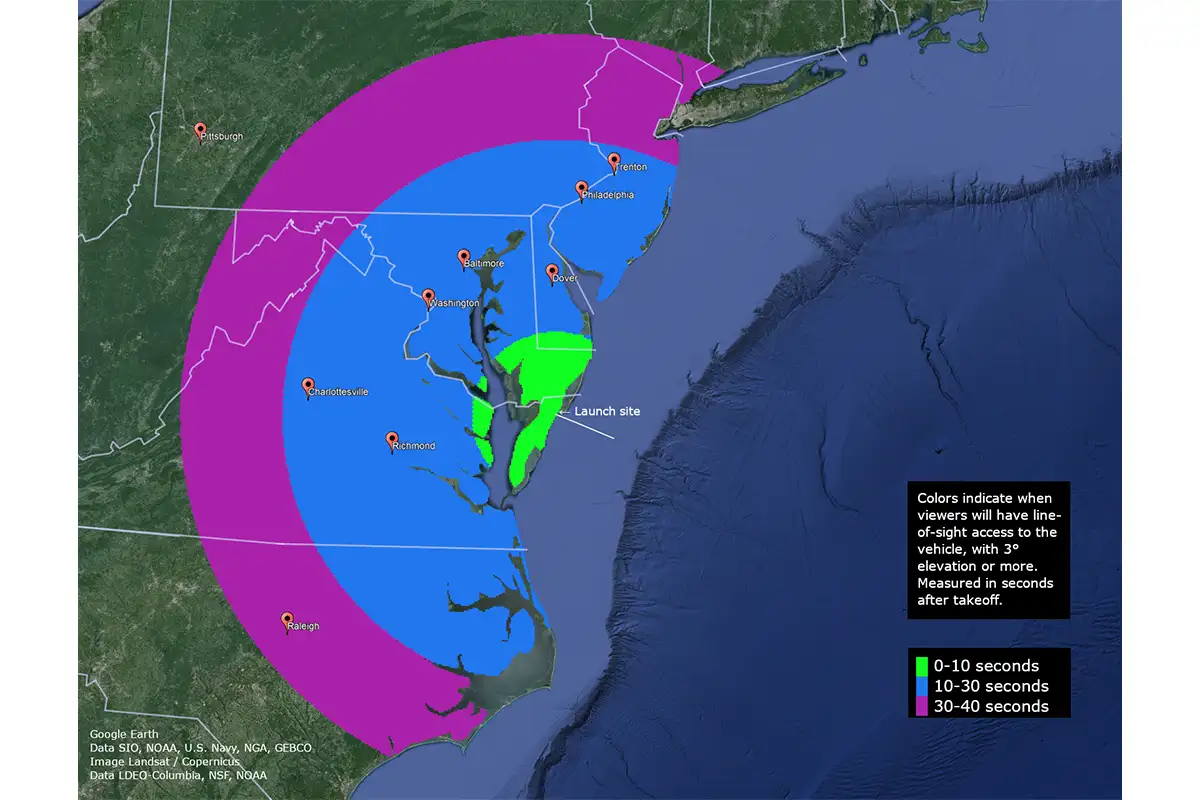
If the skies are clear, residents of Northern Virginia and nearby metro areas like Washington, D.C., Baltimore, and Philadelphia may catch the spectacle:
Within 10 seconds of launch: expect visibility closest to Wallops Island.
In Northern Virginia and similar zones, visibility may occur 10–30 seconds after liftoff.
Western Virginia and parts of Pennsylvania may see it 30–40 seconds post-launch
A livestream and live mission updates will begin approximately five minutes before each rocket’s launch on NASA’s social media channels
NASA’s Wallops Flight Facility will support the launch of Rocket Lab USA’s first Electron rocket from Virginia at 6 p.m. EST, Monday, Jan. 23.
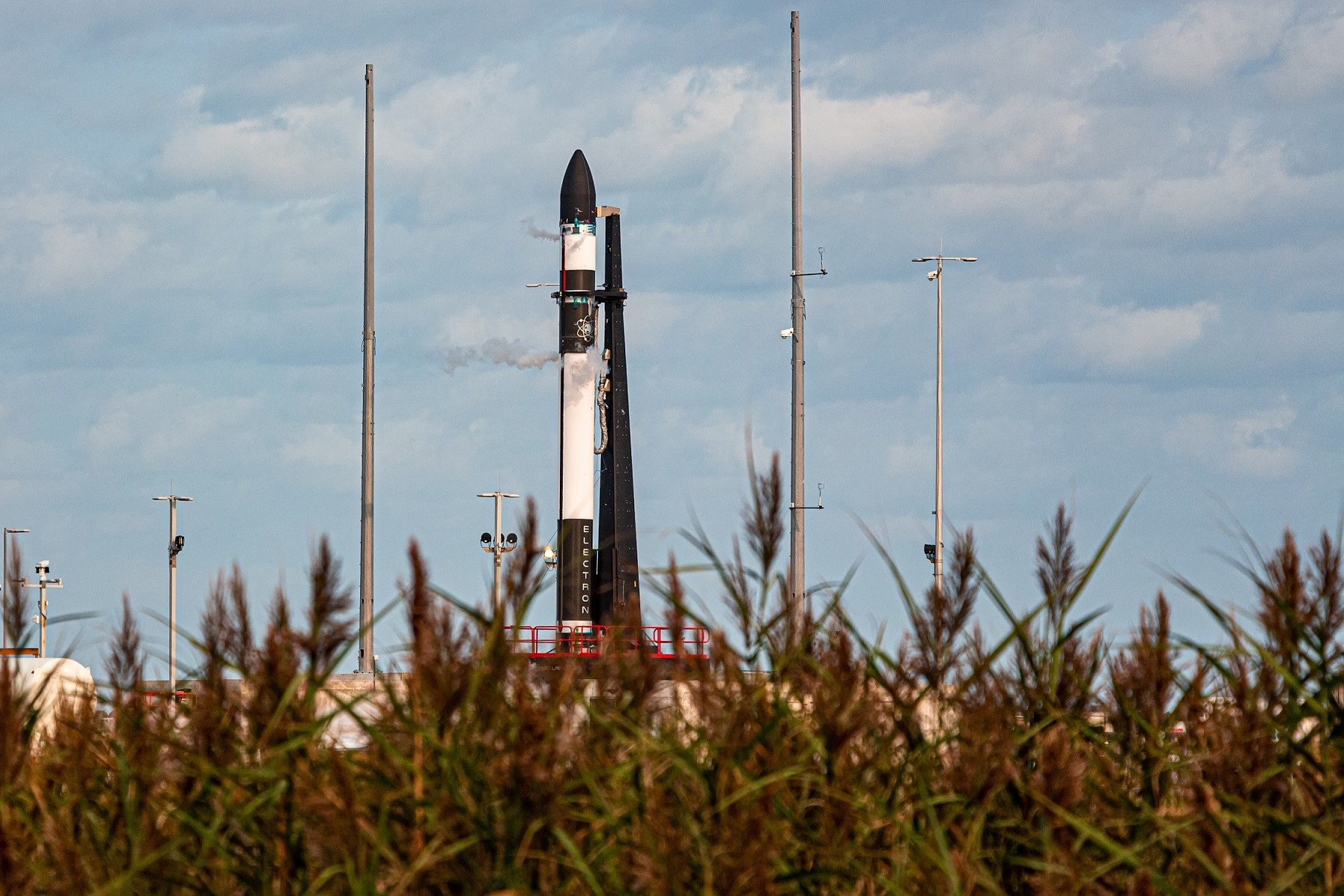
The 59-foot-tall Electron rocket will lift off from Launch Complex 2 at Virginia Space’s Mid-Atlantic Regional Spaceport on Wallops Island. The mission, named “Virginia is for Launch Lovers,” will deploy radio frequency monitoring satellites for HawkEye 360.
The launch window for the mission is 6-8 p.m. with subsequent back-up launch days.
With this mission, NASA is helping foster a growing low-Earth space economy and continues Wallops’ 35-year history of support to the commercial launch industry.
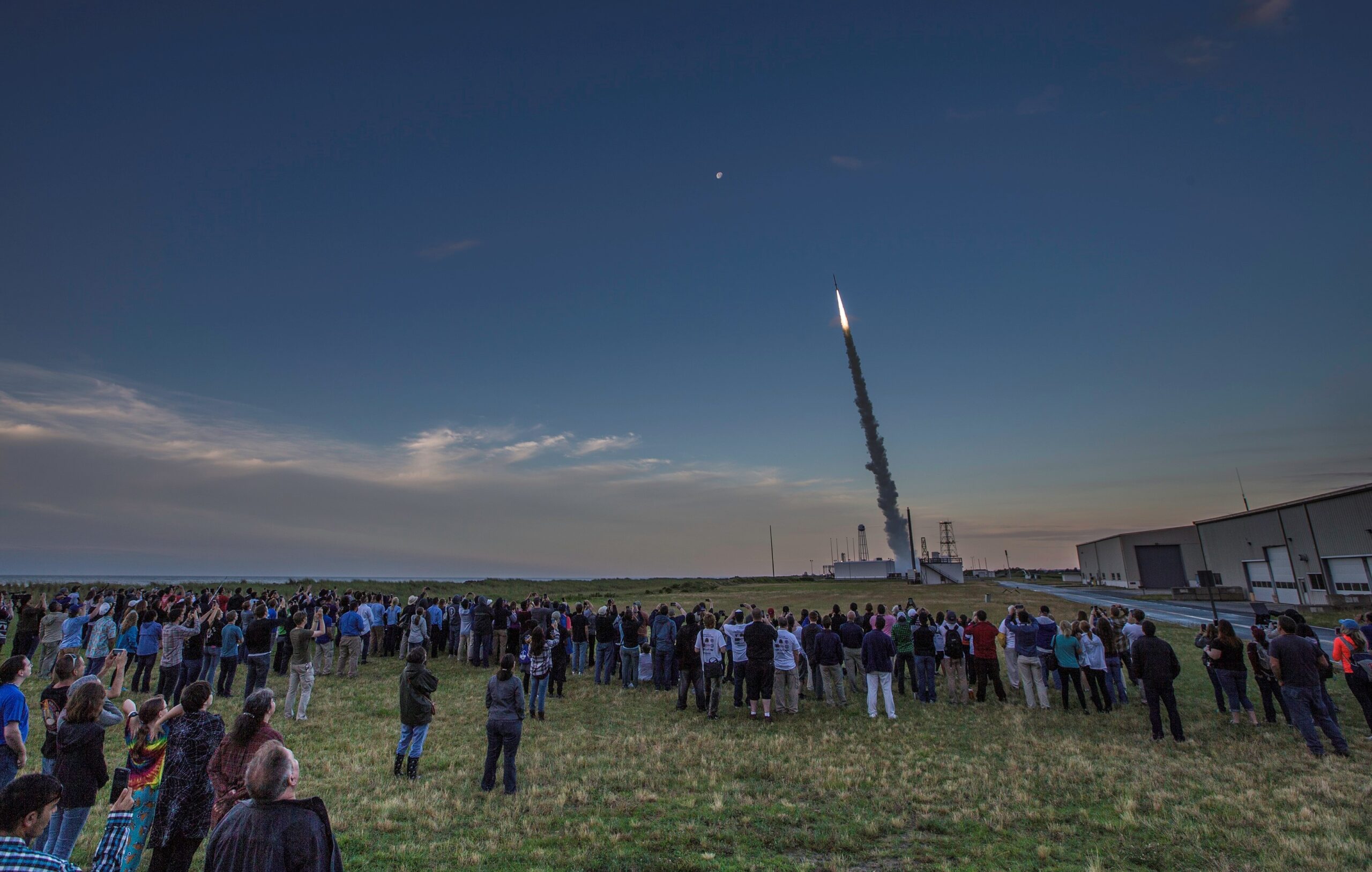
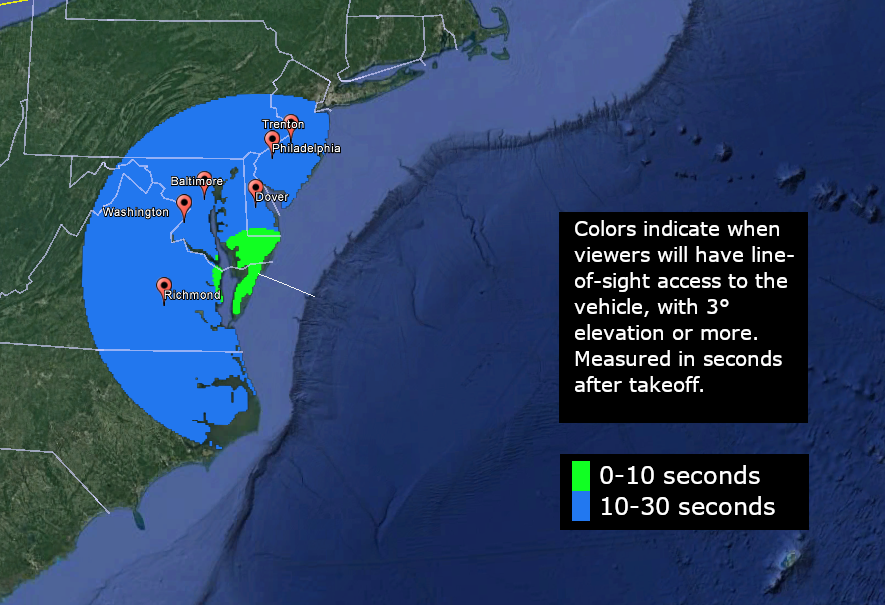
The launch may be visible, weather permitting, to residents throughout much of the east coast of the United States.
Viewing locations on Chincoteague Island include Robert Reed Park on Main Street or Beach Road spanning the area between Chincoteague and Assateague Islands. The Virginia, Maryland and Delaware Atlantic beaches also provide good viewing locations. The NASA Visitor Center at Wallops will be open for this launch, and will open at 4 p.m. on Monday, Jan. 23.
A NASA sounding rocket is scheduled to launch Friday morning, between 5:30 and 8:30 from The Wallops Flight facility.
The launch was initially scheduled for today, but technical issues and weather forced a delay.
The 36-foot long Terrier-Improved Orion suborbital sounding rocket is set to launch student projects from students across the country, including the University of Delaware. Those projects include the effects of high radiation exposure levels on high frequency components, while simultaneously developing an open-source project platform for future use within the RockSat community. They also plan to collect miscellaneous flight data and test the physical durability of a gallium nitride transistor. The third experiment is to accurately measure the temperature and density of electrons as a function of changing altitude.
Weather permitting and if you’re up early, people on the Delmarva Peninsula should be able to see the launch. The Wallops Visitor Center and viewing area will not be open for this launch.
PROJECTS:
Cubes in Space
Cubes in Space is an educational program for students ages 11-18 to design experiments in a 40 mm cube and launch on a sounding rocket. The program builds awareness in the pre-college age group about easily accessible, short-duration, and relatively low-cost spaceflight missions and opportunities in support of scientific exploration objectives.
Hobart and William Smith Colleges
The Hobart and William Smith Colleges (Geneva, New York) team will record spectra in different wavelength regions (visible light, UV, and thermal radiation) of the spectrum and measure highly charged particles called muon flux at various altitudes within the atmosphere.
Old Dominion University
The Old Dominion University (Norfolk, Virginia) team will explore the practicality and accuracy of additive manufacturing while experiencing aggressive changes in gravitational forces explored in a sounding rocket platform.
Temple University
The Temple University (Philadelphia, Pennsylvania) team will implement a single-bubble sonoluminescence (producing light from sound) experiment aboard payload to compare the change in illumination with respect to the change in gravity over time.
University of Delaware
The University of Delaware (Newark) team will conduct several experiments. The first is to quantify the effects that high radiation exposure levels have on high frequency components, while simultaneously developing an open-source project platform for future use within the RockSat community. They also plan to collect miscellaneous flight data and test the physical durability of a gallium nitride transistor. The third experiment is to accurately measure the temperature and density of electrons as a function of changing altitude in the D and E layers of the ionosphere.
Southeastern Louisiana University
Southeastern Louisiana University (Hammond) team will conduct a geophysical experiment to study the ionosphere and a mechanical experiment to study re-entry dynamics of the rocket.
West Virginia Collaboration
The West Virginia Collaboration (comprised of students from West Virginia University, Morgantown; Blue Ridge Community and Technical College, Martinsburg; West Virginia State University, Institute; and West Virginia Wesleyan College, Buckhannon) will characterize flight dynamics and observe solar activity in the infra-red, visible, and ultra-violet light, muon detection, and create and design an autonomous navigation assistant.
University of Puerto Rico
The University of Puerto Rico (San Juan) team will test the Oxford Nanopore VolTRAX Sample Preparator to set new precedents for in-flight DNA and RNA sampling processes. Internal and external sensors will provide context of flight conditions and profile to better understand the device’s limits.
A two-stage suborbital sounding rocket is scheduled for launch March 21, 2022, for a mission managed by the Air Force Research Laboratory/Air Force Office of Scientific Research, from NASA’s launch range at the Wallops Flight Facility in Virginia.
The launch of the Terrier-Improved Malemute rocket is scheduled between 7-10 p.m. EDT, March 21. The backup launch dates are March 22 through April 1.
The purpose of the mission, called Boundary Layer Turbulence 2, or BOLT-2, is to increase the understanding of boundary layer transition, turbulent heating, and drag on vehicles flying at hypersonic conditions. Boundary layer transition to turbulence is the process where smooth, laminar flow becomes unstable after which turbulence dominates and significantly increases heating and drag on high-speed vehicles.
Live coverage of the mission is scheduled to begin at 6:40 p.m. EDT on the Wallops YouTube site. Launch updates will be available on the Wallops Facebook and Twitter pages.
The rocket launch is expected to be visible from the Chesapeake Bay region. The NASA Visitor Center at Wallops will not be open for viewing the launch.