Tag: NWS

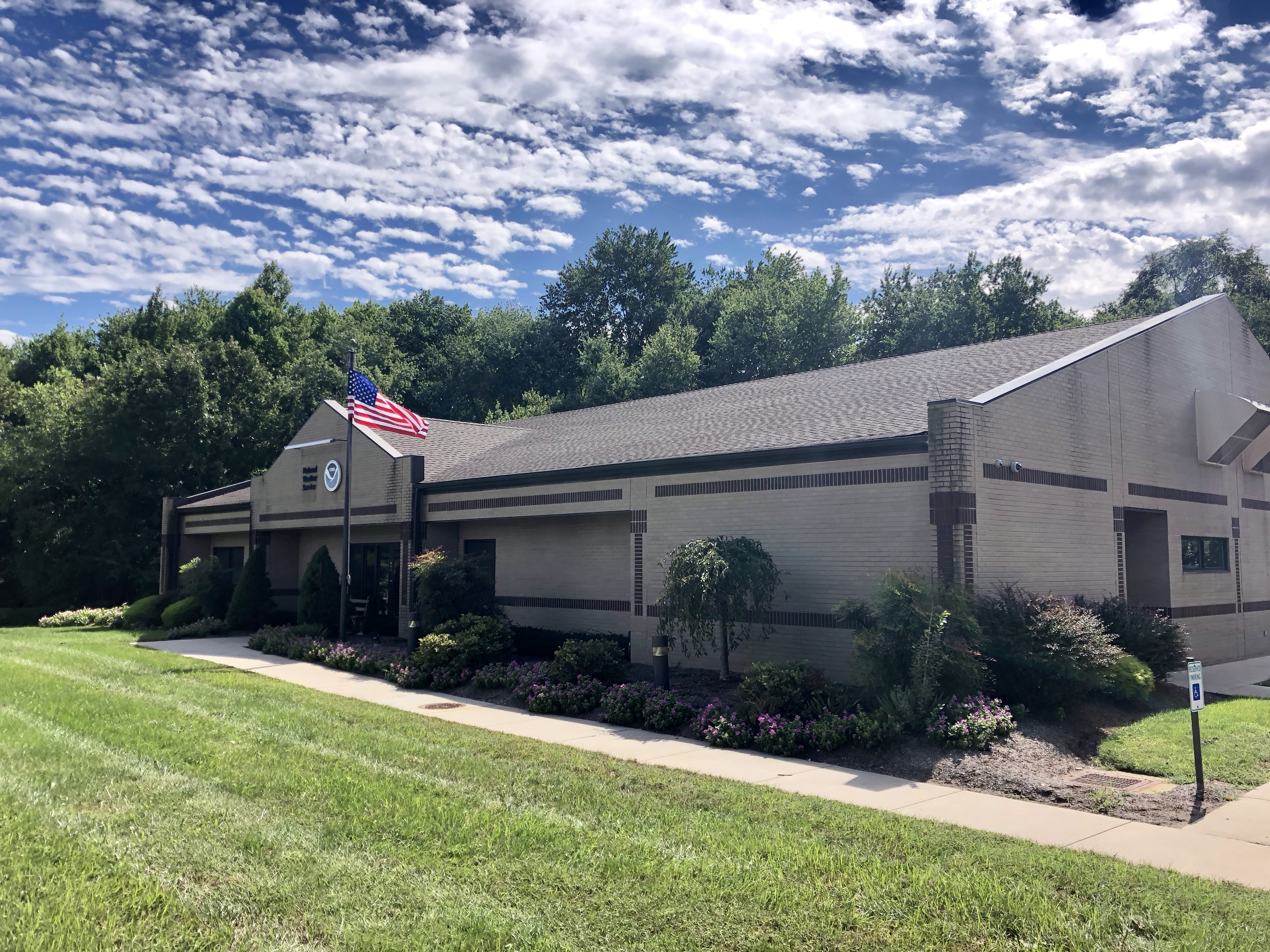
  • NWS Mount Holly to Undergo Scheduled System Upgrade; Temporary Service Adjustments Expected

    NWS Mount Holly to Undergo Scheduled System Upgrade; Temporary Service Adjustments Expected

    The National Weather Service Forecast Office in Mount Holly, NJ will be conducting a required, scheduled update to their Advanced Weather Interactive Processing System (AWIPS) system from 8 AM EDT Tuesday, May 13, 2025 through approximately 5 PM EDT Thursday, May 15, 2025. The NWS uses the AWIPS computer system to display and integrate weather and water information, and to send life-saving information, such as weather and water warnings, to the public.

    During the time of the update, forecast operations will be conducted by the National Weather Service Forecast Office in New York, NY (Upton, NY) to minimize any potential interruption to services. No impacts to our core services of forecast products and weather watches, warnings and advisories are expected during this period. However, limited impacts will occur to the following services: 

    • All NOAA Weather Radio Transmitters maintained by NWS Philadelphia/Mount Holly will be off the air through the time of the install. This includes the following transmitters: Hibernia Park, PA; Philadelphia, PA; Allentown, PA; Sudlersville, MD; Lewes, DE; Southhard/Howell Township, NJ; Hardyston, NJ; and Atlantic City, NJ
    • Tidal water level forecast services will be updated less frequently through this period. Forecasts will remain available at water.noaa.gov/wfo/phi and www.weather.gov/erh/coastalflood?wfo=phi 
    • Local graphical forecast maps that are hosted in various places on www.weather.gov/phi will not be updated. This includes all maps on the Graphical Hazardous Weather Outlook page ( https://www.weather.gov/erh/ghwo?wfo=phi).

    The forecast office in Mount Holly, NJ will remain open and staffed throughout this period for public and partner phone calls and additional functions that can be completed without AWIPS.


    If you have any questions, please contact Sarah Johnson, Warning Coordination Meteorologist, by email at [email protected] or by phone at (609) 261-6602 extension 223.  
  • Delaware Severe Weather Awareness Week: Day 2 “Tornado Safety”

    Delaware Severe Weather Awareness Week: Day 2 “Tornado Safety”

    Delaware Severe Weather Awareness Week is a reminder that Delaware has been hit with many major weather events within the past five years. This year marks five years since Tropical Storm Isaias spawned the longest tornado ever recorded in Delaware, which wreaked a path of destruction as it traveled from Dover in Kent County to Glasgow in New Castle County. In April of 2023, a tragic tornado fatality occurred in Sussex County. It was the first tornado-related death since two people were killed near a mobile home community near Hartly on July 21, 1983. Record rainfall from the remnants of Hurricane Ida in 2021 caused historic flooding in parts of downtown Wilmington,

    What is a Tornado?

    A tornado is a violently rotating column of air extending from the base of a thunderstorm down to the ground. Tornadoes are capable of completely destroying well-made structures, uprooting trees, and hurling objects through the air like deadly missiles. Tornadoes can occur at any time of day or night and at any time of the year. Although tornadoes are most common in the Central Plains and the southeastern United States, they have been reported in all 50 states.

    What Are The Differences Between A Tornado Watch & Tornado Warnings

    What is the difference between a Tornado Watch, a Tornado Warning and a Tornado Emergency?  The National Weather Service has three key alerts to watch out for.

    • Tornado Watch: Be Prepared!  Tornadoes are possible in and near the watch area. Review and discuss your emergency plans, take inventory of your supplies and check your safe room. Be ready to act quickly if a warning is issued or you suspect a tornado is approaching. Acting early helps to save lives! Watches are issued by the Storm Prediction Center for counties where tornadoes may occur. The watch area is typically large, covering numerous counties or even states.
    • Tornado Warning: Take Action! A tornado has been sighted or indicated by weather radar. There is imminent danger to life and property. Move to an interior room on the lowest floor of a sturdy building. Avoid windows. If in a mobile home, a vehicle, or outdoors, move to the closest substantial shelter and protect yourself from flying debris. Warnings are issued by your local forecast office. Warnings typically encompass a much smaller area (around the size of a city or small county) that may be impacted by a tornado identified by a forecaster on radar or by a trained spotter/law enforcement who is watching the storm.
    • Tornado Emergency: Seek Shelter Immediately! A tornado emergency is the National Weather Service’s highest alert level. It is issued when a violent tornado has touched down in the watch area. There is a severe threat to human life and property, with catastrophic damage confirmed. Immediately seek refuge in the safest location possible. Call friends and family who are within the watch area to ensure they are aware of the situation. If you see a tornado approaching, do not attempt to outrun it in a vehicle; shelter in place. Once safe, be sure to monitor your local forecast for the latest updates.

    How To Prepare For A Tornado

    • Be Weather-Ready: Check the forecast regularly to see if you’re at risk for tornadoes. Listen to local news or a NOAA Weather Radio to stay informed about tornado watches and warnings. Check the Weather-Ready Nation for tips.
    • Sign Up for Notifications: Know how your community sends warnings. Some communities have outdoor sirens. Others depend on media and smart phones to alert residents of severe storms capable of producing tornadoes.
    • Create a Communications Plan: Have a family plan that includes an emergency meeting place and related information. If you live in a mobile home or home without a basement, identify a nearby safe building you can get too quickly, such as a church or family member.
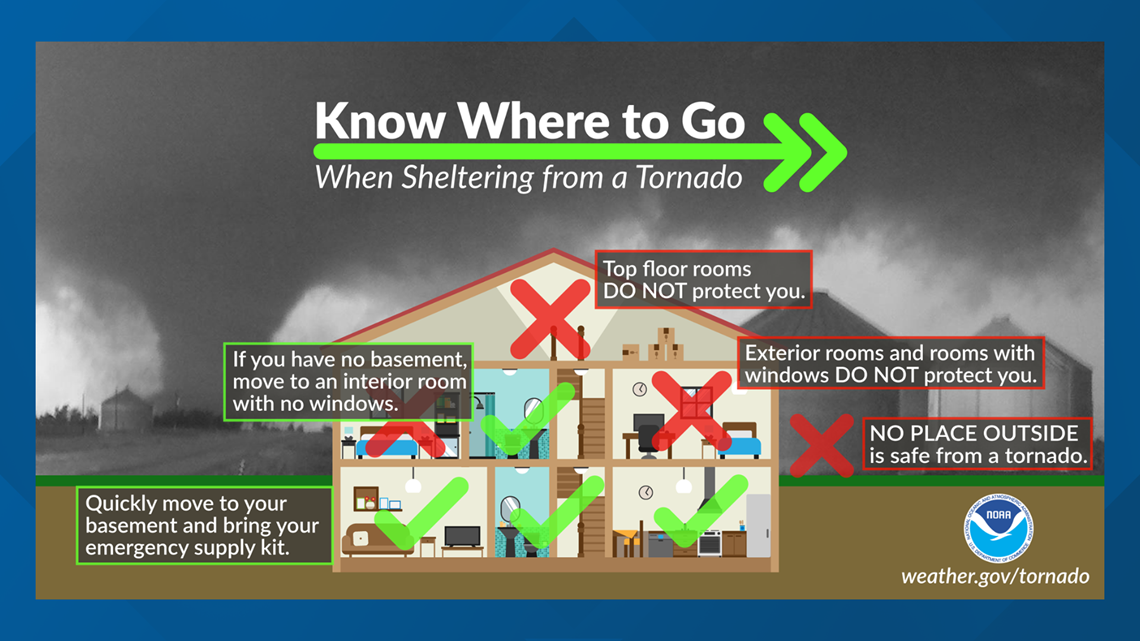
    • Pick a safe room in your home, such as a basement, storm cellar, or an interior room on the lowest floor with no windows. Check more ideas for your family plan at: https://www.ready.gov/make-a-plan
    • Practice Your Plan: Conduct a family severe thunderstorm drill regularly so everyone knows what to do if a tornado is approaching. Make sure all members of your family know to go there when tornado warnings are issued. Don’t forget pets if time allows.
    • Prepare Your Home: Consider having your safe room reinforced. You can find plans for reinforcing an interior room to provide better protection on the Federal Emergency Management Agency website.
    • Help Your Neighbor: Encourage your loved ones to prepare for the possibility of tornadoes. Take CPR training so you can help if someone is hurt.

    What To Do During A Tornado

    Find out what you can do when a tornado strikes. Acting quickly is key to staying safe and minimizing impacts.

    • Stay Weather-Ready: Continue to listen to local news or a NOAA Weather Radio to stay updated about tornado watches and warnings.
    • At Your House: If you are in a tornado warning, go to your basement, safe room, or an interior room away from windows. Don’t forget pets if time allows.
    • At Your Workplace or School: Follow your tornado drill and proceed to your tornado shelter location quickly and calmly. Stay away from windows and do not go to large open rooms such as cafeterias, gymnasiums, or auditoriums.
    • Outside: Seek shelter inside a sturdy building immediately if a tornado is approaching. Sheds and storage facilities are not safe. Neither is a mobile home or tent.  If you have time, get to a safe building.
    • In a vehicle: Being in a vehicle during a tornado is not safe. The best course of action is to drive to the closest shelter. If you are unable to make it to a safe shelter, either get down in your car and cover your head, or abandon your car and seek shelter in a low lying area such as a ditch or ravine.

    What To Do After A Tornado Strikes

    • Stay Informed: Continue to listen to local news or a NOAA Weather Radio to stay updated about tornado watches and warnings. Multiple rounds of thunderstorms capable of producing tornadoes are possible during severe weather outbreaks.
    • Contact Your Family and Loved Ones: Let your family and close friends know that you’re okay so they can help spread the word. Text messages or social media are more reliable forms of communication than phone calls.
    • Assess the Damage: After the threat for tornadoes has ended, check to see if your property has been damaged. When walking through storm damage, wear long pants, a long-sleeved shirt, and sturdy shoes. Contact local authorities if you see power lines down. Stay out of damaged buildings. Be aware of insurance scammers if your property has been damaged.
    • Help Your Neighbor: If you come across people that are injured and you are properly trained, provide first aid to victims if needed until emergency response teams arrive.