Launch Window: Between 10 p.m. tonight and 3 a.m. tomorrow Mission: TOMEX+ (Turbulent Oxygen Mixing Experiment Plus)
What to Expect
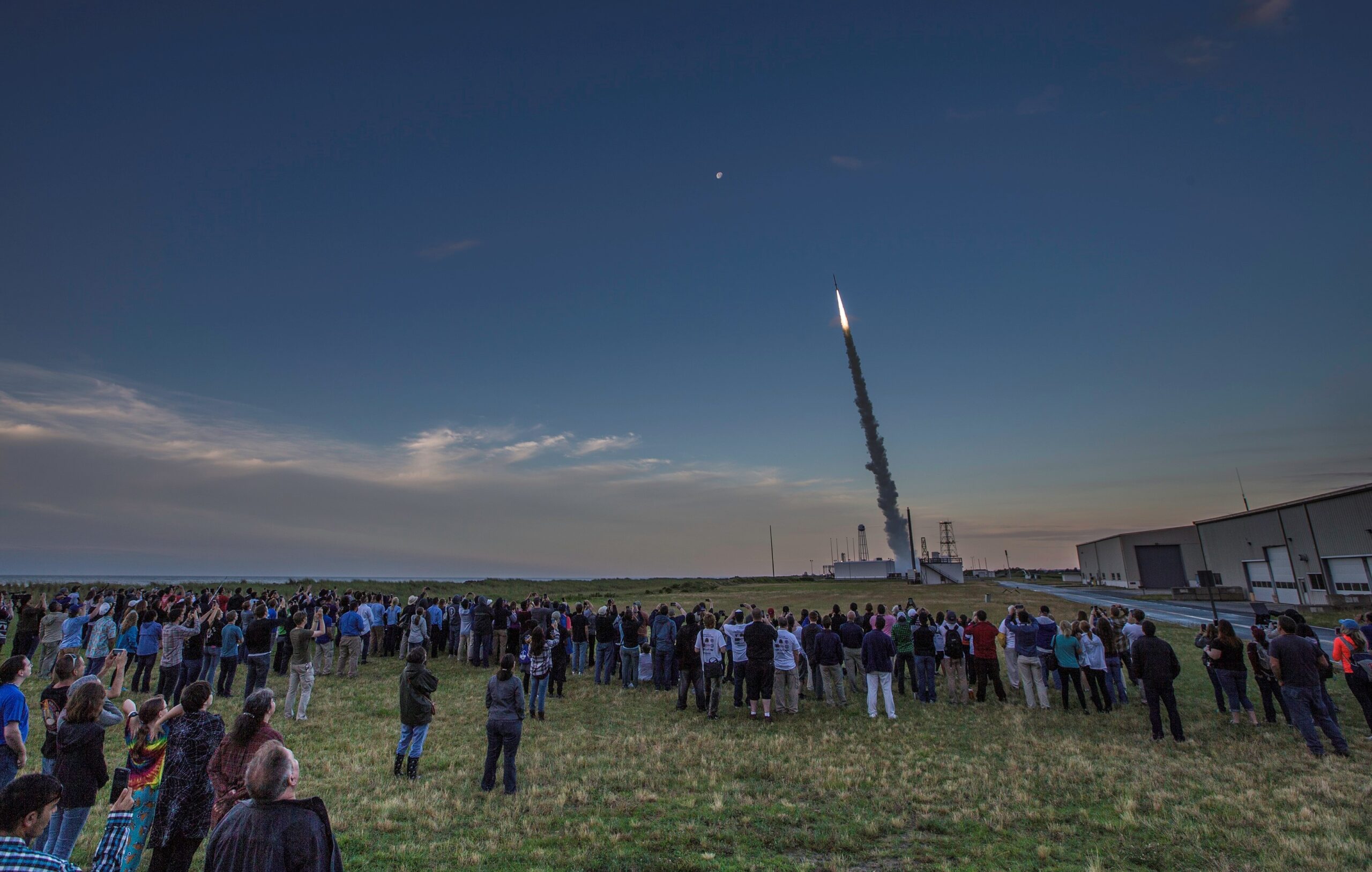
NASA is launching a series of three sounding rockets from Wallops Island tonight as part of the TOMEX+ mission. Its goal? To explore the mesopause, one of the most turbulent atmospheric zones located around 56 miles above Earth, where a layer of atomic sodium resides—created by tiny meteors burning up in the sky
First Two Rockets: They’ll release vibrant vapor tracers—colorful clouds that you can photograph from the ground. These tracers help scientists visualize and map wind patterns in the upper atmosphere.
Third Rocket (Launching ~5 Minutes Later): Equipped with a lidar instrument, it will emit short pulses of light to precisely measure atmospheric density and movement over time
Together, this trio offers scientists a uniquely detailed 3D view of turbulence at the edge of space, shedding light on high-altitude cloud formation, satellite drag, and even atmospheric behavior on other planets
Viewing Tips for Region Residents
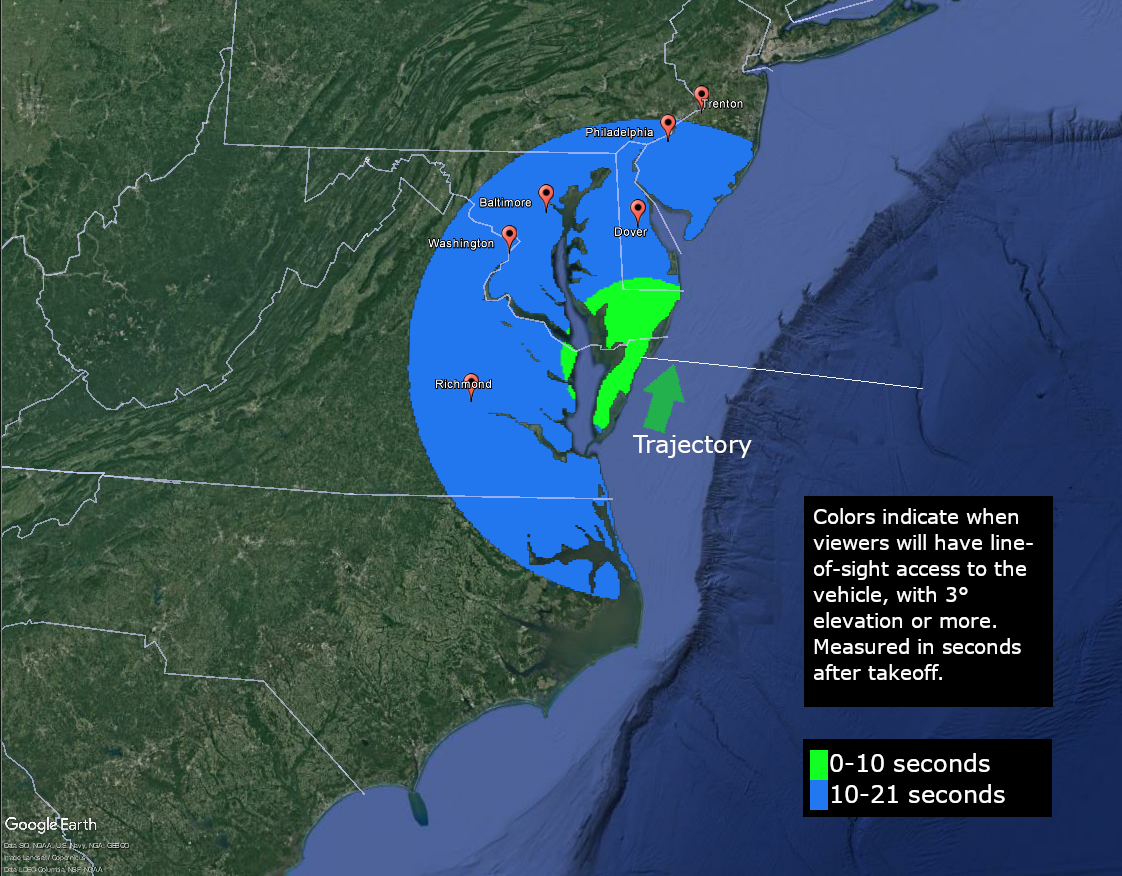
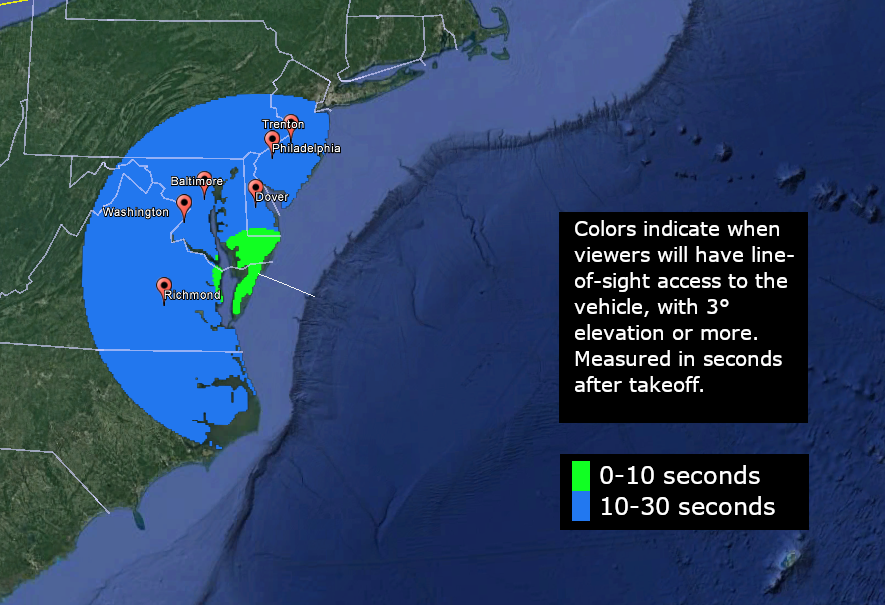
If the skies are clear, residents of Northern Virginia and nearby metro areas like Washington, D.C., Baltimore, and Philadelphia may catch the spectacle:
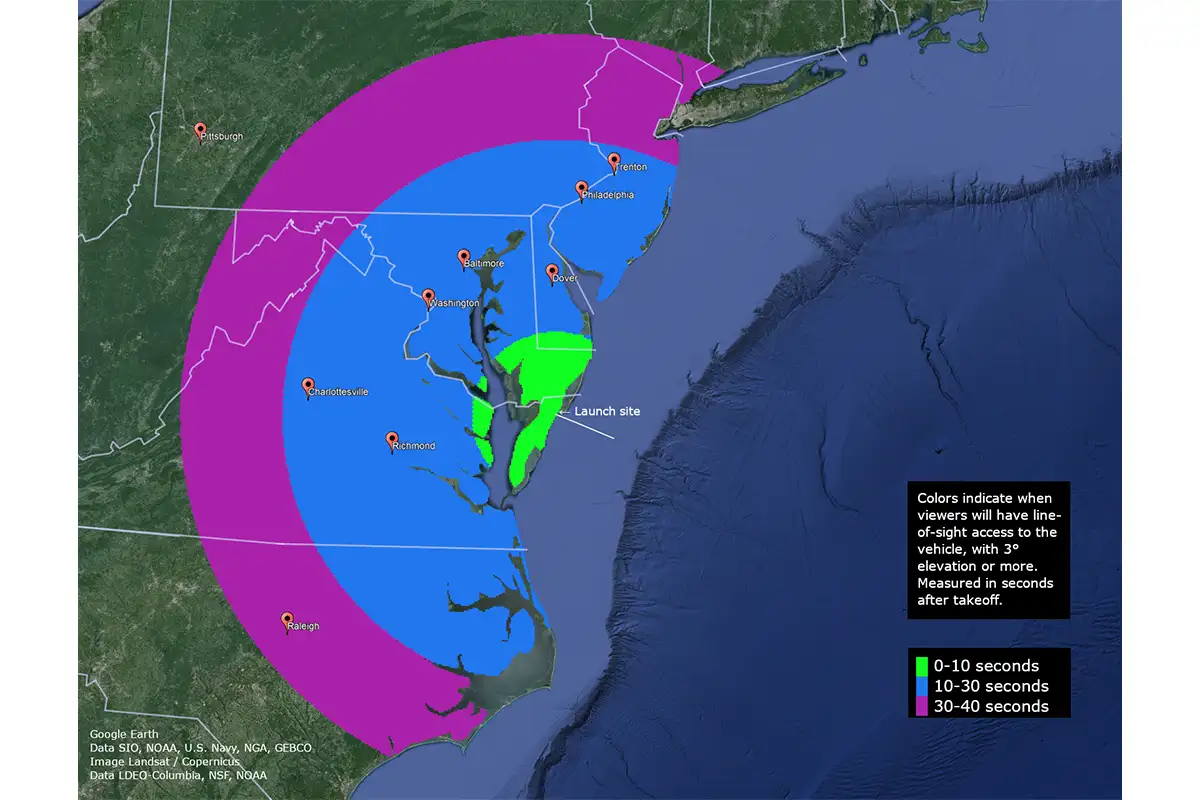
Within 10 seconds of launch: expect visibility closest to Wallops Island.
In Northern Virginia and similar zones, visibility may occur 10–30 seconds after liftoff.
Western Virginia and parts of Pennsylvania may see it 30–40 seconds post-launch
A livestream and live mission updates will begin approximately five minutes before each rocket’s launch on NASA’s social media channels
Astronomers have detected fast-repeating radio bursts from a distant “dead” galaxy, challenging existing theories about such phenomena. The discovery was reported on January 24, 2025.
Fast radio bursts (FRBs) are intense, millisecond-long pulses of radio waves originating from distant galaxies. While some FRBs have been traced to galaxies with active star formation, the recent detection from a quiescent, or “dead,” galaxy—where star formation has ceased—raises questions about the mechanisms producing these bursts.
The identification of repeating FRBs from a galaxy previously thought incapable of generating such high-energy phenomena suggests that our understanding of the environments and conditions necessary for FRB production is incomplete. Further research is needed to determine the exact sources and processes responsible for these enigmatic signals.
The latest bursts were traced to a massive elliptical galaxy located billions of light-years away. This galaxy is classified as “quiescent,” meaning it has not formed new stars for billions of years. Such galaxies are typically considered inhospitable to the high-energy processes thought to produce FRBs, making the discovery especially surprising.
The Case for Magnetars Magnetars, formed from the collapse of massive stars, are leading candidates for the origin of repeating FRBs. Their intense magnetic fields can produce bursts of radio waves during periods of instability. In active galaxies, magnetars can arise from recent supernova explosions, but their presence in a quiescent galaxy indicates they might also be formed by less conventional means, such as mergers of old stellar remnants.
This finding underscores the importance of continued observation and study of FRBs across diverse galactic environments to unravel the mysteries surrounding their origins.
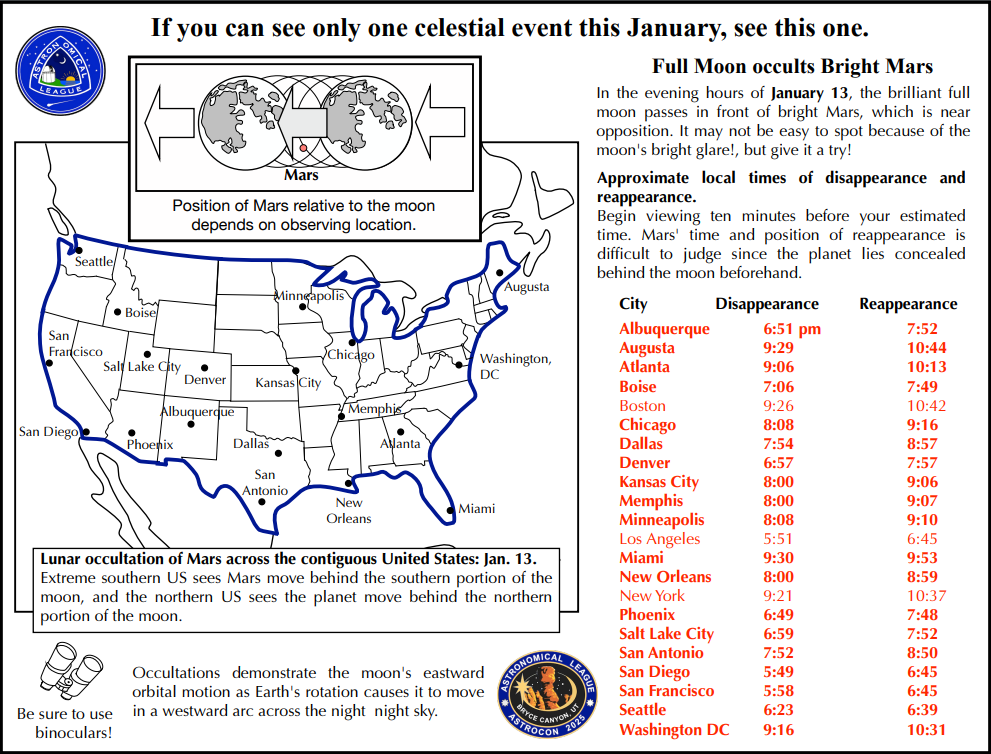
Prepare your stargazing binoculars and telescopes for a truly remarkable event, as Mars will temporarily vanish behind the moon in an astronomical phenomenon known as a lunar occultation. This captivating event will occur on January 13, 2025, offering skywatchers across large portions of the world a rare opportunity to witness the Red Planet disappearing and re-emerging from behind Earth’s natural satellite.
What is a Lunar Occultation?
A lunar occultation happens when the moon passes directly between Earth and another celestial object, temporarily obscuring that object from view. In this case, Mars will be hidden behind the moon’s bright disk for several minutes, creating a unique and fleeting moment in the night sky. Lunar occultations of planets are relatively rare occurrences because they require precise alignment between Earth, the moon, and the planet in question. When they do happen, they offer an extraordinary sight for observers and an excellent opportunity for astrophotographers to capture a spectacular cosmic event.
Coinciding with Mars’ Opposition
The timing of this occultation makes it even more special. On January 13, Mars will be in opposition, meaning it will be directly opposite the sun from Earth’s perspective. During opposition, Mars appears at its largest and brightest in the night sky, as it reaches its closest approach to Earth. This combination of a lunar occultation and Mars being at opposition is a rare cosmic coincidence that amplifies the visual spectacle.
Mars will shine brilliantly in a deep reddish hue, and its brightness will contrast sharply with the glowing, full moon. As a result, viewers will have the chance to observe Mars in its most stunning form just before it slips behind the lunar surface.
Where and When to Watch
This event will be visible across the contiguous United States, parts of Canada and Mexico, and portions of Western Africa. The exact timing of the occultation will vary slightly depending on your geographic location. Generally, Mars and the moon will rise together around 5 p.m. EST on January 13 and will remain close throughout the night until they set around 8 a.m. EST on January 14.
In many regions, the occultation will begin in the early evening hours, shortly after sunset. Observers will first see Mars approach the bright limb of the moon before it disappears behind it. Depending on your location, the disappearance will last for several minutes to over an hour before Mars re-emerges on the opposite side of the moon.
How to Maximize Your Viewing Experience
For the best possible view of this celestial event, it’s crucial to find a location away from urban light pollution. A rural area or a dark-sky park will provide optimal conditions. Give your eyes at least 20 minutes to adjust to the darkness for enhanced visibility. While the lunar occultation will be visible to the naked eye, using a pair of binoculars or a small telescope will dramatically improve your experience, allowing you to see finer details of both Mars and the lunar surface.
Astrophotographers should prepare in advance to capture this rare event. A telescope equipped with a camera or a DSLR attached to a high-quality telephoto lens will yield the best results. Since the moon will be full and bright, adjusting exposure settings to balance the moon’s brightness against Mars’ dimmer glow will be key to producing well-detailed images.
Scientific and Cultural Significance
Events like the lunar occultation of Mars have fascinated both amateur astronomers and professionals for centuries. Historically, occultations have been used to refine our understanding of the moon’s orbit and to measure the positions of stars and planets with great precision. In the modern era, they serve as a reminder of the dynamic nature of the night sky and offer an excellent opportunity to engage the public in the wonders of astronomy.
Moreover, such events can inspire a sense of awe and curiosity about the universe. Whether you’re a seasoned stargazer or a casual observer, witnessing Mars disappear behind the moon can be a humbling experience, reminding us of our place in the vast cosmic dance.
Final Thoughts
The lunar occultation of Mars on January 13, 2025, is shaping up to be one of the most anticipated astronomical events of the year. With Mars at opposition, the full moon illuminating the sky, and clear winter nights typical for much of the viewing region, conditions are ideal for a memorable stargazing experience.
Mark your calendar, gather your stargazing gear, and prepare to be dazzled by this celestial spectacle. Whether you watch with the naked eye, through binoculars, or a telescope, the sight of Mars vanishing and reappearing behind the moon is sure to be an unforgettable highlight of your stargazing adventures.
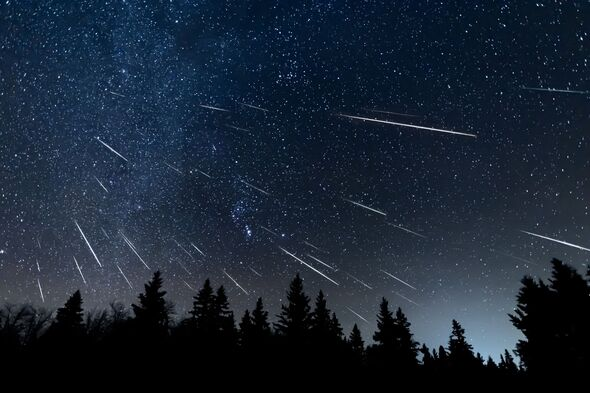
The Orionid meteor shower is an exciting annual event, and in 2024, the peak is expected on October 20 at 18:14 UTC. If you’re planning to watch, the best times are the early mornings of October 20 and 21, from after midnight until just before dawn.
Key Dates and Times
Peak Viewing: October 20 and 21, just after midnight until dawn.
Duration: September 26 to November 22.
Moon Interference: Unfortunately, the moon will be a waning gibbous during the peak, which may make the meteors harder to see. Try positioning yourself so the moon is blocked from view.
What to Expect
On a good night, under dark skies with no moon interference, you might see between 10 to 20 meteors per hour. These meteors are known to be fast, and some may leave glowing trails that last a few seconds. Occasionally, a bright fireball might light up the sky.
Where Do They Come From?
The Orionids come from debris left behind by Halley’s Comet, one of the most famous comets in history. This comet orbits the sun about every 76 years, and as it passes, it leaves behind dust and small particles. These particles hit Earth’s atmosphere in October, creating the Orionid meteor shower. We also encounter its debris in May, which causes the Eta Aquariid meteor shower.
What Makes the Orionids Special?
Speed: Orionid meteors travel at about 41 miles per second (66 km/s), making them some of the fastest meteors.
Trails: Many leave behind glowing ionized gas trails, known as persistent trains, which can last a few seconds after the meteor has disappeared.
Bright Meteors: Occasionally, a meteor will be exceptionally bright and may even break up into fragments.
Where to Look in the Sky
The Orionid meteors appear to come from the constellation Orion, which rises in the east after midnight. You don’t need to focus on Orion to see the meteors—they can appear in any part of the sky. But if you trace the path of a meteor backward, you might find it originated near Orion’s famous star, Betelgeuse.
Tips for Viewing
Find a wide-open area with minimal light pollution.
You don’t need to look in a specific direction, as the meteors can appear anywhere in the sky.
If you’re watching with friends, spread out and face different directions for the best chance of spotting meteors.
The 2024 Orionid meteor shower will peak on the mornings of October 20 and 21, though a bright moon may make it harder to see. Even so, this annual event is a great opportunity to witness fragments of Halley’s Comet streak across the sky. Happy meteor watching!
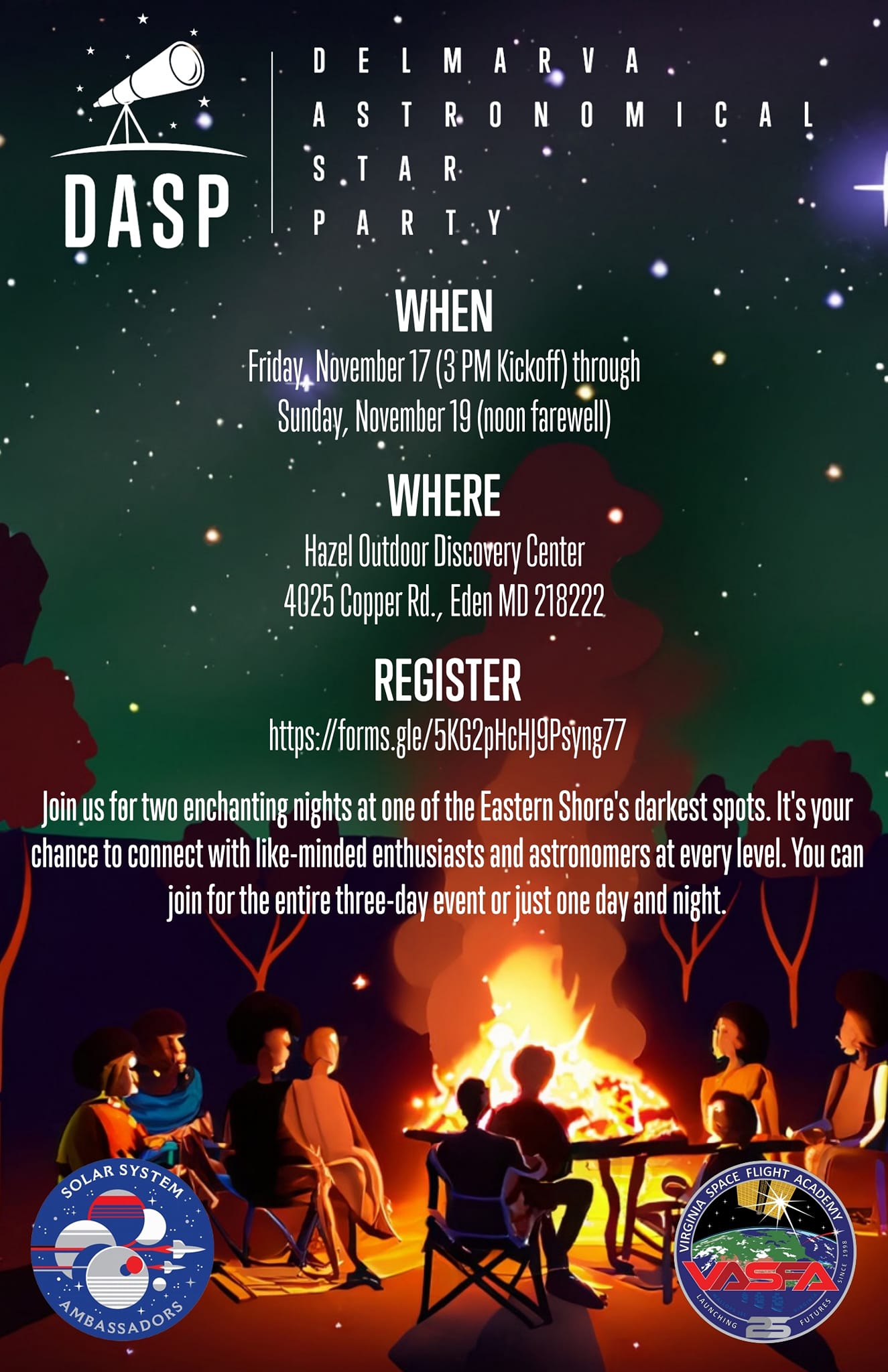
We are thrilled to invite you to an unforgettable celestial adventure at the Delmarva Astronomical Star Party (DASP), where the night sky comes alive in all its splendor. Join us for two enchanting nights at one of the Eastern Shore’s darkest spots. Whether you’re a seasoned astronomer or just starting your journey into stargazing, this event aims to create a community to support, nurture, and share all levels of astronomical passion. It’s your chance to connect with like-minded enthusiasts and astronomers at every level. You can join for the entire three-day event or just one day and night.
Event Highlights: ✨ Starry Nights: Immerse yourself in the mesmerizing beauty of the night sky at a location known for its minimal light pollution. Witness the Milky Way, constellations, planets, and deep-sky objects.
🌌 Expert Guidance: Our experienced astronomers and host, Hunter Outten, along with our many guests, will provide insightful tips and techniques to enhance your telescope observations. Learn, share, and connect with fellow stargazers.
🔥 Nightly Campfires: Gather around the campfire to share stories, trade tips, and bond with fellow attendees. Roasting marshmallows is highly encouraged!
👨👩👧👦 Family-Friendly Activities: Bring the whole family to engage with fun and educational astronomy-themed activities making this a perfect event for stargazers of all ages. Self-guided astro-crafts like star finders will be available in the lodge. Daytime activities, including hiking trails, are available on the grounds.
🏕️ Overnight Camping: Pitch your tent or set up your trailer/camper on the grounds to fully immerse yourself in the night sky. Fall asleep under a canopy of stars and awaken to the beauty of the cosmos.
Don’t miss this opportunity to share your passion for the cosmos with kindred spirits! Mark your calendar, pack your telescope and camping gear, and prepare for a weekend of celestial wonder at the inaugural Delmarva Astronomical Star Party. We look forward to seeing you there! Clear skies and best wishes,
Hunter Outten & Kim Check
Event Organizers
*Grounds Access Code Required to enter Hazel Property. Provided upon reservation confirmation.
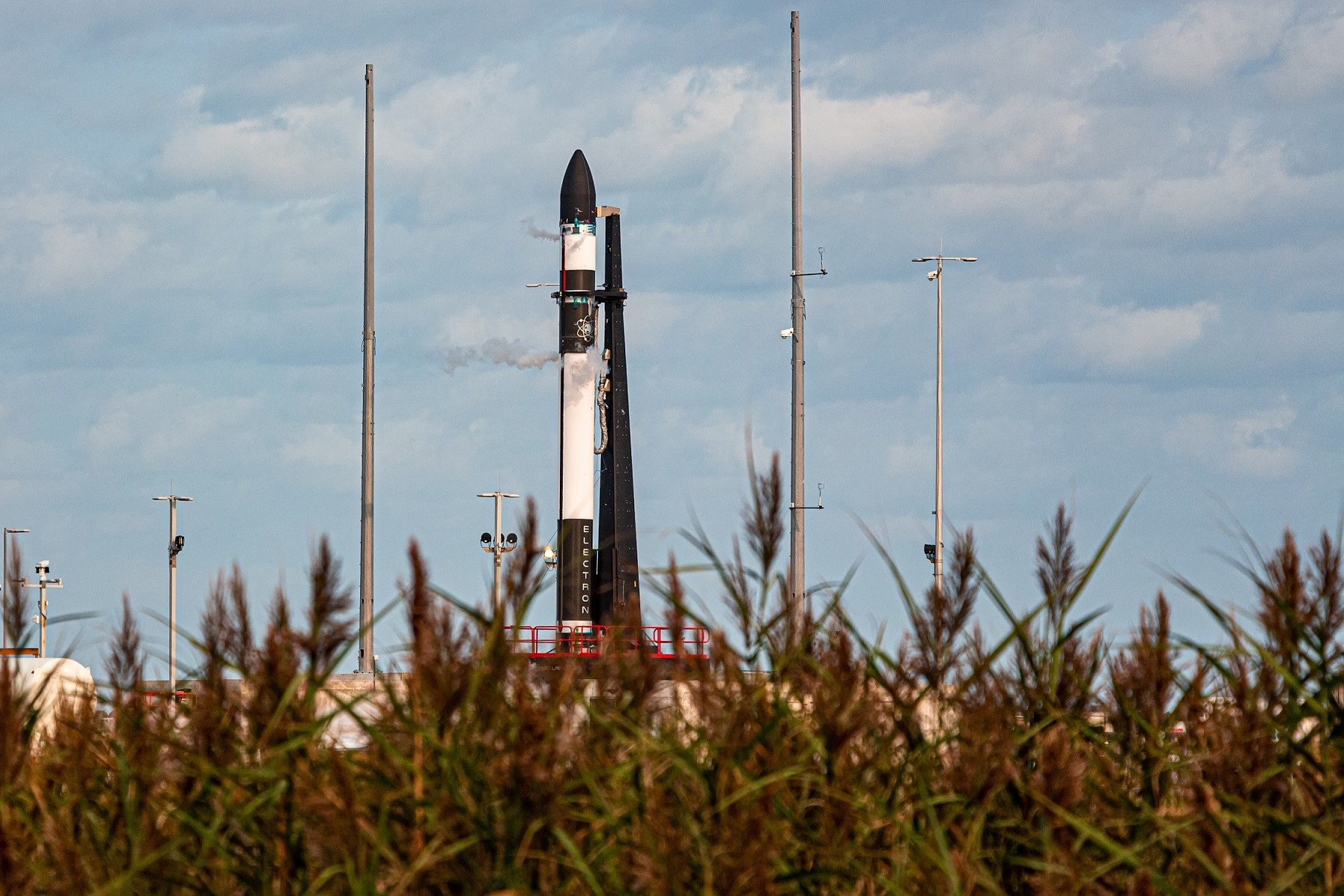
The “Stronger Together” mission will be Rocket Lab’s second Electron mission from its dedicated launch pad at Rocket Lab Launch Complex 2 (LC-2) on Wallops Island, Virginia.
The launch is a dedicated mission for Capella Space, a leading U.S. satellite manufacturer and Earth observation company. “Stronger Together” will deliver to orbit two more Synthetic Aperture Radar (SAR) satellites that enable Capella Space to deliver the highest quality, highest resolution SAR imagery commercially available with the fastest order-to delivery time, empowering organizations across the public and private sector to make informed, accurate decisions.
“Stronger Together” will be Capella Space’s second launch with Rocket Lab on Electron and its first from Rocket Lab Launch Complex 2 in Virginia. Supporting Rocket Lab’s vertical integration strategy, Rocket Lab will also supply Capella Space with two of Rocket Lab’s own Motorized Lightbands; separation systems designed to separate the Capella satellites from Electron once in orbit.
Rocket Lab will not attempt to recover Electron for this mission.
NASA’s Wallops Flight Facility will support the launch of Rocket Lab USA’s first Electron rocket from Virginia at 6 p.m. EST, Monday, Jan. 23.
The 59-foot-tall Electron rocket will lift off from Launch Complex 2 at Virginia Space’s Mid-Atlantic Regional Spaceport on Wallops Island. The mission, named “Virginia is for Launch Lovers,” will deploy radio frequency monitoring satellites for HawkEye 360.
The launch window for the mission is 6-8 p.m. with subsequent back-up launch days.
With this mission, NASA is helping foster a growing low-Earth space economy and continues Wallops’ 35-year history of support to the commercial launch industry.
The launch may be visible, weather permitting, to residents throughout much of the east coast of the United States.
Viewing locations on Chincoteague Island include Robert Reed Park on Main Street or Beach Road spanning the area between Chincoteague and Assateague Islands. The Virginia, Maryland and Delaware Atlantic beaches also provide good viewing locations. The NASA Visitor Center at Wallops will be open for this launch, and will open at 4 p.m. on Monday, Jan. 23.
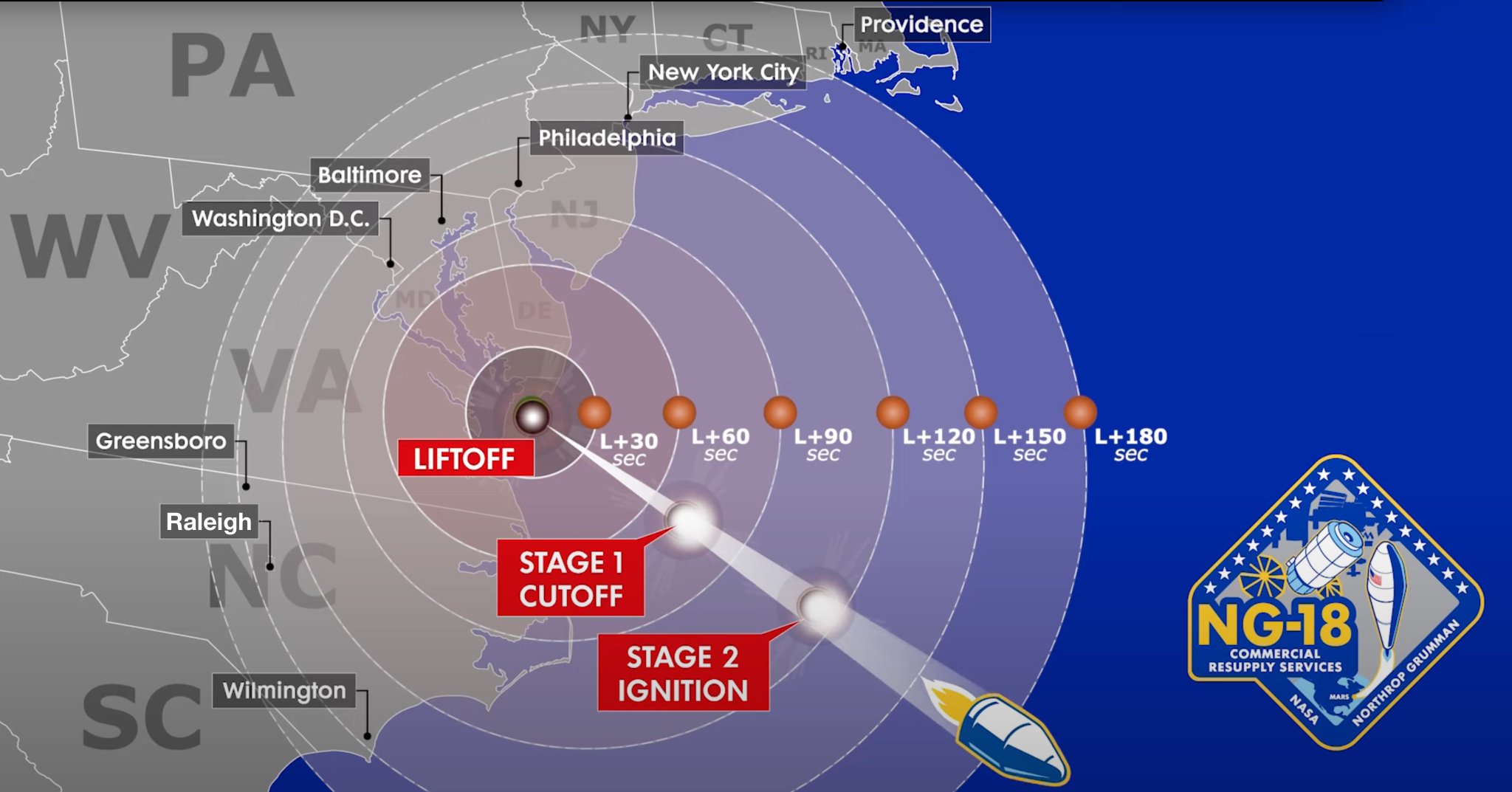
Rise and shine early to catch the next launch of Northrop Grumman’s Antares rocket from NASA’s Wallops Flight Facility on the Eastern Shore of Virginia.
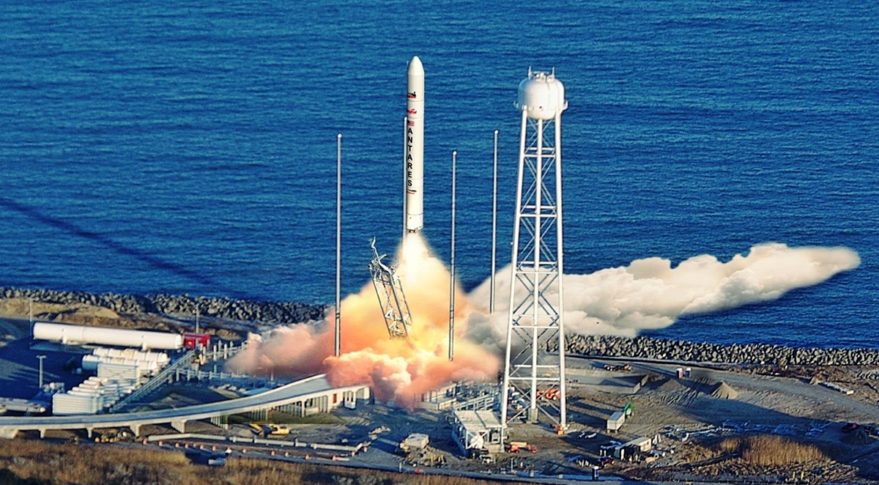
The next Antares launch is scheduled for 5:50 a.m. EST, Sunday, Nov. 6, from the Mid-Atlantic Regional Spaceport’s Pad 0A on Wallops Island.
The launch just before sunrise may be visible, weather permitting, to residents throughout the mid-Atlantic region and possibly the East Coast of the United States.
This will be Northrop Grumman’s 18th commercial resupply services mission for NASA, delivering science investigations, supplies and equipment to the International Space Station.
The time changes from Eastern Daylight Time (EDT) to Eastern Standard Time (EST) at 2 a.m., Nov. 6. Take the change into account when making your plans and remember to turn your clock back one-hour when going to bed the night of Nov. 5.
Viewing locations on Chincoteague Island include Robert Reed Park on Main Street or Beach Road spanning the area between Chincoteague and Assateague Islands. The Virginia, Maryland and Delaware Atlantic beaches also provide good viewing locations.
The NASA Visitor Center at Wallops will be open for this launch. Gates open at 3:30 a.m. EST.
Live coverage of the mission countdown is scheduled to begin at approximately 1:50 a.m. EDT on the Wallops IBM video site.
Launch coverage and mission commentary will air live on NASA TV at 5:30 a.m. EST. For NASA TV streaming video, downlink and scheduling information, visit:
NASA will test new science equipment for future missions with a sounding rocket launch August 22 from its Wallops Flight Facility in Virginia.
.
The Sporadic-E ElectroDynamics Demonstration mission, or SpEED Demon, will fly new instrumentation along with heritage instruments that have flown on other sounding rocket missions, but not together. The SpEED Demon instruments will be further improved based on results from this launch and will subsequently fly on a science mission targeted for summer 2024 from the Kwajalein Atoll in the Marshall Islands and possibly many other sounding rocket opportunities.
Credits: NASA’s Wallops Flight Facility
SpEED Demon will launch on a 40-foot tall Terrier-Improved Malemute sounding rocket between 9 p.m. EDT Aug. 22 and 1 a.m. Aug. 23. The backup launch dates are Aug. 23 through Aug. 27.
.
The NASA Wallops Visitor Center will open to the public at 8 p.m. on launch day for viewing the flight. The rocket launch is expected to be visible from the mid-Atlantic/Chesapeake Bay region. Live coverage of the mission is scheduled to begin at 8:40 p.m. on the Wallops YouTube site.
NASA’s MAVEN (Mars Atmosphere and Volatile EvolutioN) spacecraft discovered “layers” and “rifts” in the electrically charged part of the upper atmosphere (the ionosphere) of Mars. The phenomenon is similar to commonly occurring sporadic-E layers on Earth, which SpEED Demon is studying, that can cause unpredictable disruptions to radio communications. This unexpected discovery by MAVEN shows that Mars is a unique laboratory to explore and better understand this highly disruptive phenomenon that can occur on presumably any planet. Credits: NASA’s Goddard Space Flight Center
A NASA sounding rocket is scheduled to launch Friday morning, between 5:30 and 8:30 from The Wallops Flight facility.
The launch was initially scheduled for today, but technical issues and weather forced a delay.
The 36-foot long Terrier-Improved Orion suborbital sounding rocket is set to launch student projects from students across the country, including the University of Delaware. Those projects include the effects of high radiation exposure levels on high frequency components, while simultaneously developing an open-source project platform for future use within the RockSat community. They also plan to collect miscellaneous flight data and test the physical durability of a gallium nitride transistor. The third experiment is to accurately measure the temperature and density of electrons as a function of changing altitude.
Weather permitting and if you’re up early, people on the Delmarva Peninsula should be able to see the launch. The Wallops Visitor Center and viewing area will not be open for this launch.
PROJECTS:
Cubes in Space
Cubes in Space is an educational program for students ages 11-18 to design experiments in a 40 mm cube and launch on a sounding rocket. The program builds awareness in the pre-college age group about easily accessible, short-duration, and relatively low-cost spaceflight missions and opportunities in support of scientific exploration objectives.
Hobart and William Smith Colleges
The Hobart and William Smith Colleges (Geneva, New York) team will record spectra in different wavelength regions (visible light, UV, and thermal radiation) of the spectrum and measure highly charged particles called muon flux at various altitudes within the atmosphere.
Old Dominion University
The Old Dominion University (Norfolk, Virginia) team will explore the practicality and accuracy of additive manufacturing while experiencing aggressive changes in gravitational forces explored in a sounding rocket platform.
Temple University
The Temple University (Philadelphia, Pennsylvania) team will implement a single-bubble sonoluminescence (producing light from sound) experiment aboard payload to compare the change in illumination with respect to the change in gravity over time.
University of Delaware
The University of Delaware (Newark) team will conduct several experiments. The first is to quantify the effects that high radiation exposure levels have on high frequency components, while simultaneously developing an open-source project platform for future use within the RockSat community. They also plan to collect miscellaneous flight data and test the physical durability of a gallium nitride transistor. The third experiment is to accurately measure the temperature and density of electrons as a function of changing altitude in the D and E layers of the ionosphere.
Southeastern Louisiana University
Southeastern Louisiana University (Hammond) team will conduct a geophysical experiment to study the ionosphere and a mechanical experiment to study re-entry dynamics of the rocket.
West Virginia Collaboration
The West Virginia Collaboration (comprised of students from West Virginia University, Morgantown; Blue Ridge Community and Technical College, Martinsburg; West Virginia State University, Institute; and West Virginia Wesleyan College, Buckhannon) will characterize flight dynamics and observe solar activity in the infra-red, visible, and ultra-violet light, muon detection, and create and design an autonomous navigation assistant.
University of Puerto Rico
The University of Puerto Rico (San Juan) team will test the Oxford Nanopore VolTRAX Sample Preparator to set new precedents for in-flight DNA and RNA sampling processes. Internal and external sensors will provide context of flight conditions and profile to better understand the device’s limits.
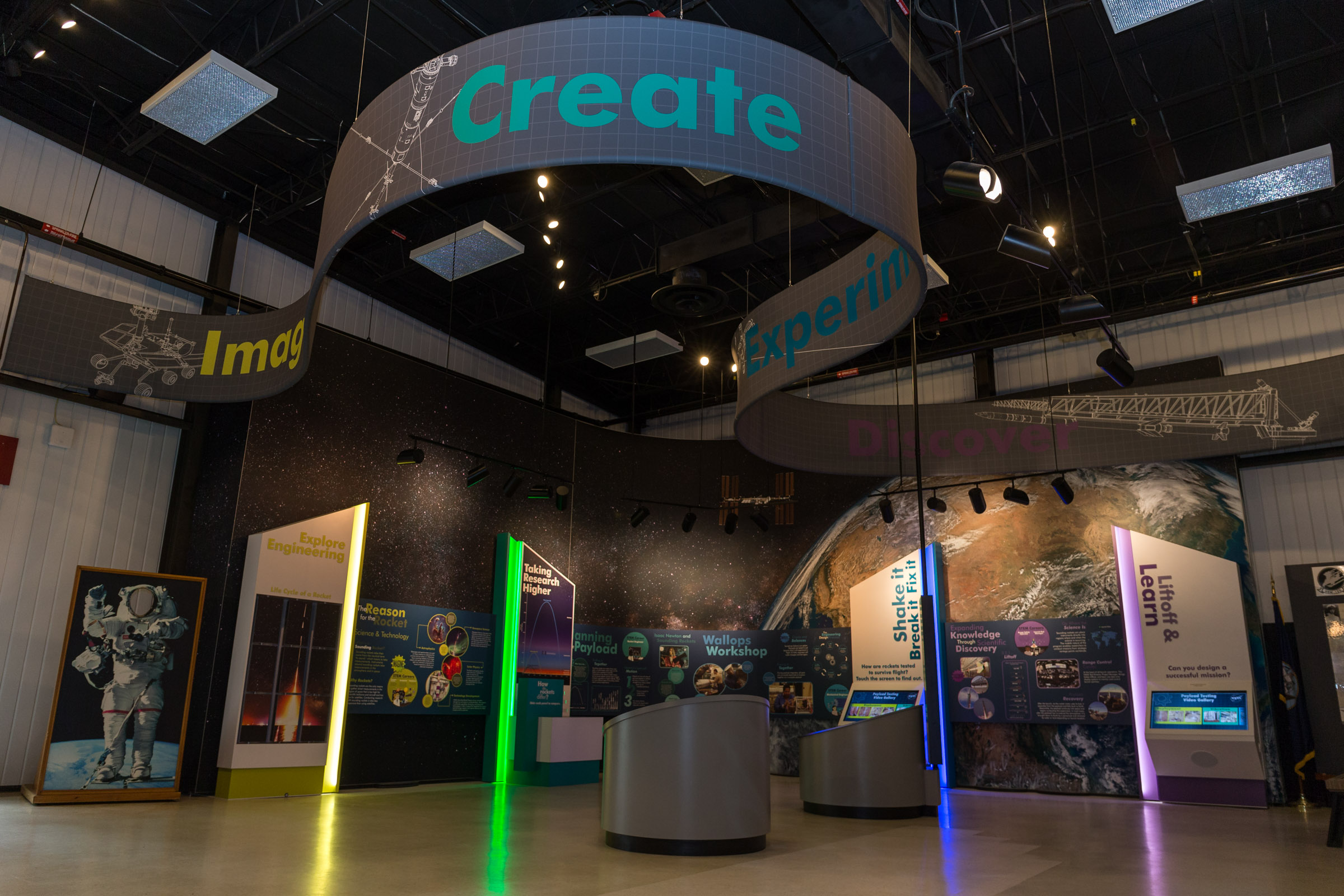
The Visitor Center at NASA’s Wallops Flight Facility is reopening to the public beginning May 6, 2022, after being closed for more than two years due to the COVID-19 pandemic.
The center will be open from 10 a.m. to 4 p.m. EDT on Fridays and Saturdays through June 4. Beginning June 7, the center will be open to the public 10 a.m. to 4 p.m. on Tuesdays through Saturdays.
Photos of the new sounding rocket display at NASA Wallops Flight Facility Visitor Center.
“We are looking forward to welcoming visitors back to the Visitor Center! While we have enjoyed our busy virtual schedule, we’re so excited to introduce visitors to our new in-person pop-up programs and activities!” said Amy Barra, Visitor Center director.
The Visitor Center staff has brought the excitement of NASA research to the public virtually for the past two years. During this time, over 539 programs have been conducted, reaching more than 28,315 people from 46 states and 16 countries across five continents.
Photos of the new sounding rocket display at NASA Wallops Flight Facility Visitor Center.
“The virtual field trips have been enthusiastically received by the public,” Bara said. “These will continue and will be available to groups on Tuesdays once the Visitor Center returns to normal operations in June. In-person programs also will resume this summer.”
The Visitor Center is open to the public with no admission fee. The center showcases the research activities at Wallops and throughout NASA through exhibits, full-scale rocket displays, and hands-on activities.
A two-stage suborbital sounding rocket is scheduled for launch March 21, 2022, for a mission managed by the Air Force Research Laboratory/Air Force Office of Scientific Research, from NASA’s launch range at the Wallops Flight Facility in Virginia.
The launch of the Terrier-Improved Malemute rocket is scheduled between 7-10 p.m. EDT, March 21. The backup launch dates are March 22 through April 1.
The purpose of the mission, called Boundary Layer Turbulence 2, or BOLT-2, is to increase the understanding of boundary layer transition, turbulent heating, and drag on vehicles flying at hypersonic conditions. Boundary layer transition to turbulence is the process where smooth, laminar flow becomes unstable after which turbulence dominates and significantly increases heating and drag on high-speed vehicles.
Live coverage of the mission is scheduled to begin at 6:40 p.m. EDT on the Wallops YouTube site. Launch updates will be available on the Wallops Facebook and Twitter pages.
The rocket launch is expected to be visible from the Chesapeake Bay region. The NASA Visitor Center at Wallops will not be open for viewing the launch.
NASA’s Wallops Flight Facility in Virginia was selected by Rocket Lab as the home for its new Neutron rocket’s first launch pad and production facility, further supporting the growth of commercial space capabilities in Virginia.
The Neutron Production Complex will include a rocket production, assembly, and integration facility just outside the NASA gate to Wallops Island. The dedicated launch pad will be located on the south end of Wallops Island.
“NASA’s only owned and operated launch range at Wallops Flight Facility supports small- and medium-class orbital rocket launches, which are key contributors to a growing space economy,” said Wallops Director David Pierce. “The high-tech jobs created by this move are vital for the Wallops region, and I’m excited we’re bringing more of the agency’s expertise to Rocket Lab, Virginia Space, and all our partners on the Eastern Shore.”
Rocket Lab has targeted the first Neutron medium class orbital rocket launch for no earlier than 2024.
“We congratulate the Commonwealth of Virginia, Virginia Space and Accomack County working with Rocket Lab to bring this next chapter of commercial space operations to Wallops,” said Pierce. “We welcome Rocket Lab’s expansion on the Shore and look forward to working with them in bringing this new launch capability to reality.”
Wallops is a multi-user/multi-tenant facility in a geographic location ideal for supporting satellite tracking and commanding, military operations and training, scientific investigations, technology development and testing, as well as commercial aerospace. The facility’s diverse mission sets and on-site partners, including the U.S. Navy, National Oceanic and Atmospheric Administration, the United States Coast Guard, and Virginia Space’s Mid-Atlantic Regional Spaceport, are a model for leveraging and optimizing multi-organizational capabilities and support services.
A robust and competitive low-Earth orbit economy is vital to continued progress in space. The United States is committed to encouraging and facilitating the growth of the U.S. commercial space sector that supports America’s needs, is globally competitive, and advances U.S. leadership in the next generation of new markets and innovation-driven entrepreneurship. NASA has developed a long-term vision to achieve this goal where, one day, NASA will become one of many customers in low-Earth orbit. This plan builds on, uses the capabilities of, and applies the lessons learned from decades of work and experience with commercial companies.
Written By: Keith Koehler NASA’s Wallops Flight Facility, Virginia
NASA and commercial cargo provider Northrop Grumman are targeting 12:40 p.m. EST Saturday, Feb. 19, for the launch of the company’s 17th resupply mission to the International Space Station from NASA’s Wallops Flight Facility on Wallops Island, Virginia.
TV Delmarva will be in Wallops Island to bring you live coverage from ground level with this mission
Loaded with more than 8,200 pounds of research, crew supplies, and hardware, Northrop Grumman’s Cygnus cargo spacecraft will launch on the company’s Antares rocket from Virginia Space’s Mid-Atlantic Regional Spaceport.
The Cygnus spacecraft, named the S.S. Piers Sellers in honor of the late NASA astronaut who spent nearly 35 days across three missions helping to construct the space station, will arrive at the orbiting outpost Monday, Feb. 21. At about 4:35 a.m., NASA astronaut Raja Chari will capture Cygnus, with NASA astronaut Kayla Barron acting as backup. After Cygnus capture, mission control in Houston will send ground commands for the station’s arm to rotate and install it on the station’s Unity module Earth-facing port.
an investigation from Colgate-Palmolive that will leverage the acceleration of skin aging in microgravity to help create and validate an engineered tissue model to serve as a platform for testing potential products to protect aging skin
a demonstration of a lithium-ion secondary battery capable of safe, stable operation under extreme temperatures and in a vacuum environment
new hydrogen sensors that will be tested for the space station’s oxygen generation system
a system that will test hydroponic and aeroponic techniques for plant growth and will allow scientists to observe root growth through video and still images
The Cygnus spacecraft is scheduled to remain at the space station until May, when it will depart the station, disposing of several tons of trash during a fiery reentry into Earth’s atmosphere.