Tag: icy

  • Snow Squalls Could Create Hazardous New Year’s Eve Travel Across Delmarva, Maryland, and Pennsylvania

    Snow Squalls Could Create Hazardous New Year’s Eve Travel Across Delmarva, Maryland, and Pennsylvania

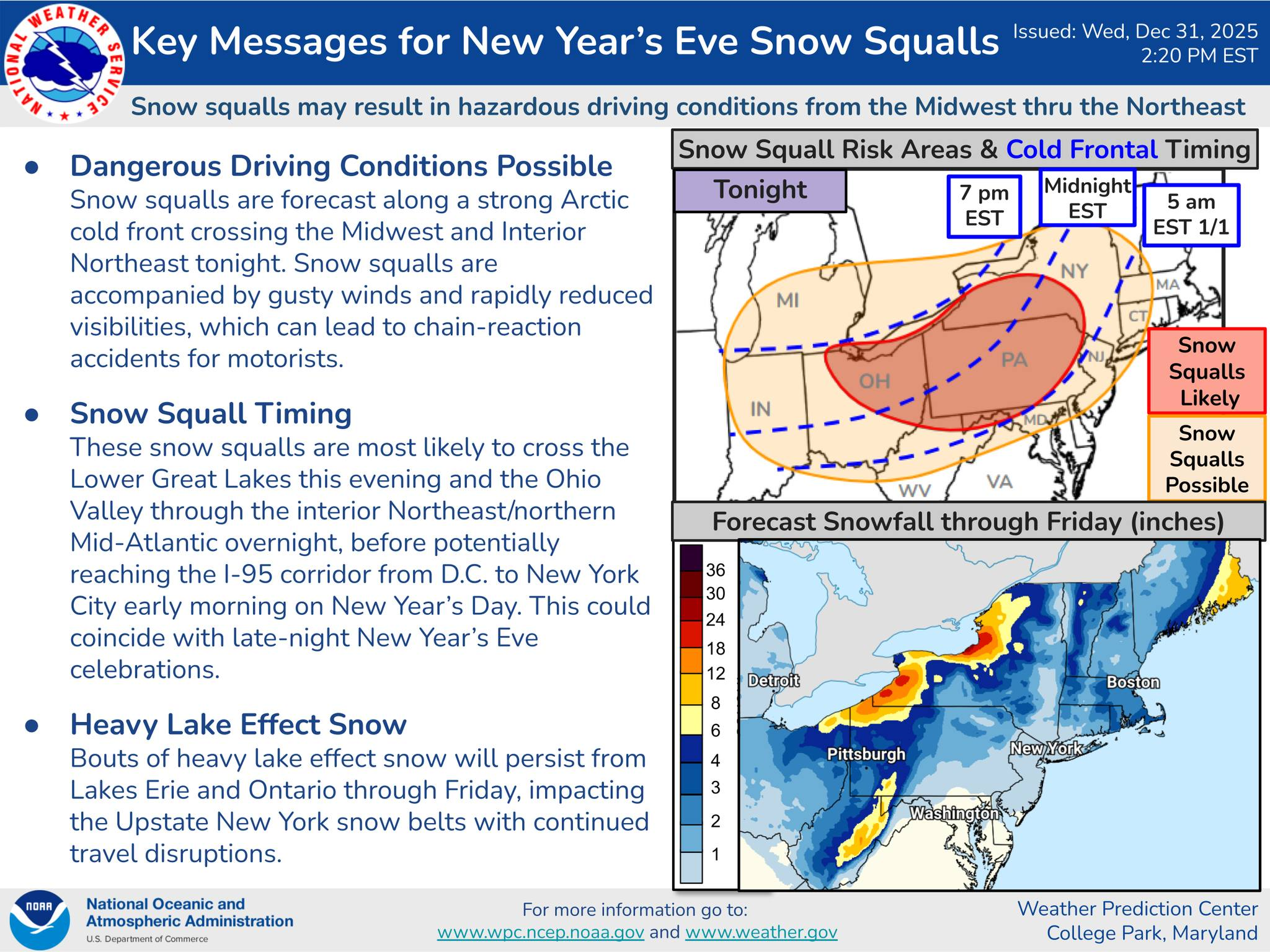
    Drivers across Delmarva, Maryland, and much of Pennsylvania are being urged to use caution this New Year’s Eve as a strong Arctic cold front moves through the region, bringing the potential for sudden snow squalls and dangerous travel conditions. While snowfall amounts are expected to be brief and localized, the intensity of these squalls could quickly reduce visibility to near zero and lead to slick, snow-covered roadways in a matter of minutes.

    Forecasters say the greatest risk for snow squalls will develop this evening across western and central Pennsylvania before shifting east overnight into eastern Pennsylvania, northern Maryland, and parts of Delmarva. The squalls may be accompanied by gusty winds, creating whiteout conditions along major travel routes including Interstates 76, 81, 83, 95, and portions of U.S. Route 13 across the Delmarva Peninsula.

    Timing is a major concern, as the snow squalls could impact travel during peak New Year’s Eve festivities and late-night returns home. In Maryland, areas north of the Baltimore Washington corridor stand the best chance of seeing brief but intense snow bursts overnight, while Delmarva may see fast-moving squalls or snow showers capable of briefly coating roadways, particularly in northern and interior sections in the early morning hours.

    Even though total snowfall amounts will be limited, the rapid drop in temperatures behind the front could allow any moisture on roadways to freeze quickly, increasing the risk of icy conditions. Motorists may encounter rapidly changing visibility and road conditions with little advance warning.

    Looking ahead, much colder air settling in behind the front will fuel lake-effect snow across western and north-central Pennsylvania through Friday. While this will not directly impact Delmarva or most of Maryland, it could lead to continued travel disruptions for those heading north or west after the holiday.

    Officials urge drivers to slow down, increase following distance, and avoid unnecessary travel during squalls. Snow squalls are often short-lived but can be just as dangerous as longer-duration winter storms, especially during busy holiday travel periods.
  • Icy Post Christmas Storm Across The Northern Mid-Atlantic States

    Icy Post Christmas Storm Across The Northern Mid-Atlantic States

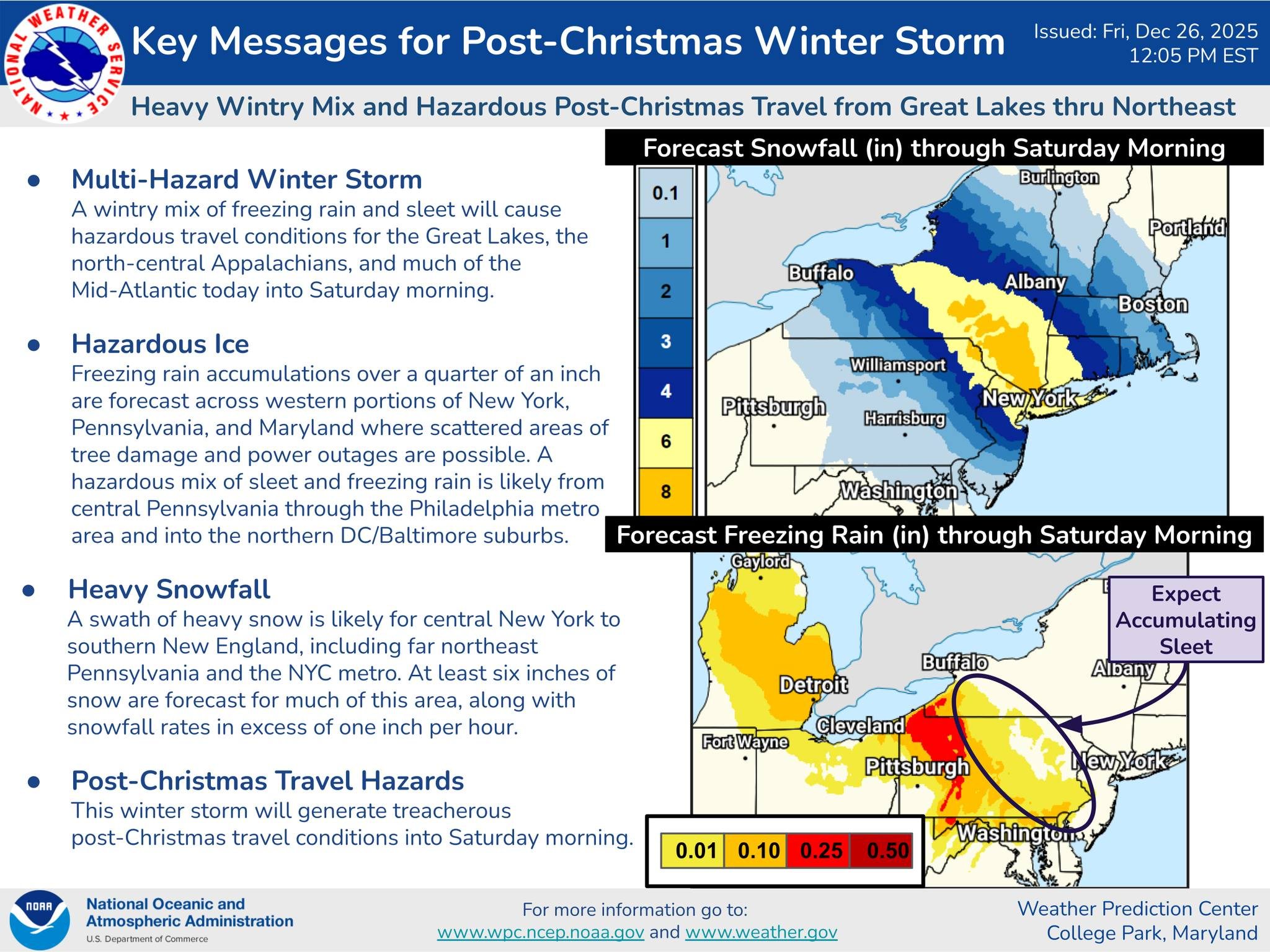
    A significant post-Christmas winter storm is expected to create hazardous conditions from the Great Lakes through the Mid-Atlantic and into the Northeast through Saturday morning, bringing a complex mix of snow, sleet, and freezing rain that will heavily impact travel and infrastructure across the region.

    According to the Weather Prediction Center, this is a multi-hazard winter storm, with the most dangerous impacts tied to ice accumulation and heavy snowfall. A swath of heavy snow is forecast from central New York into southern New England, including portions of northeastern Pennsylvania and the New York City metro area. Many of these locations could see six inches or more of snow, with snowfall rates exceeding one inch per hour at times, leading to rapidly deteriorating road conditions.

    Farther south, the primary concern shifts from snow to ice. Freezing rain and sleet are expected to dominate across portions of Pennsylvania, western and central Maryland, and parts of the Mid-Atlantic, creating a dangerous glaze on untreated surfaces. Ice accumulations over a quarter inch are possible in some areas, increasing the risk for tree damage and scattered power outages.

    Northern Maryland Impacts

    Northern Maryland, including areas near and north of the Baltimore metro, is expected to be near the transition zone between snow and freezing rain. This setup raises the risk for significant sleet accumulation followed by freezing rain, which can be particularly hazardous for travel. Roads may quickly become icy, even where surface temperatures hover near freezing. Elevated surfaces such as bridges and overpasses will be especially prone to icing. Any ice buildup on trees and power lines could result in localized outages and downed limbs.

    Northern Delmarva Concerns

    Across northern Delmarva, including Cecil County, Kent County, and areas near the upper Chesapeake Bay, a wintry mix of sleet and freezing rain is expected to develop, particularly late Friday into Friday night. While snowfall totals are likely limited, even light ice accretion could significantly impact travel along major corridors such as I-95, U.S. Route 13, and local secondary roads. Gusty winds combined with ice may further stress trees and utility lines, increasing the risk of isolated power disruptions.

    Travel and Safety Impacts

    The timing of this storm is particularly concerning, as it coincides with post-Christmas travel. Treacherous road conditions are expected to persist into Saturday morning, especially in areas affected by freezing rain and sleet. Visibility reductions, slick surfaces, and rapidly changing precipitation types will make driving dangerous, even for experienced winter drivers.
    Residents across northern Maryland and northern Delmarva are urged to closely monitor forecast updates, avoid unnecessary travel during periods of freezing rain, and prepare for the possibility of power outages. This storm serves as a reminder that ice, even more than snow, can quickly escalate impacts and disrupt daily life across the Mid-Atlantic.

  • An Icy Boxing Day On The Way For The Mid-Atlantic States

    An Icy Boxing Day On The Way For The Mid-Atlantic States

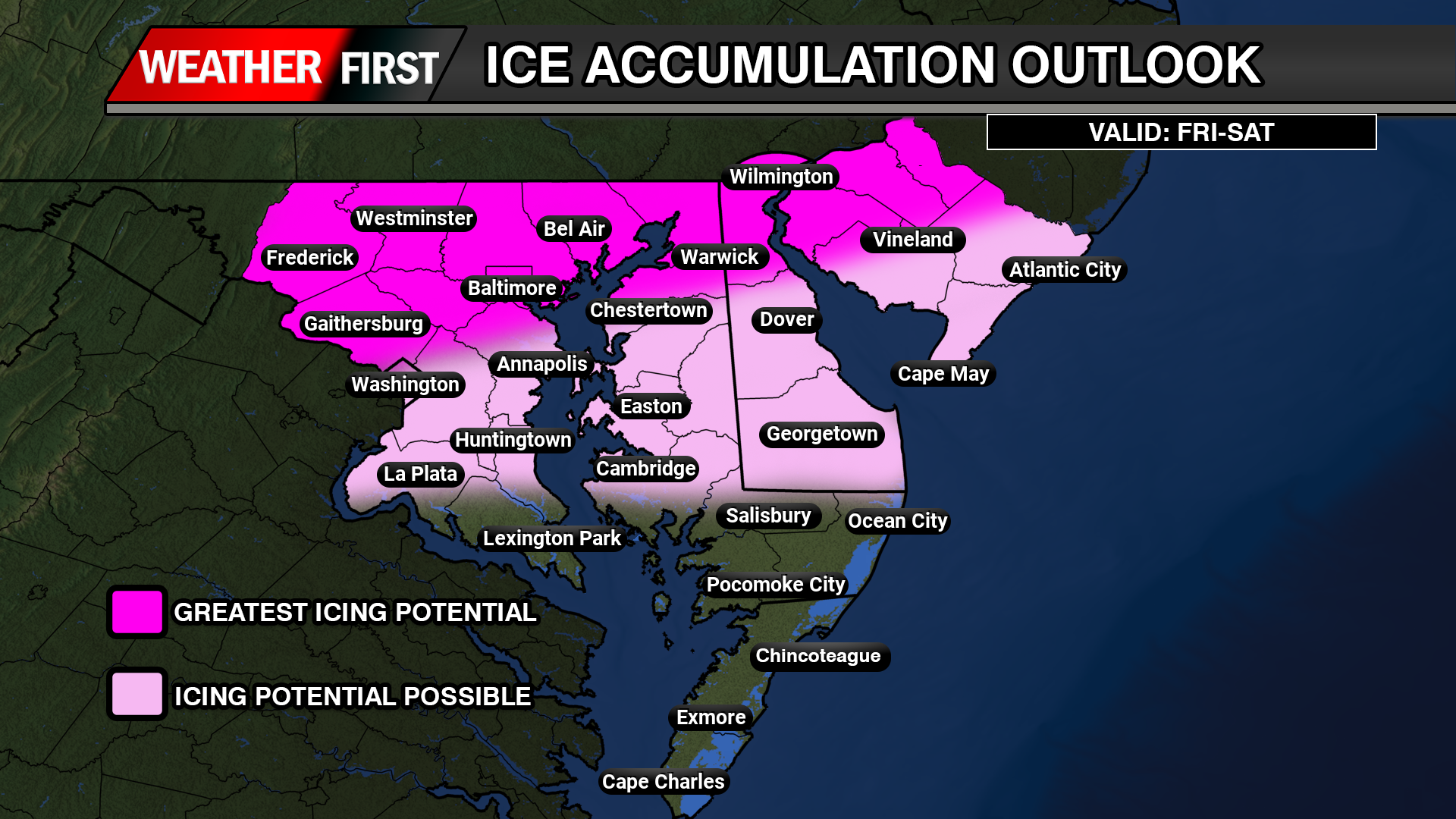
    Its shaping up to be a fairly icy day after Christmas for many across the Mid-Atlantic states Friday into Saturday. A classic “Overrunning Event” to unfold as a warm front moves into arctic air that’s trapped across New England forced by northeast winds ahead of the precip.

    An overrunning event in winter meteorology occurs when warm, moist air is lifted up and over a shallow layer of cold air at the surface. This setup is common ahead of winter storms and often develops north of a warm front. Because cold air is denser, it remains trapped near the ground while warmer air flows over it along sloping isentropic surfaces.

    As the rising warm air cools, clouds and precipitation develop well in advance of the main storm system. In winter, this frequently leads to widespread, long-duration precipitation, often falling as snow, sleet, or freezing rain, depending on the temperature profile of the atmosphere. Overrunning events are typically associated with stratiform precipitation, lower visibility, and steady rather than convective rainfall or snowfall.

    These events can produce significant winter weather impacts, including heavy snow accumulations, ice accretion, and hazardous travel conditions, especially when cold air is reinforced at the surface by high pressure to the north. Overrunning precipitation often marks the initial phase of a winter storm before stronger dynamics and surface low pressure move in.

    With the latest guidance at this time, areas closer towards the Mason-Dixon have the greatest threat for looking at snow and ice accumulations as the cold air will be locked up better in those regions. totals wise at this time is not for certain the amount of snow/ice is expected with this system as we get a bit closer in time. Areas across Central Delmarva will start off with that wintry mix but eventually change over to plain rain as the winds turn a bit more easterly which will bring in that warmer Atlantic air across the region.

  • UPDATED: Accumulating Snowfall Expected Late Tonight; Bitter Arctic Air To Follow

    UPDATED: Accumulating Snowfall Expected Late Tonight; Bitter Arctic Air To Follow

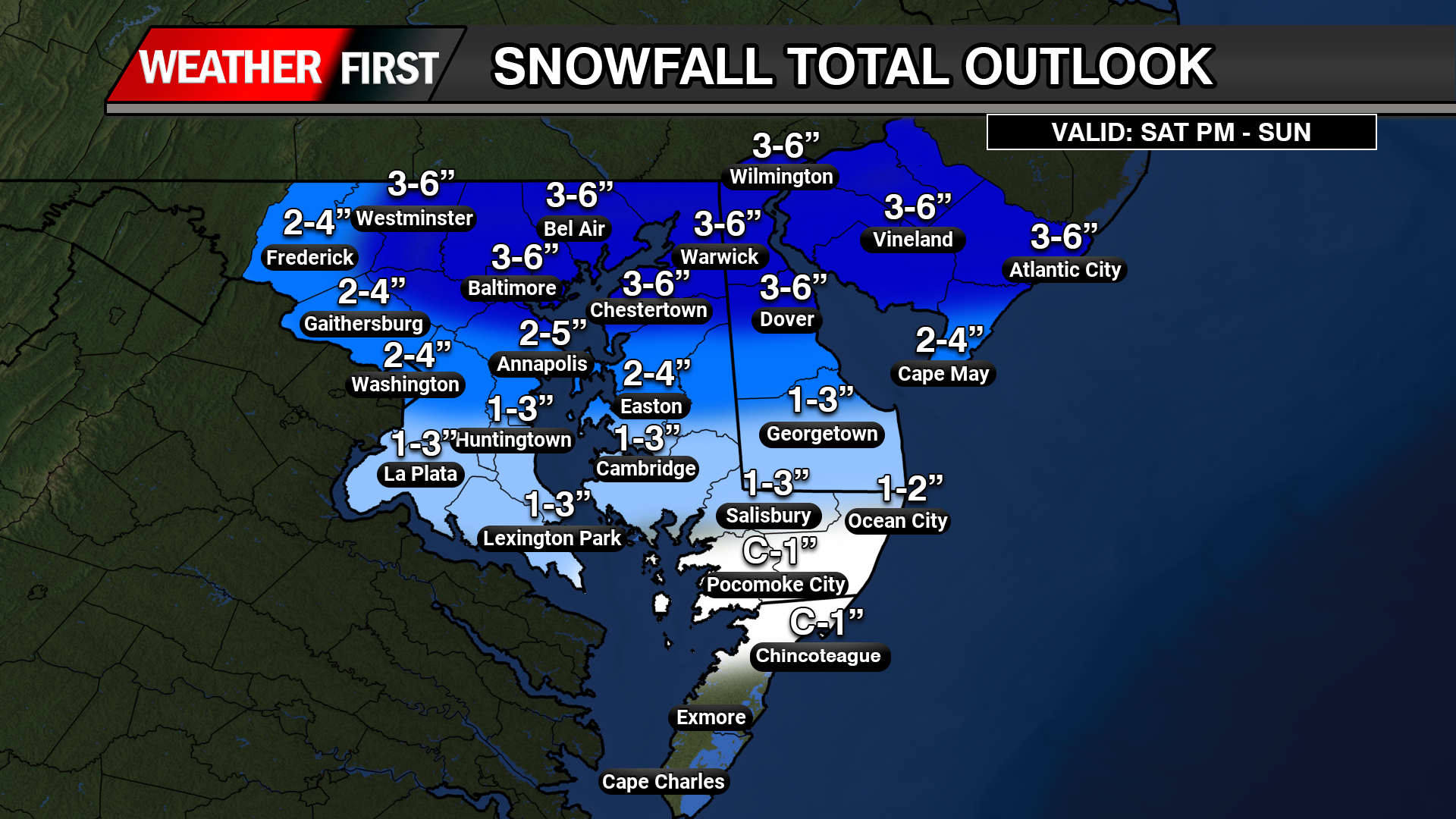
    Another round of accumulating snowfall is on tap for this weekend during the early morning hours Sunday through the late morning hours. Overall snowfall amounts have increased across Central and Northern Delmarva for tonight. A Clipper system approaching from the Mid-west will begin to redevelop a coastal low will bring a band of light to moderate snowfall to the region on Sunday as an arctic frontal boundary moves through bring severely cold temperatures throughout the Eastern US.

    Looks like right now areas across Northern Maryland, Northern Delmarva, and South Jersey will be in the hot seat for seeing the most accumulating snow when the coastal low begins to take over. A widespread swaft of 3-6 inches of snow is likely with areas further south will have lighter precipitation to deal with overall. Making for Sunday morning travel a bit slick with temperatures in the upper 20s to lower 30s and the winds begin to pick up later in the day for some blowing and drifting.

    An Arctic air mass is moving southward, bringing dangerously low temperatures and life-threatening wind chills across a broad swath of the central US, from the Northern Plains towards the Mid-Atlantic

    Temperatures are forecasted to plunge 20 to 30 degrees below normal, with wind chills dropping below -30°F in some areas. This extreme cold poses serious risks to human health, pets, and infrastructure, including the potential for frozen pipes.

    Residents in the affected regions are urged to prepare immediately by taking steps to protect themselves, their animals, and their homes. The agencies emphasize the importance of readiness to mitigate the harsh impacts of this severe weather event.

  • Accumulating Snow On The Way For Sunday; Followed By Arctic Blast

    Accumulating Snow On The Way For Sunday; Followed By Arctic Blast

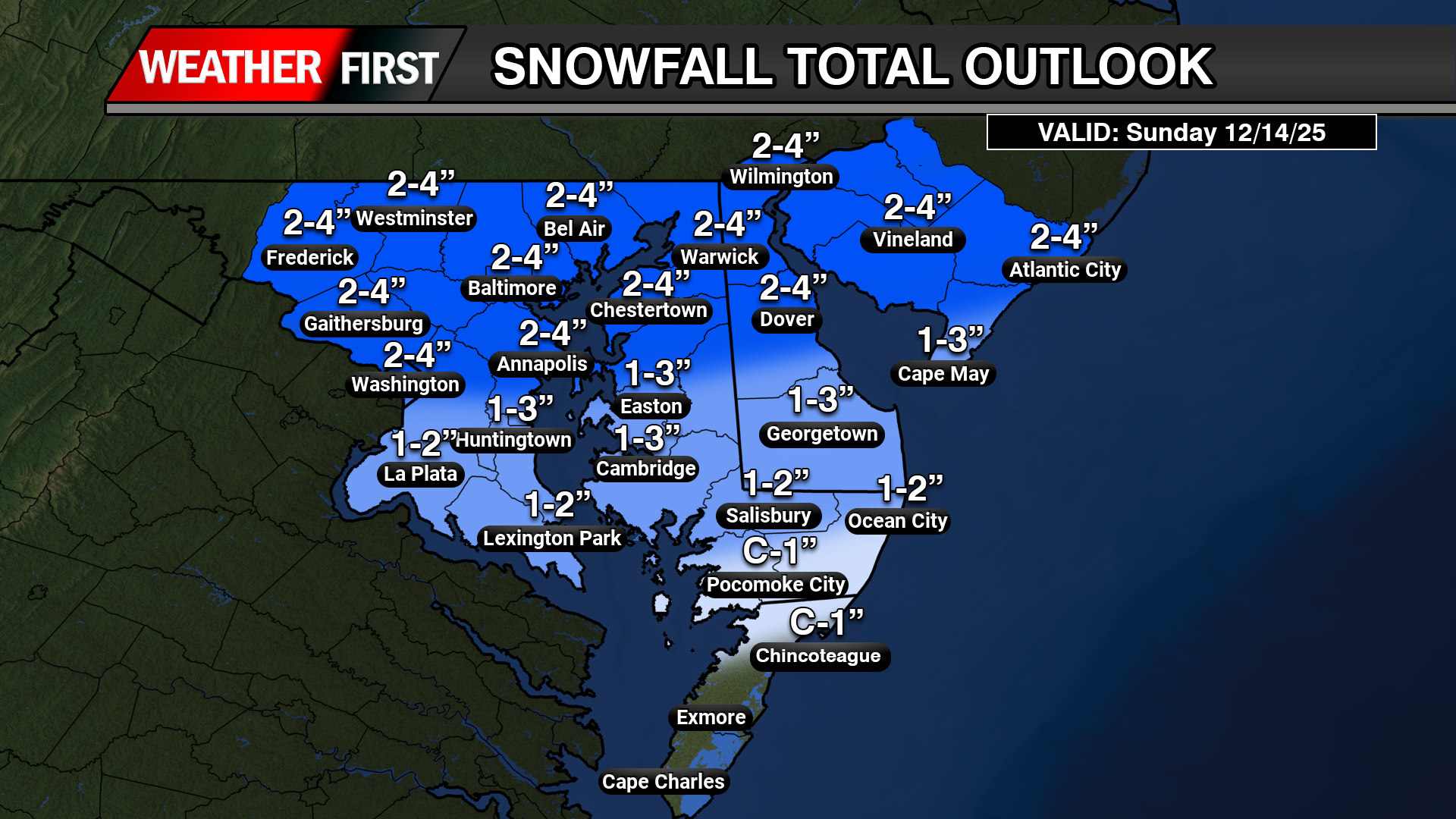
    Another round of accumulating snowfall is on tap for this weekend during the early morning hours Sunday through the late morning hours. A Clipper system approaching from the Mid-west will begin to redevelop a coastal low will bring a band of light to moderate snowfall to the region on Sunday as a arctic frontal boundary moves through bring severely cold temperatures throughout the Eastern US.

    Looks like right now areas across Northern Maryland, Northern Delmarva, and South Jersey will be in the hot seat for seeing the most accumulating snow when the coastal low begins to take over. A widespread swaft of 2-4 inches of snow seems probable with areas further south will have lighter precipitation to deal with overall. Making for Sunday morning travel a bit slick with temperatures in the upper 20s and the winds begin to pick up later in the day for some blowing and drifting.

    An Arctic air mass is moving southward, bringing dangerously low temperatures and life-threatening wind chills across a broad swath of the central US, from the Northern Plains towards the Mid-Atlantic

    Temperatures are forecasted to plunge 20 to 30 degrees below normal, with wind chills dropping below -30°F in some areas. This extreme cold poses serious risks to human health, pets, and infrastructure, including the potential for frozen pipes.

    Residents in the affected regions are urged to prepare immediately by taking steps to protect themselves, their animals, and their homes. The agencies emphasize the importance of readiness to mitigate the harsh impacts of this severe weather event.

  • Delmarva’s First Measurable Snow Of The Season On Friday

    Delmarva’s First Measurable Snow Of The Season On Friday

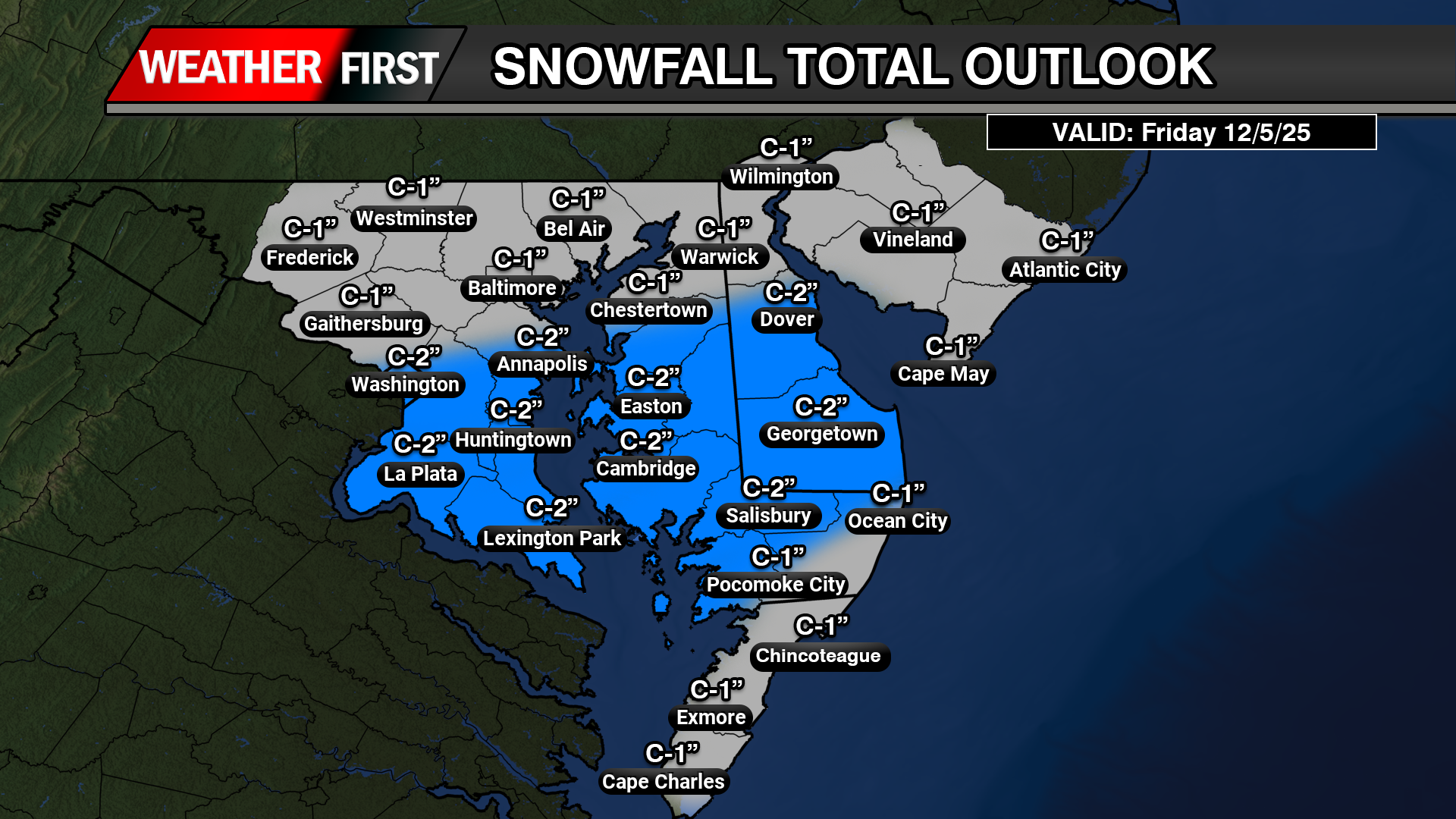
    Well folks, it looks like we have our first snowfall of season upon us for Friday. Its not a major event or anything but enough to make things a bit slippery for your Friday morning commute. Only because usually the first snow is the one that gives motorists headaches and no being used to dealing with it on the roadways. Here is the break down.

    A weak flat wave system will be riding along an arctic boundary as precipitation enters the colder airmass. An area of high pressure out ahead providing the fresh arctic airmass will be enough to support a few hours of wet snow across the Mid-Atlantic starting around 2-3am on Friday and become more steady when day breaks. Snow will remain steady through 10am before beginning to taper off and or mixing with rain towards noon across the Maryland Eastern Shore and the VA counties.

    The latest forecast is calling for a spread of a heavy coating to on the high end 2 inches across Southern Maryland and Central Delmarva. This is where the majority of the heavier snow bands will likely end up as temperatures will range from 28-32 during the whole duration. Area further south across Ocean City along the coast will be dealing with some mixing problems at times with the warmer ocean waters nearby. Areas further north across Northern Maryland, Northern Delmarva, and South Jersey will only see a dusting up to a inch with light snow overall based on the latest track.

    As mentioned before, impacts from this winter storm will be very light with only light accumulations expected. Motorists should still use caution on area roadways as they may become icy and slushy at times during the Friday morning commute.

  • Wintry Mix Threatens Central and Northern Delmarva Again with Ice Accretion and Slick Travel This Weekend

    Wintry Mix Threatens Central and Northern Delmarva Again with Ice Accretion and Slick Travel This Weekend

    A complex winter weather system is set to impact portions of central and northern Delmarva, bringing a mix of snow, sleet, and freezing rain as temperatures hover near the freezing mark towards early Saturday afternoon. This system will create hazardous travel conditions, especially in areas where freezing rain leads to ice accretion.

    Weather Setup and Model Guidance

    Latest guidance from the ICON, GFS, and ECMWF suggests that cold air at the surface will remain entrenched across northern Delmarva, allowing for a prolonged period of wintry precipitation before a gradual changeover to rain. Meanwhile, high-resolution CAMS guidance, including the HRW-WRF & NAM12KM, continues to highlight higher localized areas of ice accumulation, particularly in northern regions where cold air remains stubborn.

    As the system moves through, precipitation is expected to start as a wintry mix of snow, sleet, and freezing rain across northern and central Delmarva, with surface temperatures struggling to rise above 32°F. By early afternoon, warmer air aloft will cause much of central Delmarva to transition to plain rain, while northern Delmarva may see continued ice accretion before the system exits early Sunday.

    Potential Ice Accretion and Travel Hazards

    • Ice Accumulation: Up to 0.10” of ice is possible across northern & central Delmarva, with localized higher amounts in areas where freezing rain persists.
    • Travel Impacts: Slick roadways and hazardous conditions are expected, particularly on bridges and overpasses. Untreated surfaces may become icy and dangerous.
    • Timing: The wintry mix will continue through early afternoon, with a gradual transition to rain in central Delmarva through the evening hours. Northern areas may hold onto freezing rain longer before precipitation moves out early Sunday morning.

    Stay Weather Aware

    Residents across central and northern Delmarva should stay updated with the latest forecasts, as even small changes in temperature could impact precipitation type and ice accumulation. If traveling, exercise caution and allow extra time, especially in areas where freezing rain may linger.

  • Potential Winter Storm Threat Looming Early Next Week

    Potential Winter Storm Threat Looming Early Next Week

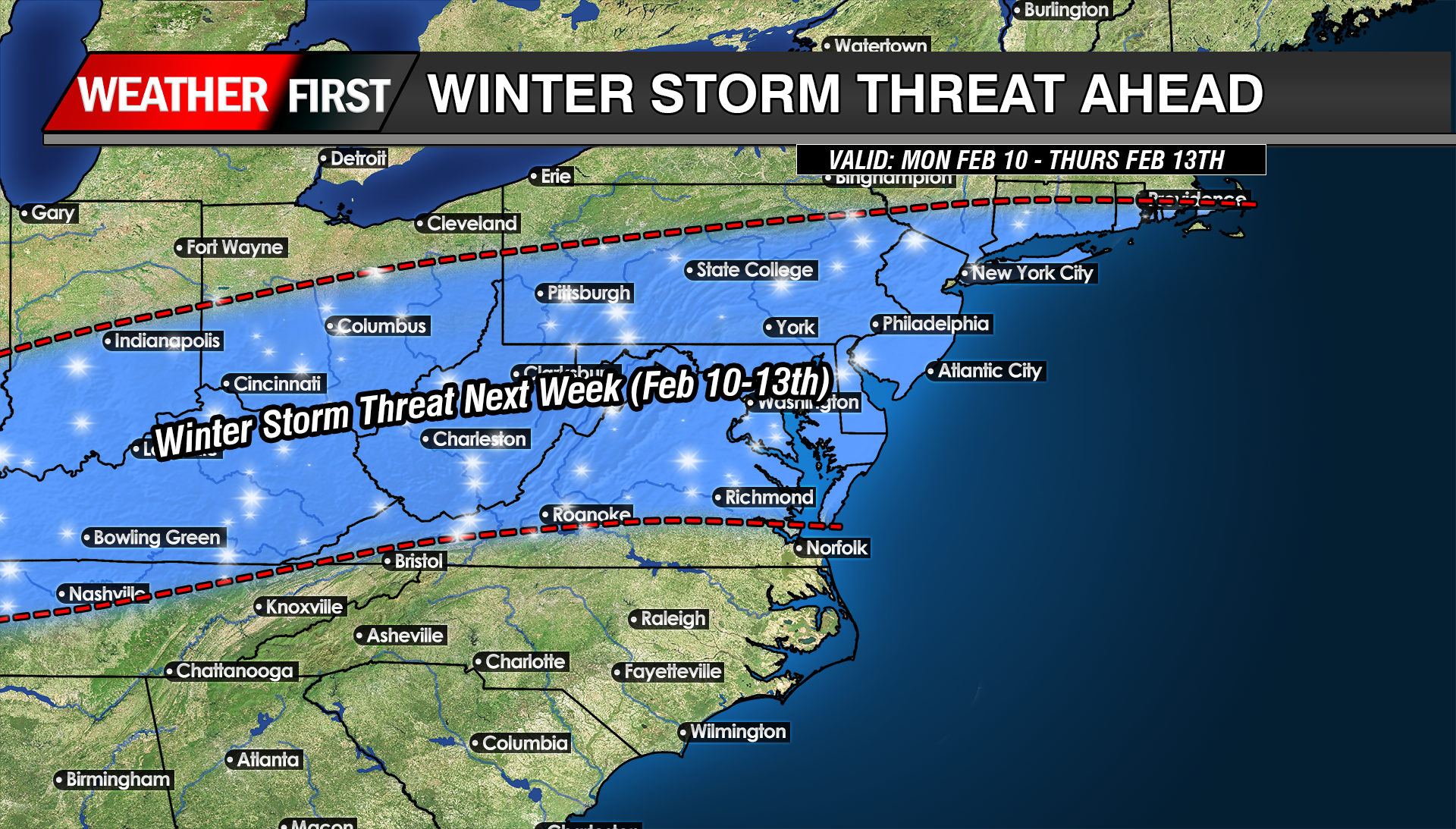
    Just when it seemed like winter might be winding down, another round of winter weather is on the horizon. After a brief break from bitter cold and snow, forecast models indicate that winter storm threats will return next week, affecting the Midwest, Mid-Atlantic, and Northeast. This won’t be just one isolated storm, but several waves of wintry weather are expected. This setup is similar to the major winter storm we experienced in early January, featuring a classic “overrunning” pattern, which often produces significant snowfall in our region. But what exactly is an overrunning winter storm?

    An overrunning winter storm occurs when warm, moisture-laden air moves over a colder, denser air mass at the surface, leading to prolonged periods of wintry precipitation. This happens when warm air from the south collides with cold air entrenched to the north. Unlike last time, however, this system is being driven by a strong Arctic high-pressure system, rather than a blocking low-pressure system to the north. Scientifically, this process is known as Isentropic Ascent—a term used to describe how air is lifted along a temperature gradient.

    Current mid-range model guidance (GFS, ECMWF, UKMET, CMC, ICON) consistently shows an overrunning event with multiple waves of low pressure traveling along a stalled frontal boundary. A strong high-pressure system (1038-1040mb) will provide ample cold air north of this boundary, while incoming warm, moist air will fuel heavy precipitation. The exact position of the frontal boundary will determine whether areas experience heavy snow, plain rain, or, in the worst-case scenario, significant icing. Overrunning setups are notorious for producing dangerous ice storms, as cold air remains locked at the surface while warm air aloft causes precipitation to fall as freezing rain or sleet—leading to hazardous road conditions.

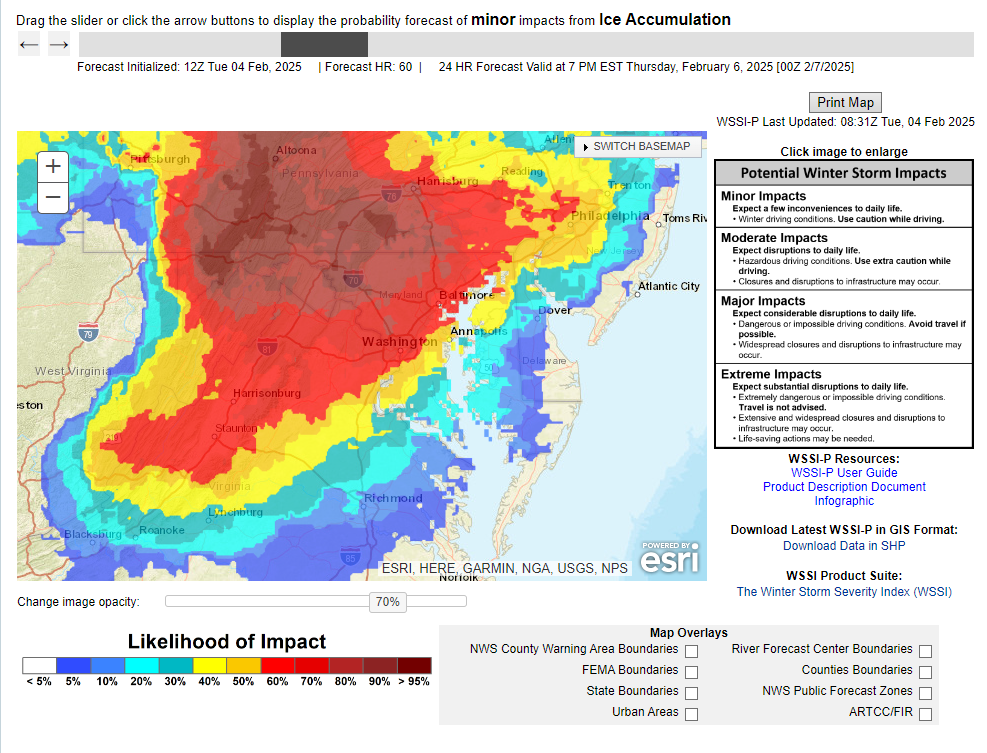
    The Weather Prediction Center (WPC) has already issued impact probabilities for next week’s potential winter storm, indicating a 50-60% chance of Minor Winter Storm Impacts and a 40-60% chance of Moderate Winter Storm Impacts. This suggests that disruptions to travel and infrastructure closures could occur.

    We’ll continue to monitor the latest forecast developments and provide real-time updates as this potential winter storm approaches early next week. Stay tuned for the latest information.

  • Freezing Drizzle Threat Wednesday Night into Thursday Morning for Central and Northern Delmarva

    Freezing Drizzle Threat Wednesday Night into Thursday Morning for Central and Northern Delmarva

    A period of freezing drizzle is expected to develop across central and northern Delmarva Wednesday night, bringing the potential for hazardous travel conditions before precipitation transitions to plain rain by Thursday morning. The greatest threat for icy conditions will be across northern Delmarva, where temperatures will be more favorable for freezing precipitation.

    What is Freezing Drizzle?

    Freezing drizzle occurs when supercooled liquid droplets fall from the sky and freeze upon contact with surfaces such as roads, sidewalks, trees, and vehicles. Unlike freezing rain, which tends to form larger droplets, freezing drizzle consists of much smaller droplets that can create a thin but dangerous glaze of ice. Because it often accumulates subtly, freezing drizzle can be particularly hazardous as it may not appear as obvious as snow or sleet.

    Timing & Transition to Rain

    Freezing drizzle is expected to develop shortly after sundown Wednesday evening and will continue off and on through the night. Areas across northern Delmarva will experience the most significant threat of icy conditions due to colder surface temperatures sticking around a bit longer. As temperatures gradually rise early Thursday morning, all areas will transition to plain rain by mid-morning, reducing the risk of ice accumulation.

    Potential Impacts

    Even a light glaze of ice can lead to dangerous conditions, including:

    • Slippery Roads & Sidewalks – Even untreated surfaces may quickly become icy, increasing the risk of accidents and falls.
    • Icy Bridges & Overpasses – Elevated surfaces freeze faster than ground-level roads, making them particularly hazardous.
    • Thin Ice Accumulation on Vehicles – Ice may form on car windshields and other exposed surfaces, requiring extra time for de-icing before travel.

    If you must travel Wednesday night into early Thursday morning, use caution, reduce speed, and be prepared for slick spots, especially in northern Delmarva. Stay updated with the latest forecasts and advisories as conditions evolve.