Tag: cold

  • Dangerous Arctic Cold Targets Delmarva Early Next Week

    Dangerous Arctic Cold Targets Delmarva Early Next Week

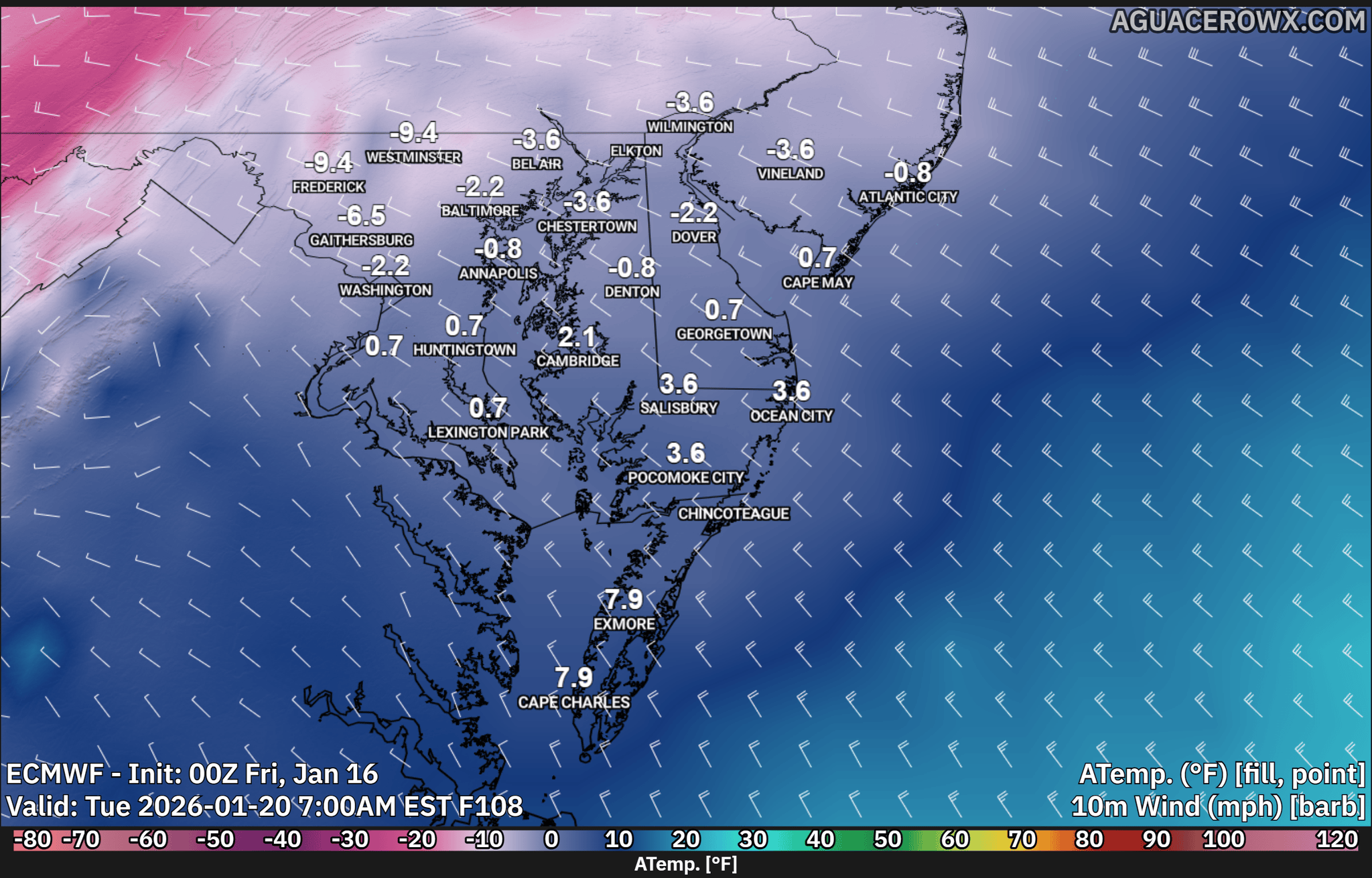
    A prolonged stretch of below normal temperatures is expected to grip the Delmarva region beginning Sunday and lasting through the middle of next week, with the most dangerous cold arriving Monday night into Tuesday.

    A deep upper level trough will settle over the eastern United States, allowing an arctic air mass to surge southward into the Mid Atlantic. At the surface, strong high pressure will dominate the region, keeping conditions dry but doing little to prevent temperatures from falling sharply.

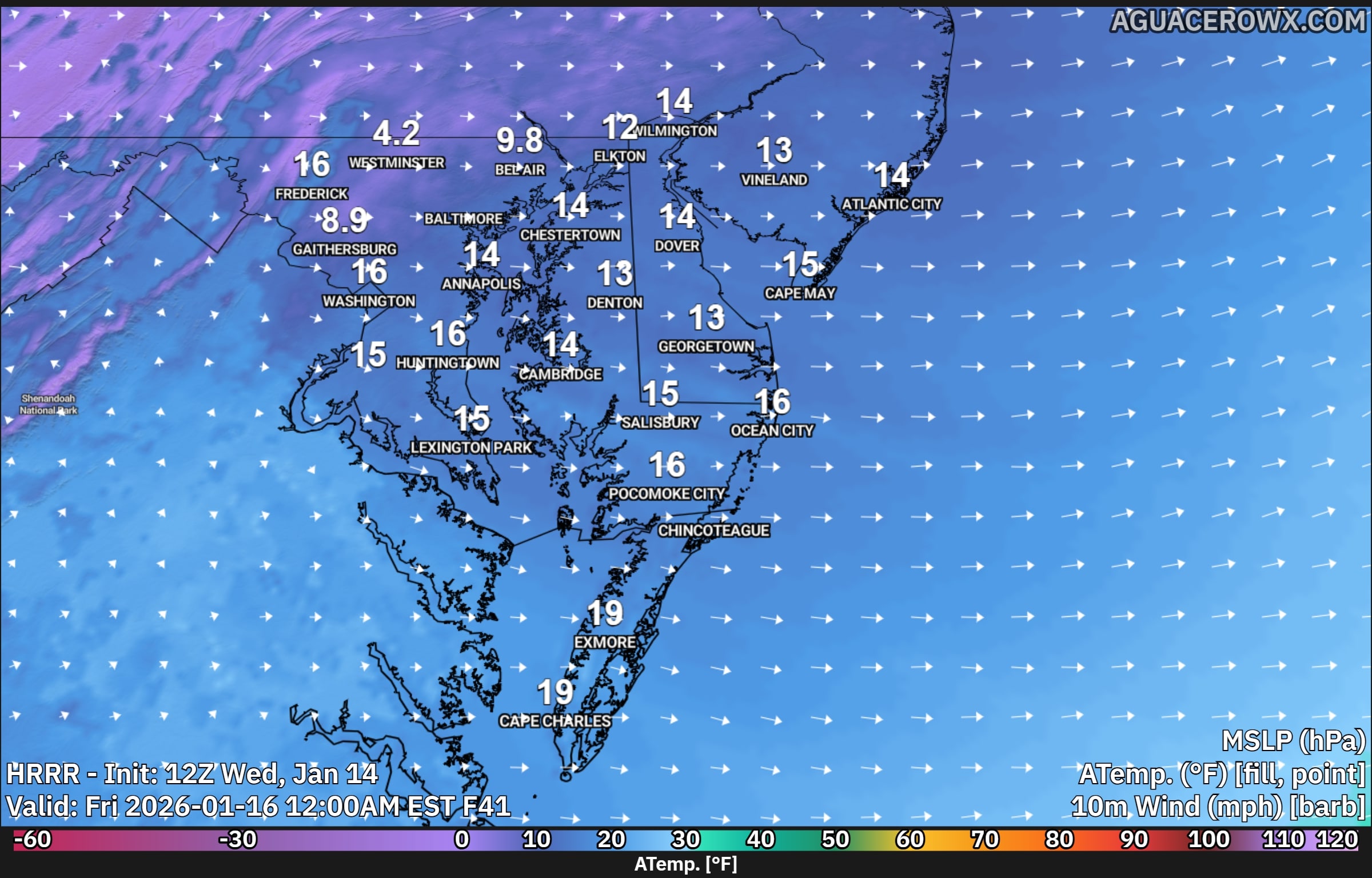
    Cold air will steadily build into the region starting Sunday, with daytime temperatures remaining well below average through at least Wednesday. The core of the arctic air mass is expected to be centered over Delmarva Monday night through Tuesday night, when the cold will be at its most intense.

    During this time, overnight wind chill values are expected to fall into the single digits and potentially below zero, especially during the overnight and early morning hours. Current indications suggest Monday night will be the coldest period, with slightly less extreme conditions expected Tuesday night.

    Daytime temperatures on Tuesday are also trending colder, with highs forecast to struggle into the upper teens to low 20s across much of Delmarva. These values are well below normal for mid January and could pose risks to anyone spending extended time outdoors.

    Given the severity of the cold, cold weather advisories or warnings may be issued for one or both nights. Residents are encouraged to prepare now by limiting outdoor exposure, protecting pets, and ensuring vulnerable pipes and plumbing are properly insulated.

    Temperatures are expected to gradually moderate later in the week as the upper level trough begins to lift, allowing readings to trend closer to seasonal averages by Thursday.

  • Unsettled Weekend Weather Ahead; Coastal Storm Threat Diminishing

    Unsettled Weekend Weather Ahead; Coastal Storm Threat Diminishing

    A developing storm system will bring a period of light snow early Saturday morning before transitioning to rain for many locations as the day goes on. The highest chances for accumulating snow will be found near and northwest of the Interstate 95 corridor, with the greatest totals expected farther north.

    An upper level trough will be positioned over the eastern United States this weekend, allowing several smaller disturbances to move through the region. The first of these systems is expected to arrive during the pre dawn hours on Saturday. As it moves in, increasing lift in the atmosphere and a gradual influx of milder air aloft will help precipitation develop.

    Forecast guidance now suggests the system will be slightly more organized than previously expected. As a result, rainfall totals have increased modestly. Areas near and northwest of I 95 are expected to receive between one tenth and two tenths of an inch of liquid precipitation through Saturday, while locations southeast of I 95 are likely to remain under one tenth of an inch.

    Precipitation is expected to begin mainly as snow early Saturday before gradually changing to rain from southeast to northwest. Little to no snow accumulation is expected southeast of the I 95 corridor before the transition occurs. Near and just northwest of I 95, snowfall amounts should range from a light dusting up to one inch.

    Farther north, including the Lehigh Valley, northwest New Jersey, and the southern Poconos, colder air will allow snow to persist longer. In these areas, snowfall totals are now forecast to reach one to two inches, with up to three inches possible at higher elevations in the southern Poconos where rain mixing may be limited.

    Watching a Coastal System for Sunday

    Attention then turns to a separate storm system expected to develop offshore late in the weekend. This coastal low is forecast to form near the Outer Banks and track northeastward on Sunday. At this time, the overall threat for a significant snowfall remains low.

    Most forecast models continue to favor a track well offshore, which would limit impacts across the region. Under the current forecast, light snow is possible along the coast and areas south and east of I 95 on Sunday, while locations farther inland may see little or no accumulation.

    There is still some uncertainty, as a small number of ensemble models suggest a closer track could occur. However, confidence in that scenario remains low. Probabilities for advisory level snowfall remain modest, generally around 20 to 25 percent at the immediate coast, decreasing farther inland.

    Current snowfall forecasts call for around one half inch to one and a half inches along the coast and southern Delaware, with a coating to one inch possible up to the I 95 corridor. North and west of I 95, only a few flurries or trace amounts are expected.

    Any precipitation associated with this system is expected to taper off Sunday night as the storm pulls farther offshore.

  • Bitter Cold Wind Chills To Finish Out The Work Week

    Bitter Cold Wind Chills To Finish Out The Work Week

    A surge of colder air behind a cold front will bring sharply colder temperatures and strong winds to the region late Thursday into Friday, creating dangerously cold wind chills.

    After the cold front moves through Thursday morning, strong cold air will continue to pour into the area through Friday morning. Afternoon temperatures on Thursday are expected to remain stuck in the low to mid 30s, while west winds increase to 15 to 20 mph with gusts reaching 30 to 35 mph. These gusty winds will make it feel much colder, with wind chills struggling to climb out of the upper teens and lower 20s during the day.

    As temperatures fall Thursday night, most locations will drop into the mid teens to near 20 degrees by early Friday morning. Although winds will ease slightly overnight, steady west winds of 10 to 15 mph will persist. This combination of cold air and lingering wind will cause wind chills to fall into the single digits across much of the area by daybreak Friday, with below zero wind chills possible in the higher elevations of the southern Poconos.

    By Friday morning, the strongest push of cold air will begin to ease, allowing winds to turn more southwesterly and temperatures to slowly recover. Afternoon highs on Friday will range from the upper 20s to the mid 30s. However, continued breezy conditions will keep wind chills in the 20s for much of the day, making it feel colder than the actual temperatures suggest.

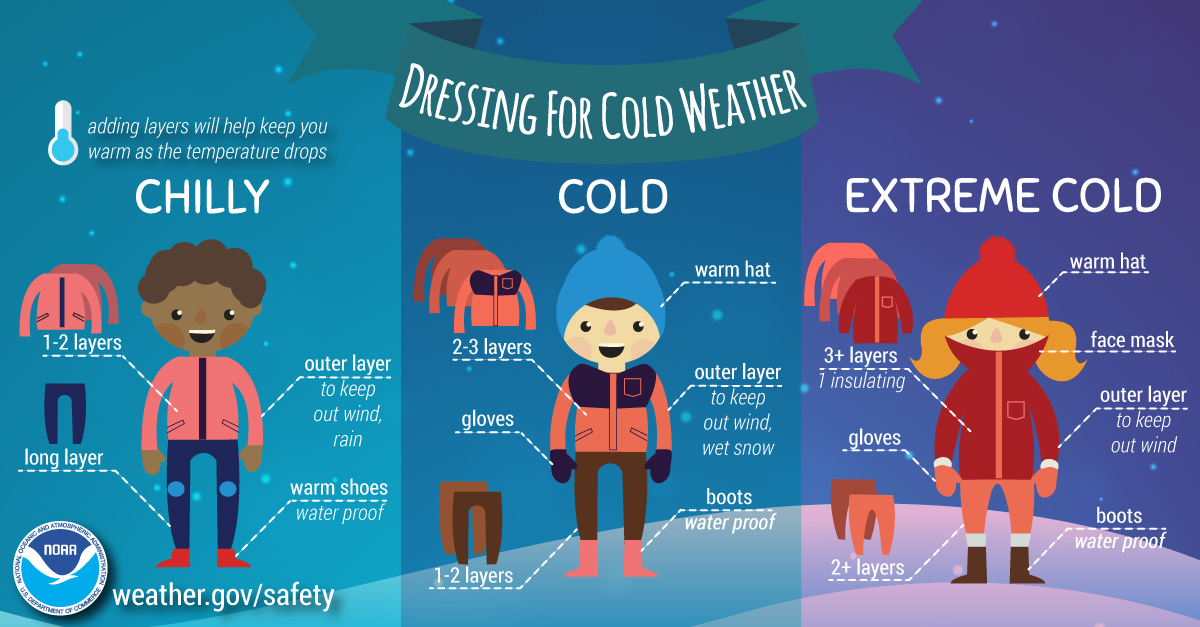
    Residents are encouraged to dress in layers, limit prolonged exposure to the cold, and take precautions to protect pets, pipes, and vulnerable populations during this stretch of cold and windy weather.

  • Flash Freeze Risk Thursday Morning as Arctic Front Sweeps Through

    Flash Freeze Risk Thursday Morning as Arctic Front Sweeps Through

    A rapidly moving arctic cold front will create dangerous flash freezing conditions early Thursday morning, posing a significant hazard for travel across the region.

    Temperatures are expected to fall sharply from the 50s into the 20s in just a few hours as the front passes. Rain will transition to snow during this time, but the most serious concern will be the sudden freeze of wet roadways, sidewalks, and bridges.

    As colder air rushes in behind the front, any standing water from earlier rainfall will freeze almost instantly. This can lead to a thin but extremely slippery layer of ice forming with little to no warning. Bridges, overpasses, untreated roads, and shaded areas will be especially vulnerable to rapid icing.

    The timing of the temperature drop may coincide with the Thursday morning commute, increasing the risk for accidents and hazardous travel conditions. Even areas that see minimal snowfall could experience dangerous conditions due to ice forming faster than road crews can treat surfaces.

    Gusty winds behind the front will reinforce the cold air and cause wind chills to drop quickly, making conditions feel even colder by daybreak. Any snow that does fall will be brief, but it may further reduce visibility during the transition.

    Residents are urged to use caution if traveling early Thursday morning. Slowing down, allowing extra stopping distance, and remaining alert for icy patches will be critical. If possible, delaying travel until conditions improve later in the morning is strongly advised.

    Conditions are expected to stabilize later Thursday as precipitation ends, but cold temperatures will persist through the day.

  • Colder Pattern Looks to Take Hold Across the Eastern U.S. Through Late January

    Colder Pattern Looks to Take Hold Across the Eastern U.S. Through Late January

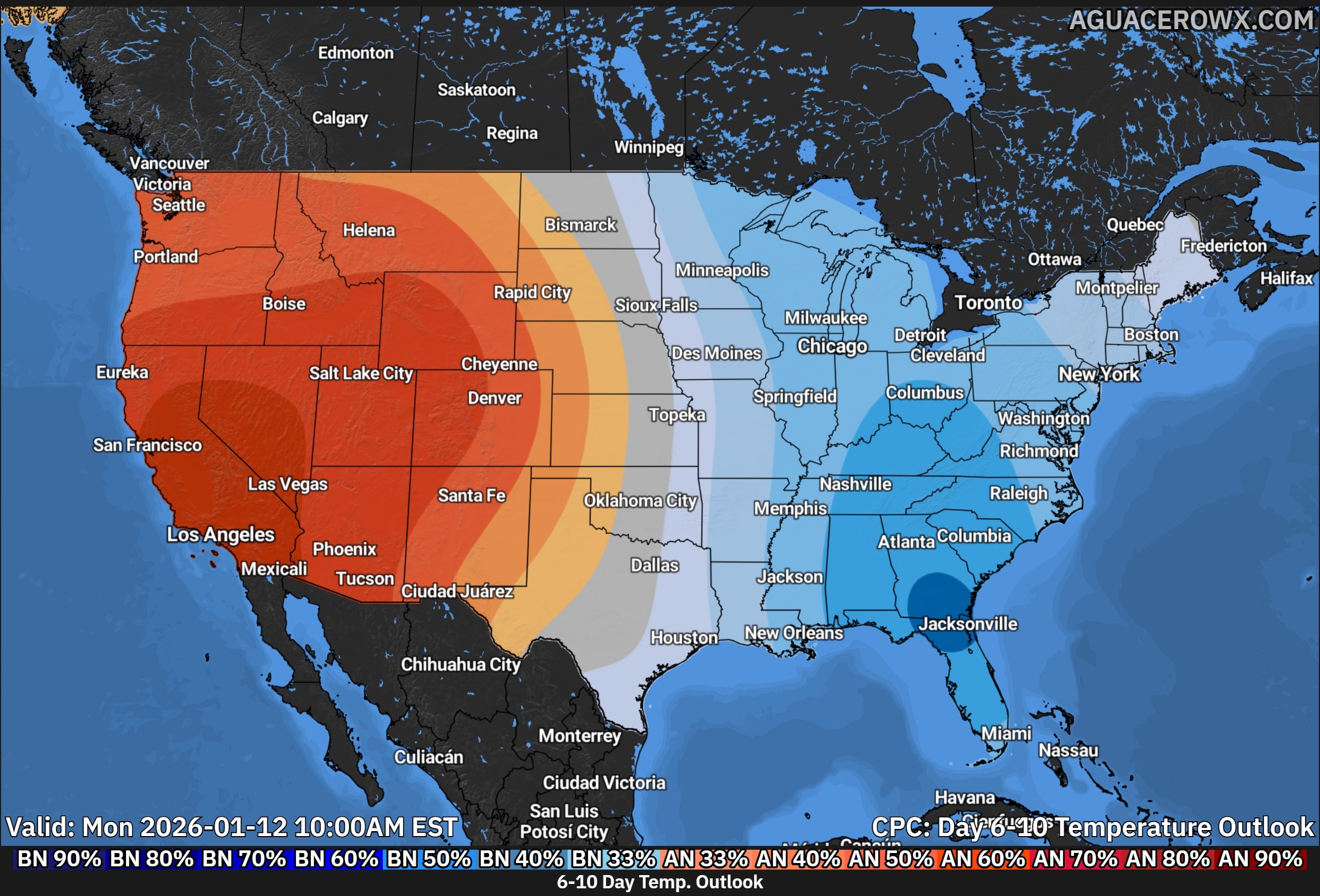
    A noticeable shift toward colder than average temperatures is expected to develop across much of the eastern United States over the next few weeks, according to the latest temperature outlooks from the Climate Prediction Center. Multiple forecast periods show increasing confidence that below average temperatures will dominate the East, including the Mid Atlantic and Delmarva region.

    6 to 10 Day Outlook: Cold Begins to Push East

    During the 6 to 10 day period, colder air is forecast to expand across much of the eastern half of the country. Below average temperatures are favored from the Midwest through the Ohio Valley and into the Mid Atlantic and Southeast. The Delmarva Peninsula falls within this colder zone, signaling a transition away from recent mild conditions.

    While the strongest cold anomalies are centered farther west early on, the overall pattern supports repeated intrusions of cooler air into the region. Daytime highs are expected to trend several degrees below normal, with overnight lows becoming more seasonable to colder than average.

    8 to 14 Day Outlook: Below Average Temperatures Become More Established

    Confidence increases during the 8 to 14 day period as below average temperatures become more firmly established across the eastern United States. The cooler air mass expands and deepens, covering much of the Mid Atlantic, Northeast, and Southeast.

    For Delmarva, this period favors a sustained stretch of cooler conditions, especially during nighttime hours. Persistent northwest flow behind passing systems may keep temperatures suppressed for several days at a time.

    Weeks 3 to 4: Colder Pattern Persists

    Looking ahead into weeks 3 and 4, the temperature outlook continues to favor below average conditions across much of the eastern United States. While forecast confidence naturally decreases at longer ranges, the signal remains consistent for a cooler than normal pattern.

    Across Delmarva, this suggests limited warm ups and continued winterlike temperatures heading into late January. Brief periods of moderation may occur, but cooler air is expected to return frequently as the broader pattern remains favorable for below average temperatures.

    What This Means for Delmarva

    For residents across Delaware, Maryland’s Eastern Shore, and Virginia’s Eastern Shore, the next few weeks are expected to feature a noticeable chill compared to normal January conditions. While temperatures will fluctuate, the overall trend points toward a colder pattern settling in across the region.

    Overall, the outlook supports a sustained period of below average temperatures across the eastern United States, with Delmarva remaining solidly within the cooler regime through much of the remainder of January.

  • January Thaw Ongoing For Now, Winter Making A Return Towards Next Week

    January Thaw Ongoing For Now, Winter Making A Return Towards Next Week

    With days as of this past week constantly being int he 50’s and even 60’s, many wonder where did winter go? Normally in the winter months across the lower 48 go through a longer duration warming trend as a recharge of the overall pattern and sign are pointing at a return to more winter weather moving back across the eastern half of the US.

    Weather models are all onboard for a bigger shift in the overall weather pattern across the Northern Hemisphere Mainly what’s going on across the Pacific Ocean which is the biggest driver to the Lower 48 weather pattern for supplying the cold air and the active storm track. One thing that is peaking my interests is a significant drop in the Eastern Pacific Oscillation during the time period of the 14th-20th.

    A very large negative Eastern Pacific Oscillation, or EPO, is a significant large scale weather pattern that can strongly influence temperature and storm tracks across the United States, especially during the fall and winter months.

    When the EPO is strongly negative, a powerful ridge of high pressure builds over the eastern Pacific, often near Alaska and the Gulf of Alaska. This ridge acts as a blocking feature, forcing the jet stream to buckle sharply northward into Alaska and then dive southward downstream into western and central North America. As a result, Arctic air is displaced south out of Canada and into the United States.

    For the western United States, a negative EPO often brings colder than normal temperatures, particularly to the Pacific Northwest and northern Rockies. The ridge offshore can suppress precipitation along parts of the West Coast, leading to drier conditions in California, while the colder air aloft supports snow in the higher elevations of the Northwest and Intermountain West when storms are able to undercut the ridge.

    Across the central and eastern United States, the downstream response to a negative EPO is often a broad trough, which allows cold air to spill southward. This can lead to below normal temperatures across the Plains, Midwest, and East Coast. When moisture is available, this pattern can be favorable for winter storms, as cold air at the surface can interact with southern stream systems or coastal lows.

    The strength of the negative EPO matters. A weak negative phase may only produce brief or modest cold shots, while a strongly negative EPO can support prolonged cold outbreaks, sometimes reaching deep into the southern United States. This setup can also increase the likelihood of sharp temperature swings if the blocking ridge eventually breaks down.

    Weather across the Eastern US might get very interesting going forward into the mid-month.

  • Polar Vortex Split Bringing Arctic Outbreak Starting Next Week

    Polar Vortex Split Bringing Arctic Outbreak Starting Next Week

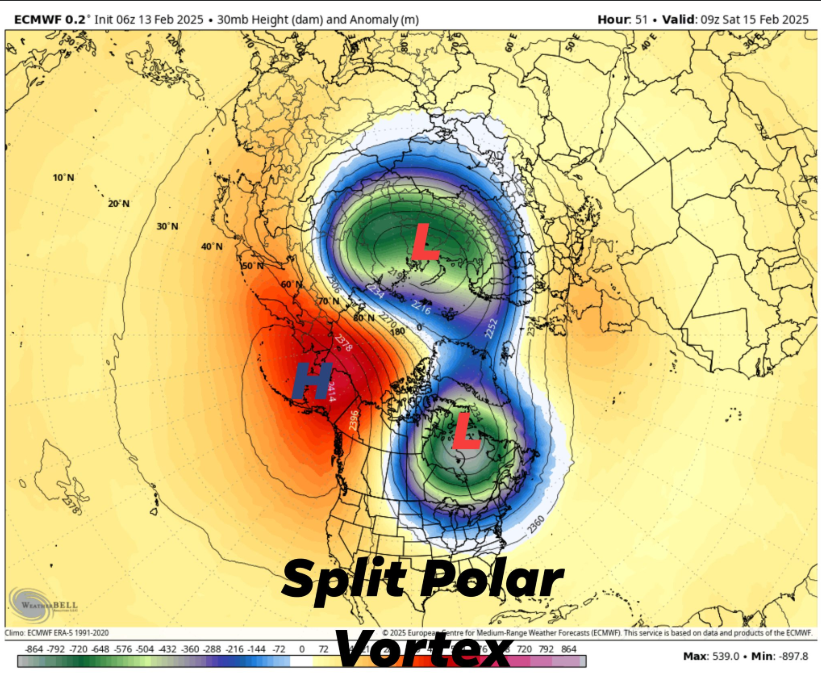
    A significant meteorological event is poised to impact the contiguous United States next week, as the stratospheric polar vortex undergoes a rare split, leading to an arctic outbreak with temperatures projected to plummet 20 to 40 degrees below normal between February 17th and 23rd.

    Understanding the Polar Vortex Split

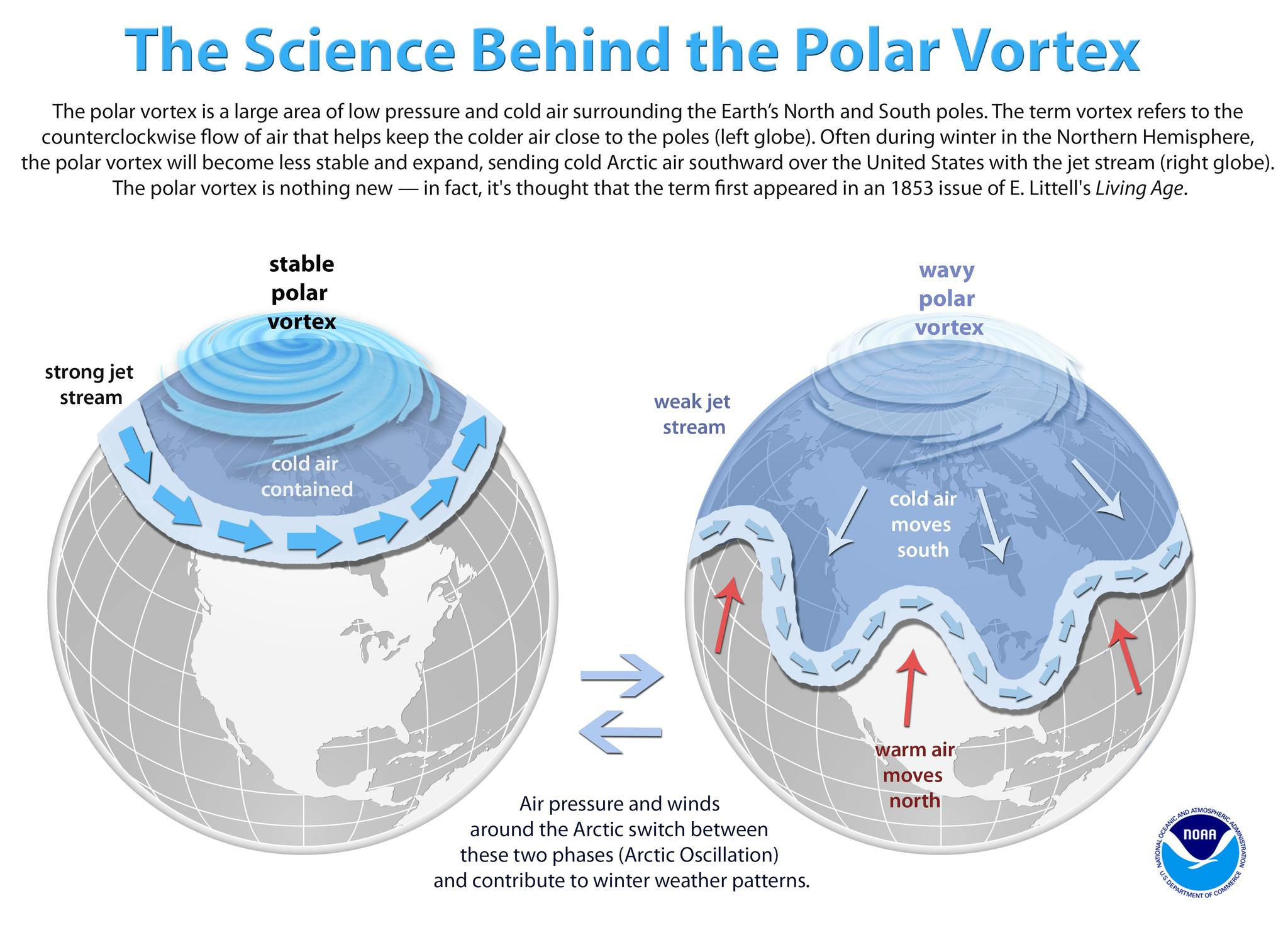
    The polar vortex is a large area of low pressure and cold air surrounding both of Earth’s poles, residing in the stratosphere. Typically, this vortex remains stable, containing the cold air within the polar regions. However, certain atmospheric conditions can disrupt this stability, leading to a phenomenon known as a Sudden Stratospheric Warming (SSW). During an SSW, large-scale atmospheric waves, called Rossby waves, propagate into the stratosphere, weakening the polar vortex. If these waves are strong enough, they can cause the vortex to split into two or more smaller vortices. This split allows frigid polar air to descend into mid-latitude regions, including parts of the United States.

    Projected Temperature Anomalies

    Forecast models, including the European Centre for Medium-Range Weather Forecasts (ECMWF) and the Global Forecast System (GFS), indicate that one of the split vortex cores will migrate over North America. This movement is expected to usher in a significant cold air outbreak across the northern, central, and eastern United States. Temperature anomalies during this period are projected to range from 20 to 40 degrees below normal.

    Potential for Increased Winter Storm Activity

    The influx of arctic air sets the stage for enhanced winter storm development. As the cold air interacts with warmer, moisture-laden systems from the south, the likelihood of snow, ice, and mixed precipitation events increases. Regions across the central and eastern U.S. should prepare for potential winter storms during this period, with the possibility of significant snowfall and hazardous travel conditions.

    Preparing for the Arctic Outbreak

    Residents are advised to monitor local weather forecasts and heed warnings from meteorological authorities. Preparations should include:

    • Ensuring adequate heating supplies and checking the functionality of heating systems.
    • Stocking up on essential items in anticipation of potential disruptions.
    • Taking necessary precautions for vulnerable populations, including the elderly and those with health conditions.
    • Preparing vehicles for winter conditions, including checking antifreeze levels and ensuring tires are suitable for snow and ice.

    By staying informed and taking proactive measures, individuals and communities can mitigate the impacts of this impending arctic outbreak.

  • Major Changes Ahead: Stratospheric Polar Vortex Split Could Bring An Active Winter Pattern Back to the U.S. Mid Month

    Major Changes Ahead: Stratospheric Polar Vortex Split Could Bring An Active Winter Pattern Back to the U.S. Mid Month

    As we head into mid-February, significant changes are brewing in the upper atmosphere that could have major implications for winter weather across the United States. The stratospheric polar vortex, a large-scale circulation of frigid air in the upper levels of the atmosphere, is undergoing a split, with one lobe shifting over North America and the other over Eastern Russia. This development could mean that winter is far from over for the Lower 48, with renewed bursts of Arctic air and even the potential for more snow.

    What is the Polar Vortex?

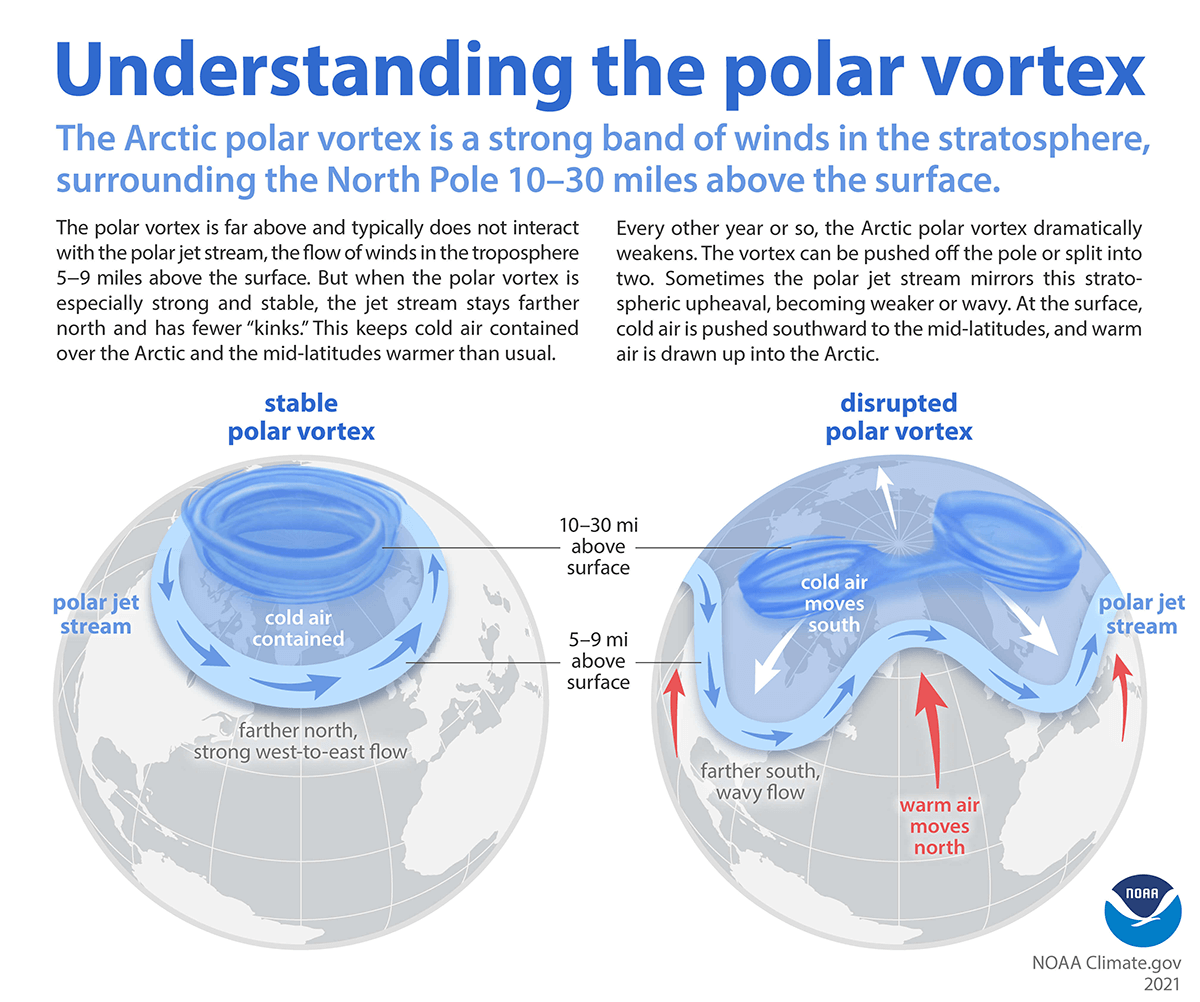
    The polar vortex is a vast region of cold, low-pressure air that resides in the stratosphere above the Arctic. It is typically strongest in winter and is contained by the polar jet stream, which acts as a barrier, keeping the frigid air locked in place. However, disturbances in the atmosphere, such as sudden stratospheric warming (SSW) events, can weaken or even split the polar vortex, allowing cold Arctic air to spill southward into mid-latitude regions, including the United States, Europe, and Asia.

    The Implications of a Polar Vortex Split

    When the polar vortex splits, the disrupted circulation can send lobes of cold air into different parts of the world. In this case, one portion of the vortex is expected to shift over North America, while the other moves over Eastern Russia. This could lead to:

    • Bitter Cold Spells: A more active intrusion of Arctic air into the U.S., potentially bringing below-average temperatures to much of the country, including regions that have recently experienced milder conditions.
    • Increased Snowfall: With cold air in place, any developing storm systems could tap into this frigid air mass and produce widespread snowfall across parts of the Midwest, Northeast, and even the South.
    • Disruptive Weather Patterns: A disrupted polar vortex can lead to more extreme weather events, including stronger storms, ice events, and even severe weather outbreaks as cold air clashes with milder air masses to the south.

    What to Expect Mid-Month

    As we approach mid-February, long-range models suggest a greater likelihood of colder air descending into the central and eastern U.S., potentially bringing another round of winter weather. The exact details remain uncertain, but if history is any guide, a significant polar vortex split often leads to prolonged cold outbreaks lasting several weeks.

    For those who thought winter was winding down, this development is a strong reminder that the season isn’t over just yet. Stay tuned for further updates as meteorologists track the evolving polar vortex split and its potential impacts on the weather in the coming weeks.

  • One Of The Coldest January Thus Far In The Last 30-40 Years.

    One Of The Coldest January Thus Far In The Last 30-40 Years.

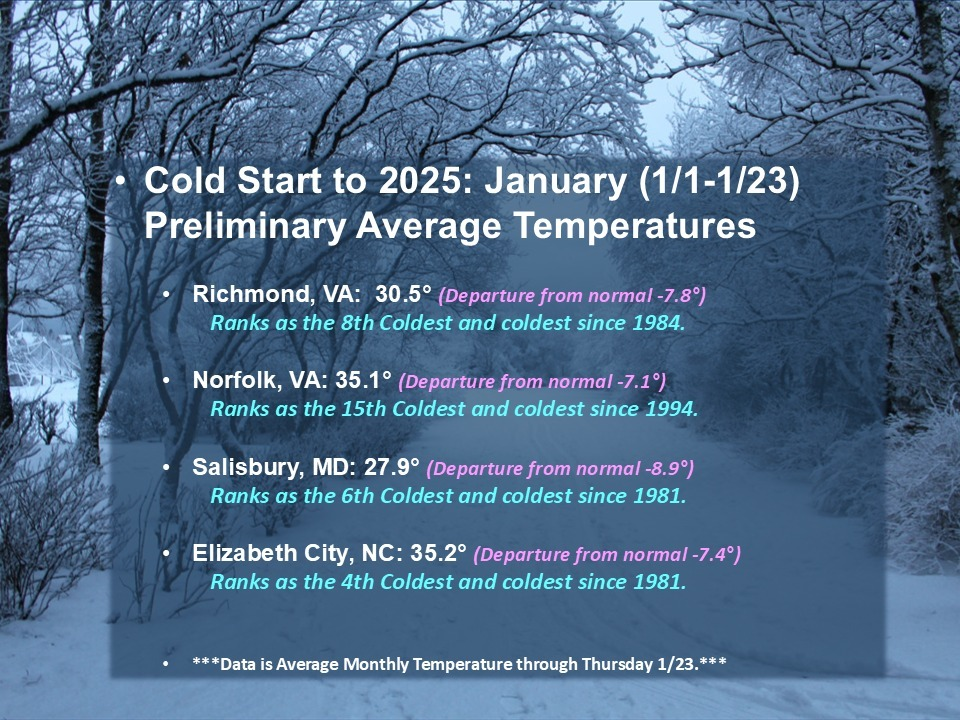
    *Graphic Provided By The National Weather Service Wakefield, VA*

    As we examine the climate data for January, we have observed some significant trends. So far this month, average temperatures in our region have consistently been 7 to 9 degrees colder than normal. While this cold weather is not unprecedented, all of our long-term climate monitoring stations are reporting the lowest average temperatures for the first 23 days of January in over 30 years, with certain areas such as Richmond, Salisbury, and Elizabeth City recording their coldest temperatures in over 40 years.

    Looking ahead, we anticipate temperatures will begin to stabilize, with averages returning closer to normal levels in the coming week as we near the end of the month. This indicates that while the current temperature deviations are notable, they may decrease somewhat. Nonetheless, we project that Salisbury and Elizabeth City are likely to secure spots on the top 10 coldest January lists by month’s end. Richmond may be on the cusp of making this list, but it is more probable it will fall just outside the top 10. In the meantime, Norfolk, which has a weather record extending over 150 years, is expected to rank between the 15th and 20th coldest January.

    Stay warm everyone, and please keep an eye on those temperature fluctuations! #WeatherUpdate #ColdWeather #JanuaryTemperatures #ClimateChange #StayWarm #TemperatureRecord #Meteorology

  • DHSS Providing Warming Stations Across The State During The Arctic Outbreak

    DHSS Providing Warming Stations Across The State During The Arctic Outbreak

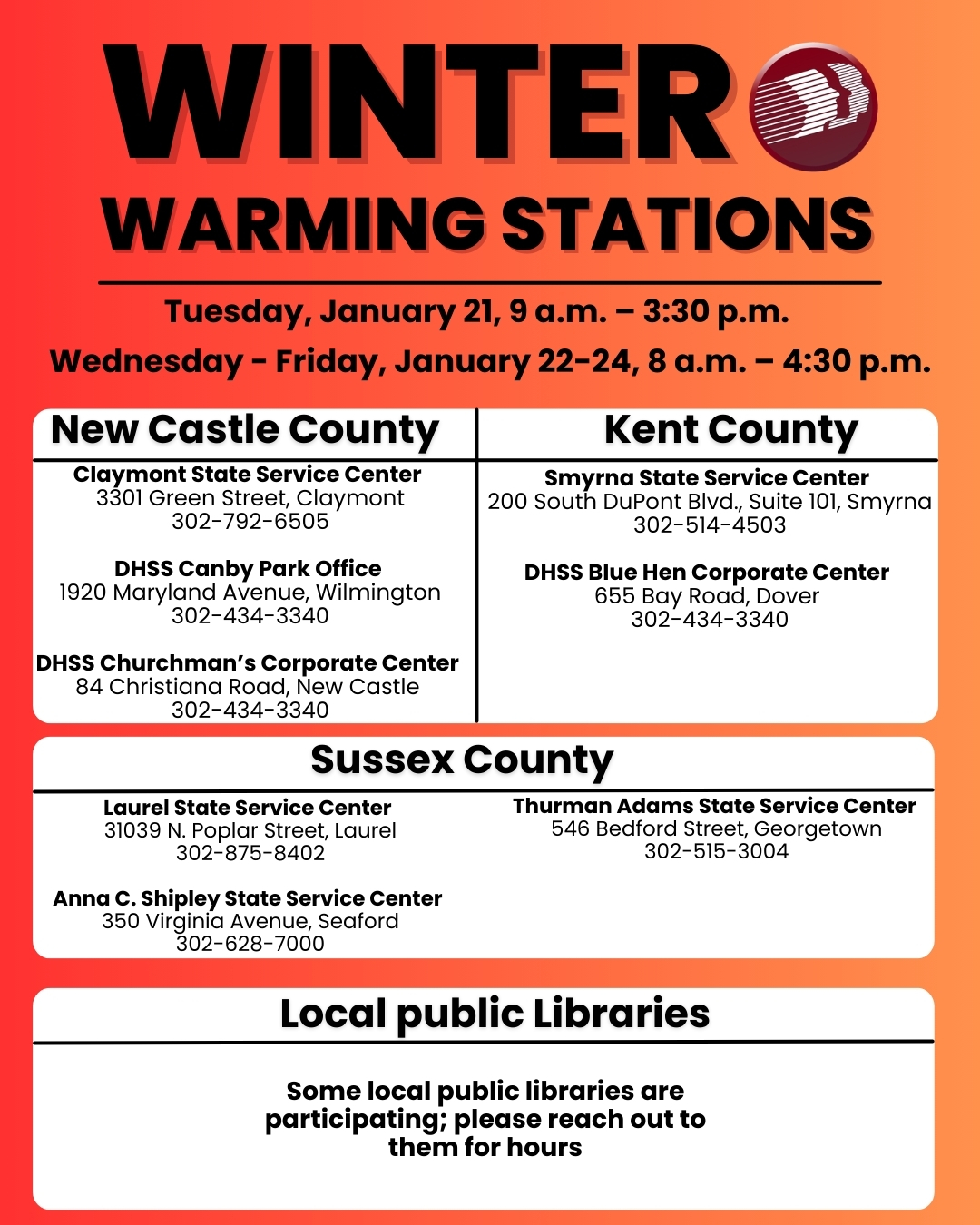
    ❄️ As we brace ourselves for the frigid days ahead, the Department of Health and Social Services (DHSS) is here to support our beloved community during this harsh winter season. We understand how challenging it can be to face the biting cold, which is why we are taking proactive steps by opening warming stations. These stations are designed to provide warmth and comfort to everyone in need, ensuring that no one feels isolated or uncomfortable during this season.

    📅 We invite you to join us on Tuesday, January 21, from 9 a.m. to 3:30 p.m., and Wednesday through Friday, January 22-24, from 8 a.m. to 4:30 p.m. Our warming stations will be available at various designated locations throughout the county. These spaces have been created to ensure a secure, inviting environment where anyone can find refuge from the chilly conditions.

    ❗ Remember, no one should have to face this frigid weather alone. Together, let’s ensure that everyone in our community can stay safe, warm, and cared for during these cold days. Every bit of support makes a difference!

    🗺️ Be sure to check the accompanying graphic for the specific locations of the warming stations available in your county. This important information will help you or someone you know find shelter from the cold.

    ❤️ Let’s come together to spread the word and keep an eye out for one another. If you or someone you know could benefit from a warm place to go, please don’t hesitate to visit us. Your safety and comfort are our utmost priority this winter!

  • Light Snow Event Tonight For Areas Of Southern Delmarva: Dangerous Cold Remains

    Light Snow Event Tonight For Areas Of Southern Delmarva: Dangerous Cold Remains

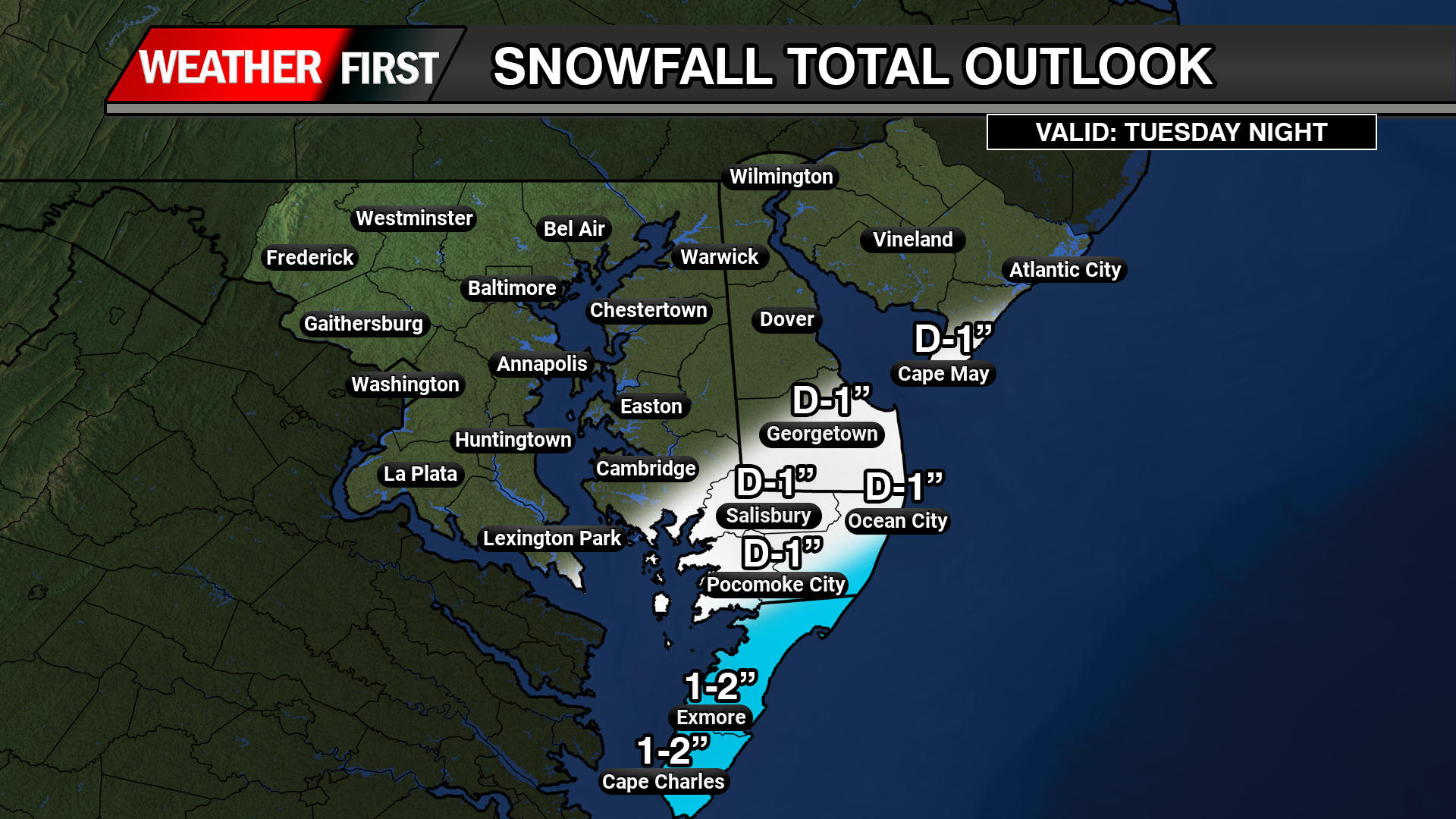
    A minor to light snowfall event on the way tonight as a rare southern US snowstorm is underway. Areas of Delmarva will see the extreme northern extend of the precipitation shield bringing areas of snow showers tonight, in particular across the VA counties. With extremely cold temperatures in place, this will be a very light and fluffy snow as temperatures are expected to be in the teens by the time the snow arrives later this evening. Most of the snowfall accumulations will be occurring across Northampton and Accomack counties where a short duration 1 to 2 inches are possible. Even though the amount of precipitation is very little of a tenth of a inch or less, temperatures are playing a huge role for “high ratio snowfall”

    The snow-to-liquid ratio is a quantitative measurement of how fluffy or heavy new fallen snow is.  It’s reported as the number of inches of snow that comes from 1 inch of liquid precipitation.  Typical snow-to-liquid ratios vary by region and by the weather pattern producing the snowfall. Air temperature, humidity, and wind speed influence how dense new fallen snow is. The highest snow ratios (or lowest density snow) are usually formed by temperatures that are roughly between 0°F and 10°F, in what is called the “Dendritic Growth Zone.”  This is the regime for forming large dendrites that accumulate with abundant air space between crystals.   New snow grains that are smaller and pack together better form denser snow.  Snow that forms outside of the Dendritic Growth Zone regime will be denser, as will snow that falls through warmer layers or is subject to riming.  Stronger winds will batter snowflakes together as they fall, which breaks down snow crystals into smaller, denser grains.

    ...WINTER WEATHER ADVISORY IN EFFECT FROM 5 PM THIS AFTERNOON TO 7
    AM EST WEDNESDAY...
    
    * WHAT...Snow expected. Total snow accumulations of 1 to 2 inches.
    
    * WHERE...Portions of northeast North Carolina and eastern and
      southeast Virginia.
    
    * WHEN...From 5 PM this afternoon to 7 AM EST Wednesday.
    
    * IMPACTS...Plan on slippery road conditions. The hazardous
      conditions could impact the Tuesday evening and Wednesday morning
      commutes.
    
  • Cold Weather Advisory In Effect: What It Is & How To Prepare

    Cold Weather Advisory In Effect: What It Is & How To Prepare

    A few changes going into this winter season with the replacement of Wind Chill products. Introducing Extreme Cold Weather products with “Cold Weather Advisories” now in place for areas of the Delmarva region starting tonight through Wednesday morning.

    ...COLD WEATHER ADVISORY NOW IN EFFECT FROM 6 PM THIS EVENING TO
    NOON EST WEDNESDAY...
    
    * WHAT...Very cold wind chills as low as 7 below expected.
    
    * WHERE...Delaware, northeast Maryland, central to southern New
      Jersey, and southeast Pennsylvania.
    
    * WHEN...From 6 PM this evening to noon EST Wednesday.
    
    * IMPACTS...The cold wind chills could result in hypothermia if
      precautions are not taken. Frostbite and hypothermia will occur if
      unprotected skin is exposed to these temperatures.
    
    PRECAUTIONARY/PREPAREDNESS ACTIONS...
    
    Use caution while traveling outside. Wear appropriate clothing, a
    hat, and gloves.
    
    Keep pets indoors as much as possible.
    
    Make frequent checks on older family, friends, and neighbors. Ensure
    portable heaters are used correctly. Do not use generators or grills
    inside.

    Extreme Cold Warning vs Watch and Cold Weather Advisory

    • Extreme Cold Warning: Take Action! An Extreme Cold Warning is issued when dangerously cold air temperatures or wind chill values are expected or occurring. If you are in an area with an Extreme Cold Warning, avoid going outside. If you have to go outside, dress in layers, cover exposed skin, and make sure at least one other person knows your whereabouts. Update them when you arrive safely at your destination.
    • Extreme Cold Watch: Be Prepared. An Extreme Cold Watch is issued when dangerously cold air temperatures or wind chill values are possible. As with a Warning, adjust your plans to avoid being outside during the coldest parts of the day. Make sure your car has at least half a tank of gas, and update your winter survival kit.
    • Cold Weather Advisory: Be Aware. A Cold Weather Advisory is issued when seasonably cold air temperatures or wind chill values, but not extremely cold values, are expected or occurring. Be sure you and your loved ones dress appropriately and cover exposed skin when venturing outdoors.

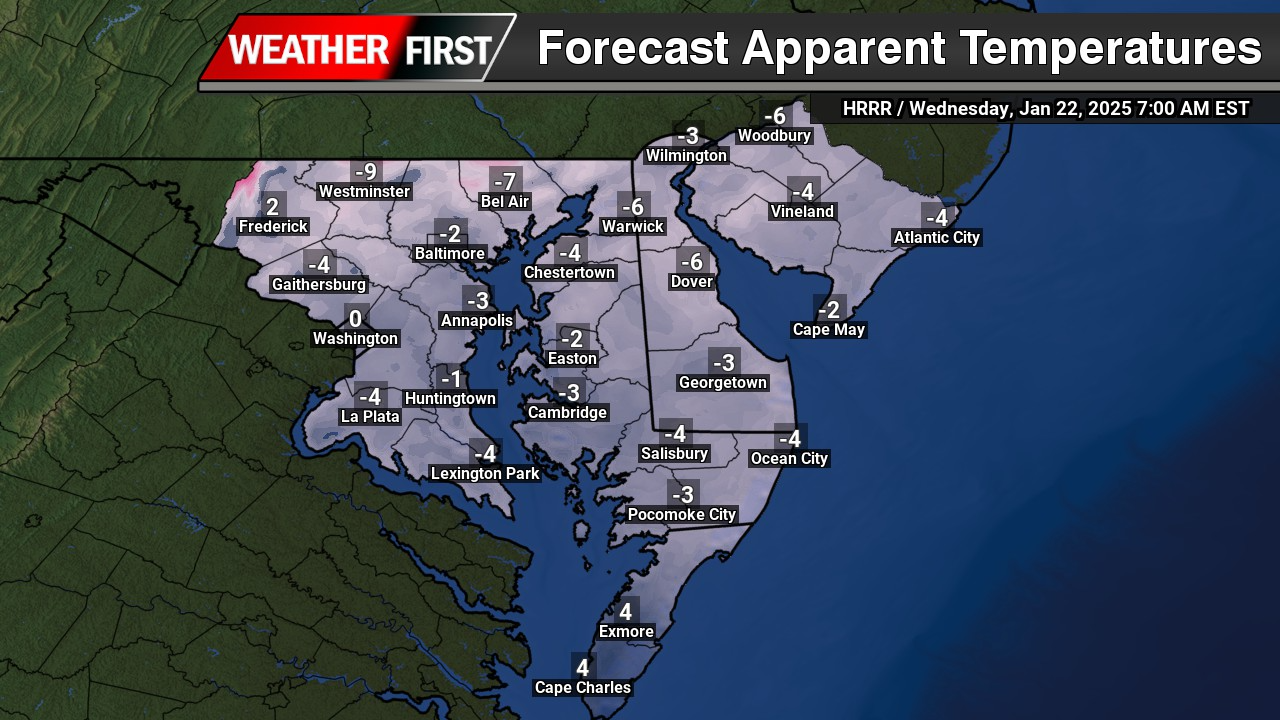
    Dangerous wind chills dropping down below zero are expected for the next few nights here on Delmarva as winds will be gusting 20-30 mph. Temperatures dropping down to the single digits making it the coldest nights we have seen in the last several years.

    Extremely cold air comes every winter into at least part of the country and affects millions of people across the United States. The arctic air can be dangerous. Combined with brisk winds, dangerously cold wind chill values can result. People exposed to extreme cold are susceptible to frostbite and can succumb to hypothermia in a matter of minutes. Areas most prone to frostbite are uncovered skin and the extremities, such as hands and feet. Hypothermia occurs when the body loses heat faster than it can produce it.

    Prepare for Cold Weather

    The way to avoid frostbite and hypothermia is to plan for extreme cold before it arrives. Don’t get caught unprepared.

    • Check the Forecast at weather.gov or your favorite weather app, station, etc.: Make checking the forecast part of your regular routine so you’ll know when to expect cold weather.
    • Adjust Your Schedule: If possible, avoid being outside during the coldest part of the day, typically the early morning. Try to find a warm spot for your children while waiting for the school bus outside.
    • Protect Your Pets, Livestock and other Property: If you have pets or farm animals, make sure they are not overly exposed to extreme cold and have plenty of food and water that has not frozen.Take precautions to ensure your water pipes do not freeze. Know the temperature thresholds of your plants and crops.
    • Fill up the tank: Make sure your car or vehicle has at least a half a tank of gas during extreme cold so that you can stay warm if you become stranded.
    • Dress for the outdoors even if you don’t think you’ll be out much.
    • Update Your Winter Car Survival Kit: Make sure your car survival kit has the following:
      • Jumper cables: flares or reflective triangle are great extras
      • Flashlights: Replace the batteries before the winter season starts and pack extras
      • First Aid Kit: Carry essential medications with you in a purse or bag
      • Baby gear: Diapers and any special formula or food
      • Medical supplies: Materials for any special medical needs.
      • Food: Non-perishable food such as canned food and a can opener, dry cereal and protein rich foods like nuts and energy bars
      • Water: At least 1 gallon of water per person a day for at least 3 days
      • Basic toolkit: Pliers, wrench, screwdriver
      • Pet supplies: Food and water
      • Radio: Battery or hand cranked
      • Cat litter or sand: For better tire traction
      • Shovel: To dig out snow
      • Ice scraper: Have one in the car even if you usually park in a garage
      • Clothes: Dress for the weather in warm clothes, gloves, hat, sturdy boots, jacket and an extra change cold weather of clothes
      • Warmers: For body, hands and feet
      • Blankets or sleeping bags: If you get stranded you’ll be glad to have it.
      • Charged Cell Phone: And keep a spare charger in your car 

    Essential Tasks After it Warms Up

    • Check Your Pipes: Your pipes may be frozen. Water pipes on exterior walls and in places that are subject to cold, like in the basement, attic, and under kitchen cabinets, freeze most often. Water expands as it freezes, causing pipes to burst. If they are frozen, first turn on the faucet. Water will drip as you warm the pipes. Heat the pipes using a space heater, heating pad, electric hair dryer, or hot water on a cloth. Never use an open flame. Continue until water pressure returns to normal or call a plumber if you have more issues.
    • Salt Your Walkways: Once it warms up enough to go out, it’s important to shovel the snow from your sidewalks and driveway or sprinkle salt if there is ice. If there is a thick layer of snow on the ground that you cannot move, salt the area so that the snow melts. You should also put down salt if there is ice on the stairs leading into your house – less than a quarter inch of ice can be dangerous!
    • Call Your Neighbors: Check to see that your neighbors are okay, particularly seniors, disabled persons, or others living alone. Carbon monoxide poisoning is one of the leading causes of death after extreme cold, particularly if there are power outages. Cases of frostbite and hypothermia are also common for elderly people who were stuck in their homes.
    • Refill Your Supplies: This cold event may be over, but there might be another one soon. It is important to always be prepared.
  • Dangerous Cold Invades The Lower 48 Next Week: Coldest Outbreak In Several Years

    Dangerous Cold Invades The Lower 48 Next Week: Coldest Outbreak In Several Years

    🚨 Severe Cold Weather Alert: An Arctic air mass is forecasted to sweep across a significant portion of the United States this weekend! 📉 From the Rockies to the Great Plains, this frigid air will reach the Gulf Coast by Saturday night and move towards the Eastern Seaboard by Sunday evening.  

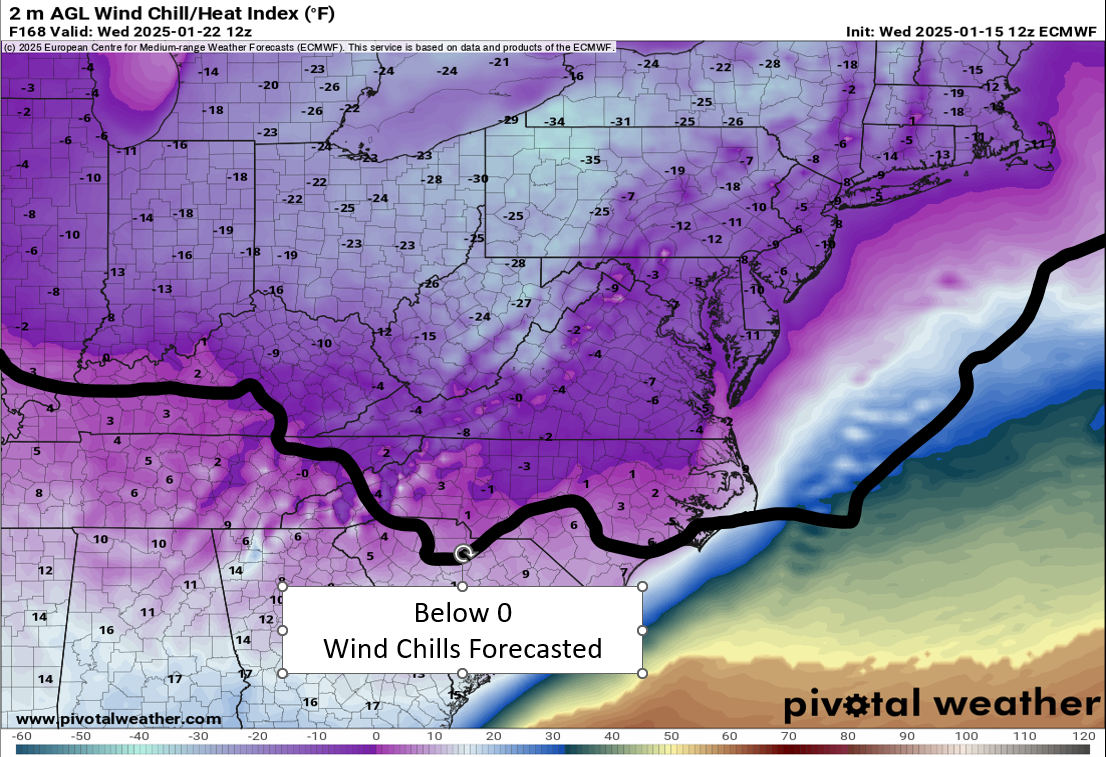
    ❄️ Extremely Low Wind Chills: The Rockies, northern Plains, and Upper Midwest are expected to experience dangerous wind chills as low as -30°F or even lower from Saturday through Tuesday. This extreme cold poses serious risks of hypothermia and frostbite for individuals exposed to these conditions. If you plan to travel, ensure you have a cold weather survival kit prepared for your safety.  
    🌬️ Furthermore, below-zero wind chills are anticipated to extend into the southern Plains and the Ohio Valley from Sunday night through Tuesday. The hazardous cold is likely to persist along the Gulf Coast and across the Southeast U.S. for much of the following week. Stay warm and take all necessary precautions during this severe cold snap! 🥶

  • Dangerous Cold Following Major Winter Storm: How To Prepare Ahead

    Dangerous Cold Following Major Winter Storm: How To Prepare Ahead

    With the recent snowstorm blanketing the region and extreme cold temperatures expected to follow, it’s crucial to take precautions to safeguard both your health and your home. Freezing temperatures can pose significant risks, from hypothermia and frostbite to frozen pipes that can cause extensive water damage. Here’s a guide to staying safe and minimizing damage during this extreme weather event.

    The Threat of Frozen Pipes

    When temperatures drop below freezing, unprotected pipes are at risk of freezing. Water expands as it freezes, which can cause pipes to crack or burst, leading to costly repairs and potential water damage to your home. With the recent deep snow pack, temperatures will likely plummet over the next few nights ahead.

    How to Prevent Frozen Pipes:

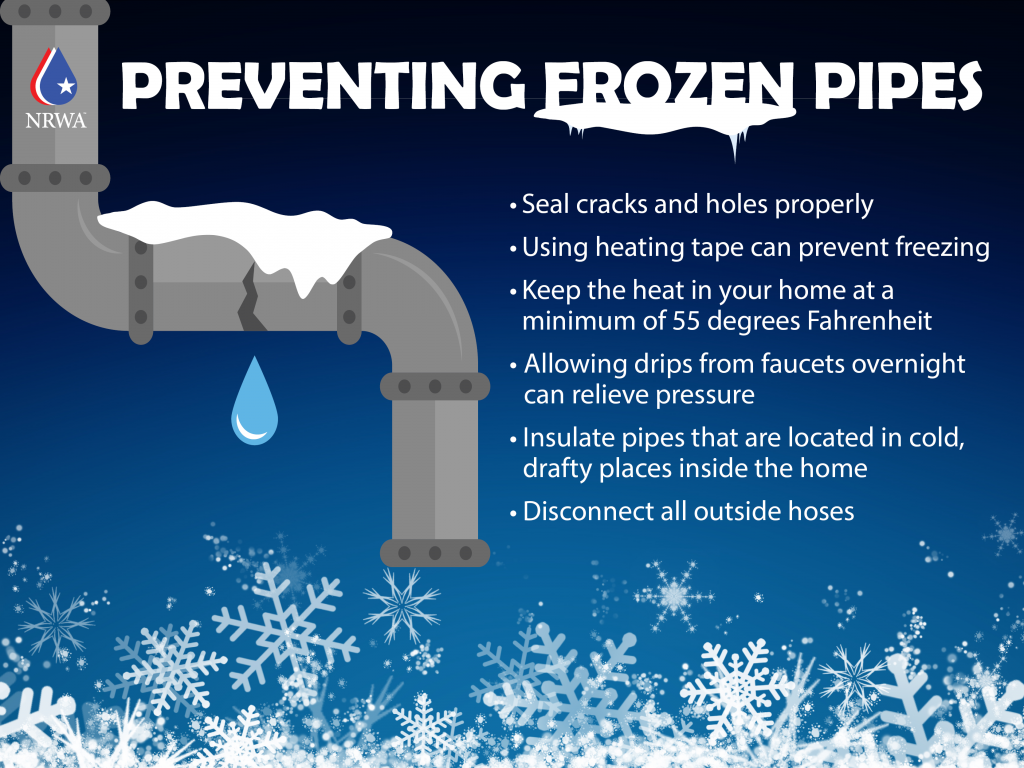
    1. Keep Water Flowing: Allow a small trickle of water to flow from faucets connected to vulnerable pipes. Moving water is less likely to freeze.
    2. Open Cabinet Doors: Open kitchen and bathroom cabinet doors to allow warm air to circulate around plumbing.
    3. Insulate Pipes: Use pipe insulation or heat tape on exposed pipes, especially those in unheated areas such as basements, attics, and garages.
    4. Seal Drafts: Check for drafts near pipes and seal any gaps in walls, windows, or doors to prevent cold air from reaching them.
    5. Maintain Indoor Temperature: Keep your thermostat set to a consistent temperature, even at night, to reduce the risk of freezing.

    What to Do if Pipes Freeze:

    1. Turn Off the Water: If you suspect a pipe has frozen, shut off the water at the main valve to prevent flooding.
    2. Thaw Pipes Safely: Use a hairdryer, heating pad, or space heater to warm the frozen pipe slowly. Never use an open flame, as this can cause a fire.
    3. Check for Leaks: Once the pipe is thawed, turn the water back on slowly and check for any leaks.

    Protecting Yourself and Your Family

    Cold weather poses significant health risks, particularly hypothermia and frostbite. Knowing how to dress and recognizing the signs of cold-related illnesses can prevent serious health issues.

    Tips for Staying Warm:

    1. Dress in Layers: Wear multiple layers of clothing, including a moisture-wicking base layer, an insulating middle layer, and a waterproof outer layer.
    2. Cover Extremities: Wear a hat, gloves, scarf, and thermal socks. Most body heat is lost through the head and extremities.
    3. Stay Dry: Wet clothing can rapidly decrease body temperature. If your clothing becomes wet, change into dry clothes as soon as possible.
    4. Limit Time Outdoors: Try to minimize outdoor activities during extreme cold. If you must go outside, take frequent breaks to warm up indoors.

    Recognizing Cold-Related Illnesses:

    • Hypothermia: Symptoms include shivering, confusion, drowsiness, and slurred speech. Seek medical attention immediately if you suspect hypothermia.
    • Frostbite: Frostbite can affect fingers, toes, nose, and ears. Skin may appear white or grayish-yellow and feel numb or hard. Gradually warm the affected area and seek medical help.

    Preparing Your Vehicle for Extreme Cold

    In addition to protecting your home and health, ensure your vehicle is ready for the extreme cold:

    1. Check Antifreeze Levels: Ensure your vehicle has the correct amount of antifreeze to prevent engine freezing.
    2. Inspect the Battery: Cold weather reduces battery efficiency. Have your battery tested and replace it if necessary.
    3. Maintain Tire Pressure: Cold temperatures cause tire pressure to drop. Check and inflate your tires to the recommended levels.
    4. Keep an Emergency Kit: Include blankets, extra clothing, a flashlight, snacks, water, and a first aid kit in case you become stranded.

    Extreme cold following a snowstorm presents a range of hazards, from frozen pipes and water damage to serious health risks like hypothermia. By taking proactive measures to protect your home, vehicle, and personal safety, you can minimize the impact of this severe weather. Stay informed by monitoring local weather reports and follow the advice of emergency management officials.

    Stay safe and warm!

  • Cold & Stormier Ringing In The New Year

    Cold & Stormier Ringing In The New Year

    To most of you this just looks like a bunch of lines on a graph. To me this is a pure (Mwah Chef’s Kiss) for someone who is a fan of cold and stormy going into the New Year. And right now the forecasted teleconnections across the Northern Hemisphere are as good as it gets.

    What are teleconnections? Teleconnections are significant relationships or links between weather phenomena at widely separated locations on earth, which typically entail climate patterns that span thousands of miles. Many teleconnection patterns behave like a seesaw, with atmospheric mass/pressure shifting back and forth between two distant locations.

    So going forward we have a -AO (Arctic Oscillation) which promotes something known as Cross-Polar Flow bringing colder air from Siberia down into North America.

    A -NAO (North Atlantic Oscillation) which promotes high latitude blocking across Greenland which helps slows down the jet-stream pattern. This allows storm to deepen and strengthen across the country.

    A +PNA (Pacific North-American Oscillation) promotes ridging across the Western US, and on the opposite end brings troughs to the east for storm systems to follow.

    And we also throw in a -EPO (Eastern Pacific Oscillation) which works with the PNA to promote ridging in the Eastern Pacific which helps allows cross polar flow down in the Eastern US.

    All these together is the ingredients to start bringing up the chances for some snowstorms in the east after the New Year! Not to mention, we have a SSW (Sudden Stratospheric Warming) occuring which will help break down the Polar Vortex and displace cold air southward to the Middle Latitudes. This is the response to what the teleconnections are forecasted to do here in the next few weeks.

    If you are fan of cold and stormy weather, this is the pattern for you hands down!

  • Polar Plunge To Finish Out January

    Polar Plunge To Finish Out January

    Large Trough Across The Eastern US

    We went from a extremely warm month of December, to now a January with a vengeance. With 2 snow events in our books and one being the biggest snowstorm in 4 years. We are not going to be done with those snow chances to finish out the month of January. The tropospheric polar vortex will remain quite dominate across Canada with a constant serious of troughs throughout the eastern half of the nation. With the polar vortex hanging around the Hudson Bay, this will allow several short waves to dip down from the Northern Plains all the way to the East Coast.

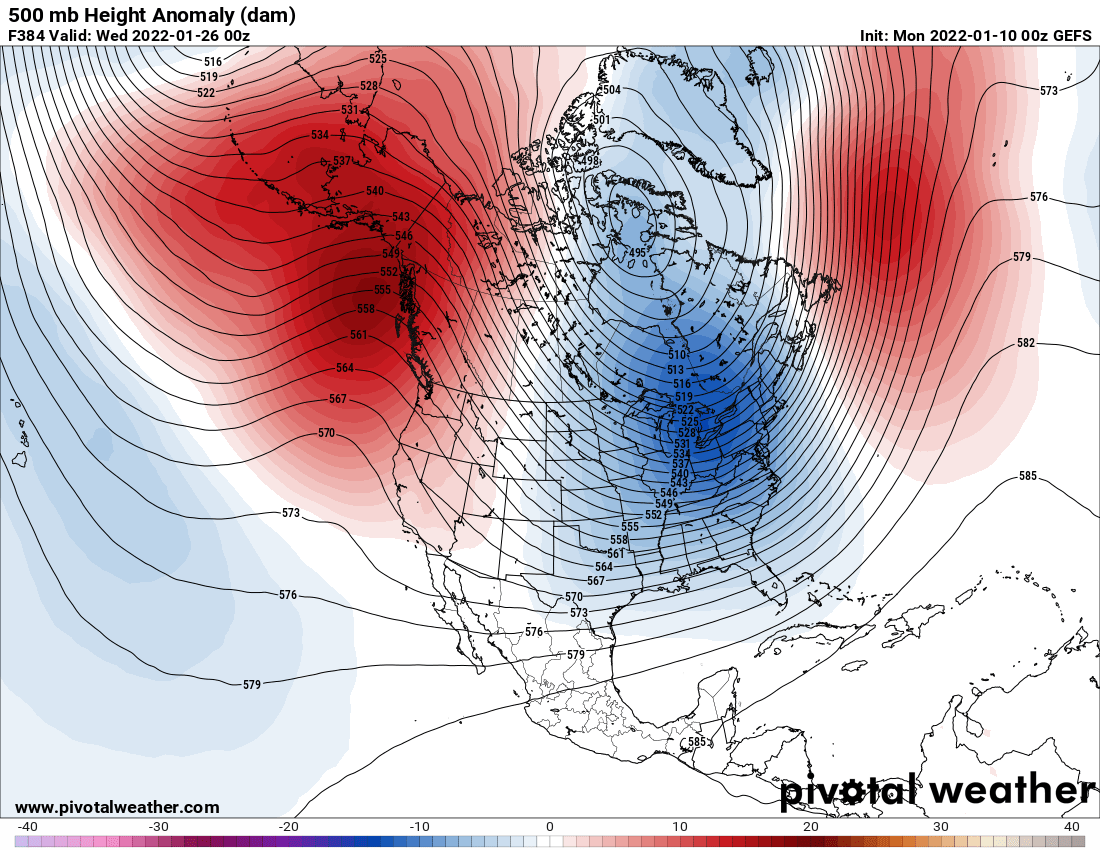
    ECMWF EPS 500mb Heights

    We are looking at a text book setup for cold and stormy across the eastern half of the nation. Strong ridging across the Pacific Northwest. Ridging over Greenland to act as a block for the persistent troughing across the Eastern US. This created the perfect Rossby Wave pattern for those who love the cold and snow. What is a Rossby Wave anyway? Rossby waves, also known as planetary waves, naturally occur in rotating fluids. Within the Earth’s ocean and atmosphere, these waves form as a result of the rotation of the planet.

    Two sets of Omega Blocks across the Northern Hemisphere pattern. (Omega blocks get their name because the upper air pattern looks like the Greek letter omega (Ω). Omega blocks are a combination of two cutoff lows with one blocking high sandwiched between them.) This keeps these patterns locked in for an extended period of time. Like in this instance for the rest of the month. Get ready to see more arctic outbreaks and snow chances this month going forward. Several storm signals are becoming apparent beginning the 15th through the 26th.

  • Snowfall Forecast For Monday (Updated (9:30pm)

    Snowfall Forecast For Monday (Updated (9:30pm)

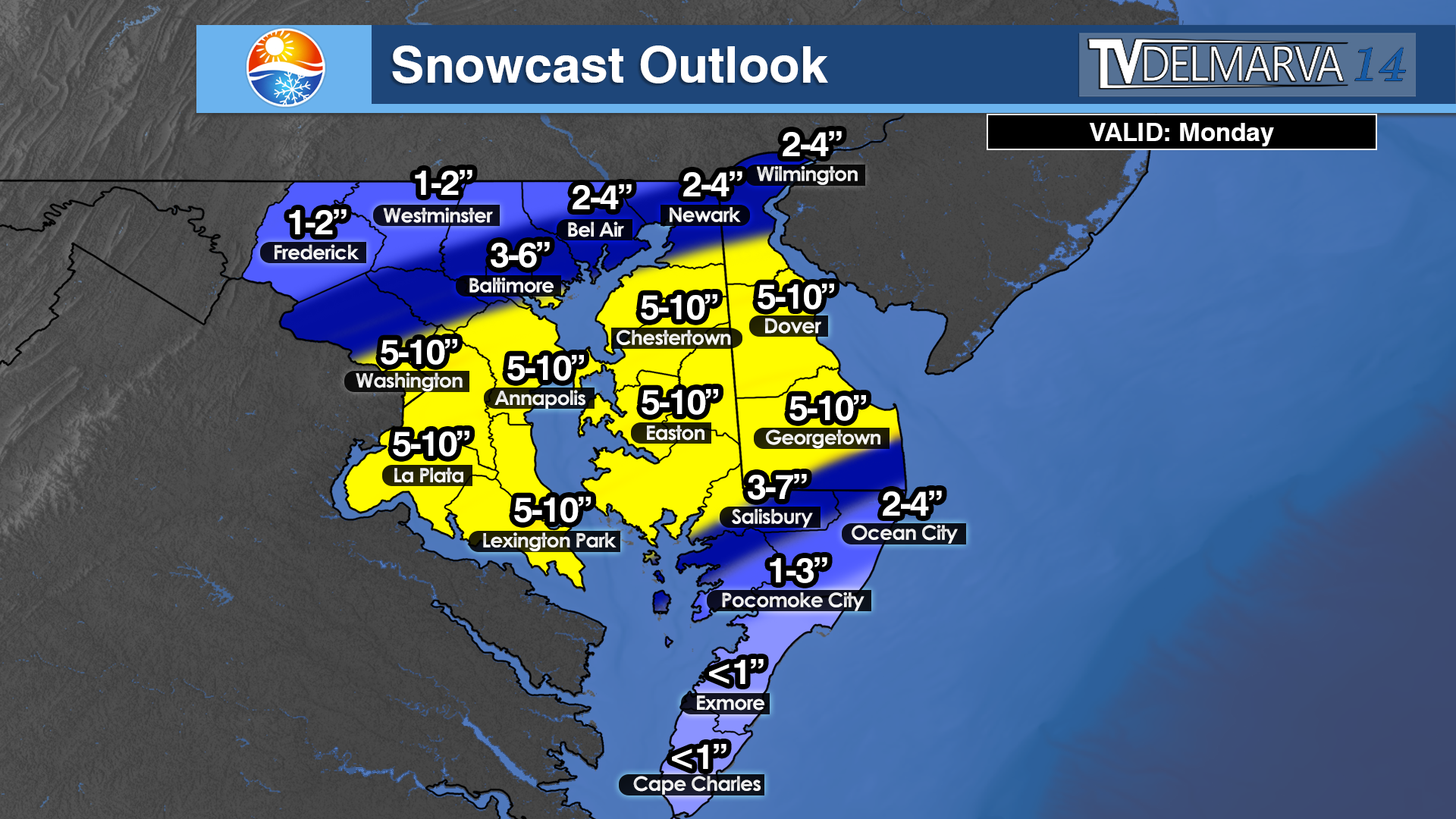
    Snowfall Forecast Valid For Monday (Subject To Change)

    Do not let these warm conditions fool you of the arctic snap that’s on our doorsteps today. With a very significant shift in the forecast trending towards the potential biggest storm in the region since 2019. Around this time in 24 hours, we will see a 30-35 degree temperature drop once the arctic front settles in from the north to the region.

    Futurecast Radar

    The main focus mechanism will be a lobe breaking off from the Sub-Tropical Jet Stream that will begin to interact with the stalling out arctic front. The thermodynamic difference along this front will help generate a strong baroclinic forcing. An area of low pressure will begin to intensify later this evening and track just off the coast of the Carolinas. Moisture will then start running into the arctic air mass (overrunning) creating a fairly narrowband of moderate snow to overspread areas from central Virginia into the Delmarva region.

    500mb Vorticity Forecast ECMWF

    For a rare set of parameters, there has been exceptional agreement between ALL model guidance regarding several inches of snow to the region. Some big contenders like the ECMWF (European model) showing some fairly significant snow to the region. GFS being the most robust out of all them showing a foot plus. Although that’s being really extreme and not likely at this time, but we have a great average of 4-8 blend with all the guidance at this time. Subject to chance of course for the difference in small fluctuations on axis and location.

    Winter Storm Warnings / Winter Weather Advisories

    I get a lot of questions and concerns when it comes to the sudden temperature drop and ground temperatures. On the first onset of precipitation, intensity will be key. Just because we were in the 60’s the last few days, falling snow can quickly cool off ground temperatures with the heavier intensity of snowfall. Same with roadways. Snow will be beginning to fall during the pre dawn hours and continue into the afternoon hours.

    Let’s not forget the night after if we have snow cover on the ground. With the arctic air mass settling in and fresh snow cover, temperatures will tank significantly during the overnight hours with clear skies. The snow will act as a blanket keeping the ground temperatures from warming the surface air temperature. Think of it like a cooler with ice in it, the air above the ice is extremely cold but underneath is above freezing. Depending on snow depth covering the ground, temperatures could drop down into the single digits.

    We will continue to provide updates on this potential winter storm going into tomorrow.