Tag: arctic

  • Snow Squalls Could Create Hazardous New Year’s Eve Travel Across Delmarva, Maryland, and Pennsylvania

    Snow Squalls Could Create Hazardous New Year’s Eve Travel Across Delmarva, Maryland, and Pennsylvania

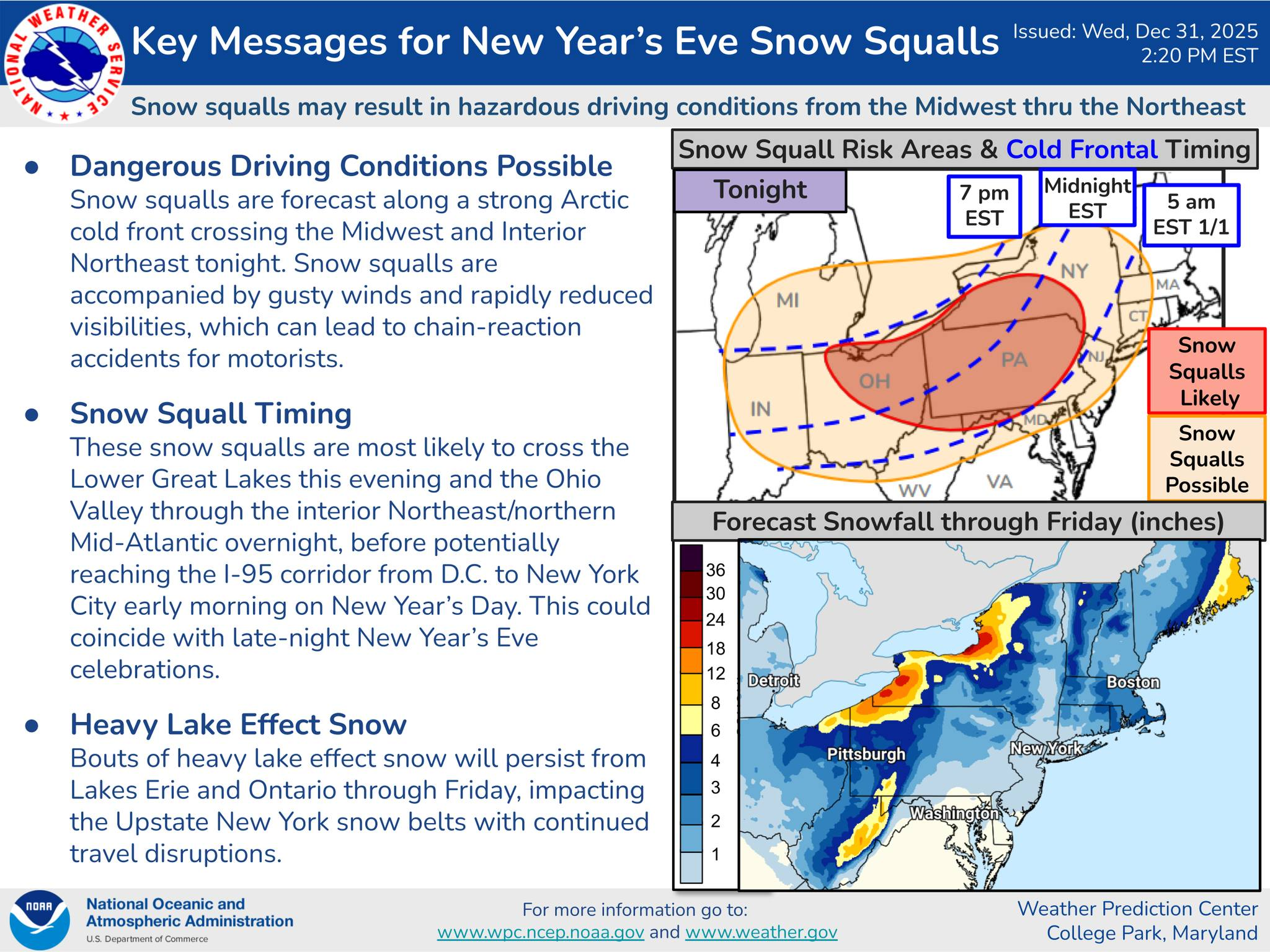
    Drivers across Delmarva, Maryland, and much of Pennsylvania are being urged to use caution this New Year’s Eve as a strong Arctic cold front moves through the region, bringing the potential for sudden snow squalls and dangerous travel conditions. While snowfall amounts are expected to be brief and localized, the intensity of these squalls could quickly reduce visibility to near zero and lead to slick, snow-covered roadways in a matter of minutes.

    Forecasters say the greatest risk for snow squalls will develop this evening across western and central Pennsylvania before shifting east overnight into eastern Pennsylvania, northern Maryland, and parts of Delmarva. The squalls may be accompanied by gusty winds, creating whiteout conditions along major travel routes including Interstates 76, 81, 83, 95, and portions of U.S. Route 13 across the Delmarva Peninsula.

    Timing is a major concern, as the snow squalls could impact travel during peak New Year’s Eve festivities and late-night returns home. In Maryland, areas north of the Baltimore Washington corridor stand the best chance of seeing brief but intense snow bursts overnight, while Delmarva may see fast-moving squalls or snow showers capable of briefly coating roadways, particularly in northern and interior sections in the early morning hours.

    Even though total snowfall amounts will be limited, the rapid drop in temperatures behind the front could allow any moisture on roadways to freeze quickly, increasing the risk of icy conditions. Motorists may encounter rapidly changing visibility and road conditions with little advance warning.

    Looking ahead, much colder air settling in behind the front will fuel lake-effect snow across western and north-central Pennsylvania through Friday. While this will not directly impact Delmarva or most of Maryland, it could lead to continued travel disruptions for those heading north or west after the holiday.

    Officials urge drivers to slow down, increase following distance, and avoid unnecessary travel during squalls. Snow squalls are often short-lived but can be just as dangerous as longer-duration winter storms, especially during busy holiday travel periods.

  • Historic Arctic Outbreak and Potential Severe Winter Storm Poised to Impact Central and Eastern U.S. Next Week

    Historic Arctic Outbreak and Potential Severe Winter Storm Poised to Impact Central and Eastern U.S. Next Week

    A robust Arctic air mass is forecast to plunge into the Central U.S. next week, bringing widespread record-breaking low temperatures and dangerously low wind chills. Meteorologists indicate high confidence in this event, with numerous daily minimum temperature records expected to be set from the central Plains to the south-central U.S. between Tuesday and Friday. Some locations may approach or exceed their lowest recorded temperatures for this late in the winter season, with the freeze line potentially reaching as far south as the Gulf Coast.

    Hazardous Wind Chill Conditions Expected

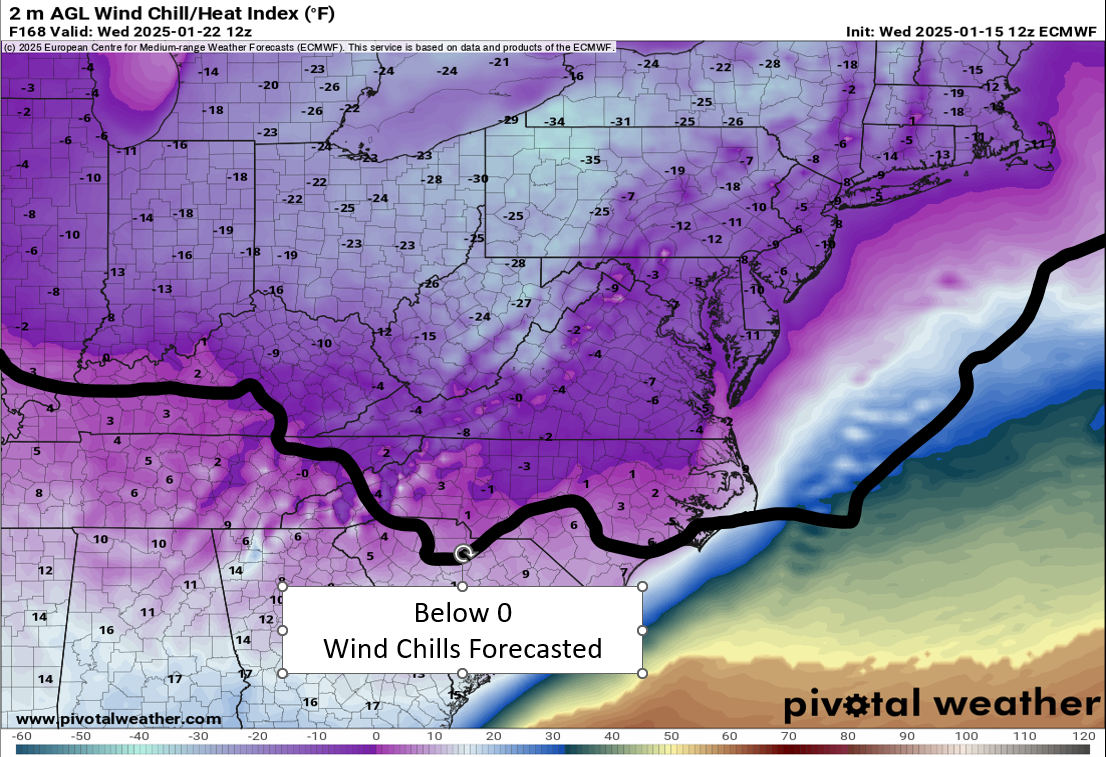
    Accompanying the frigid temperatures, dangerously low wind chills ranging from -30°F to -60°F are expected across the northern Plains, persisting for several days. These conditions significantly increase the risk of frostbite and hypothermia with even brief exposure. Sub-zero wind chills are forecast to extend southward into Texas, Arkansas, and portions of western Tennessee and Kentucky, posing a widespread risk to public safety and infrastructure.

    Increased Potential for Winter Storm and Heavy Snowfall

    In addition to the Arctic outbreak, there is an increasing probability of a significant severe winter storm forming along the periphery of the cold air mass. While the specific track and intensity remain uncertain, current model guidance suggests that areas from the central Plains and the Ozarks to Kentucky through potentially the Northeast U.S. corridor could experience a highly impactful snowfall. Given the dynamic nature of winter storm development, continued monitoring of forecasts is essential as the system evolves.

    Model guidance continues to grow higher confidence of a severe winter storm with snowfall amounts exceeding 10 inches is becoming more of a reality. NBM probability outputs show very highly probabilities of >60% for 6 inches or more of snowfall with going as far as >30% chance of 12 inches or more of snowfall.

  • DHSS Providing Warming Stations Across The State During The Arctic Outbreak

    DHSS Providing Warming Stations Across The State During The Arctic Outbreak

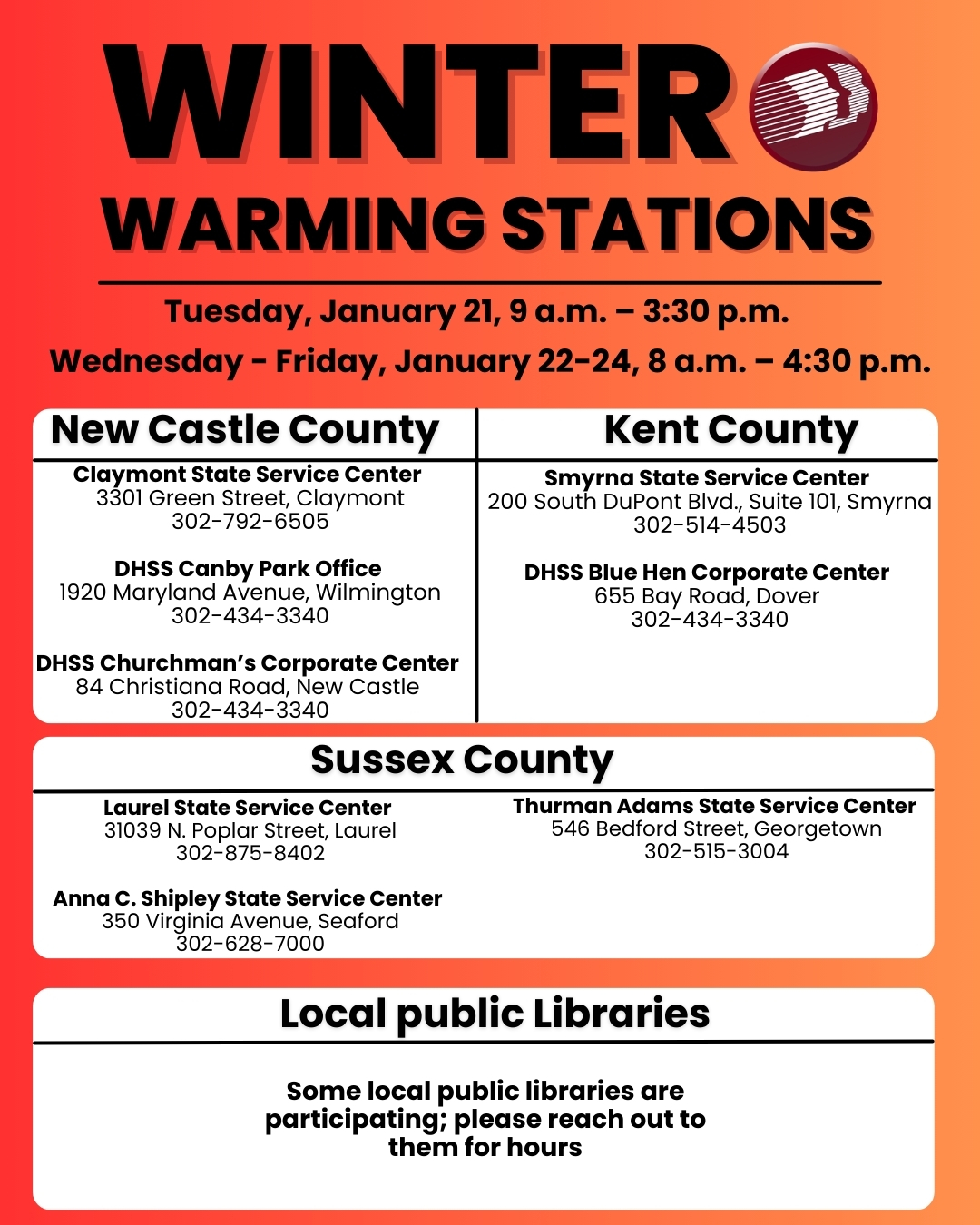
    ❄️ As we brace ourselves for the frigid days ahead, the Department of Health and Social Services (DHSS) is here to support our beloved community during this harsh winter season. We understand how challenging it can be to face the biting cold, which is why we are taking proactive steps by opening warming stations. These stations are designed to provide warmth and comfort to everyone in need, ensuring that no one feels isolated or uncomfortable during this season.

    📅 We invite you to join us on Tuesday, January 21, from 9 a.m. to 3:30 p.m., and Wednesday through Friday, January 22-24, from 8 a.m. to 4:30 p.m. Our warming stations will be available at various designated locations throughout the county. These spaces have been created to ensure a secure, inviting environment where anyone can find refuge from the chilly conditions.

    ❗ Remember, no one should have to face this frigid weather alone. Together, let’s ensure that everyone in our community can stay safe, warm, and cared for during these cold days. Every bit of support makes a difference!

    🗺️ Be sure to check the accompanying graphic for the specific locations of the warming stations available in your county. This important information will help you or someone you know find shelter from the cold.

    ❤️ Let’s come together to spread the word and keep an eye out for one another. If you or someone you know could benefit from a warm place to go, please don’t hesitate to visit us. Your safety and comfort are our utmost priority this winter!

  • Cold Weather Advisory In Effect: What It Is & How To Prepare

    Cold Weather Advisory In Effect: What It Is & How To Prepare

    A few changes going into this winter season with the replacement of Wind Chill products. Introducing Extreme Cold Weather products with “Cold Weather Advisories” now in place for areas of the Delmarva region starting tonight through Wednesday morning.

    ...COLD WEATHER ADVISORY NOW IN EFFECT FROM 6 PM THIS EVENING TO
    NOON EST WEDNESDAY...
    
    * WHAT...Very cold wind chills as low as 7 below expected.
    
    * WHERE...Delaware, northeast Maryland, central to southern New
      Jersey, and southeast Pennsylvania.
    
    * WHEN...From 6 PM this evening to noon EST Wednesday.
    
    * IMPACTS...The cold wind chills could result in hypothermia if
      precautions are not taken. Frostbite and hypothermia will occur if
      unprotected skin is exposed to these temperatures.
    
    PRECAUTIONARY/PREPAREDNESS ACTIONS...
    
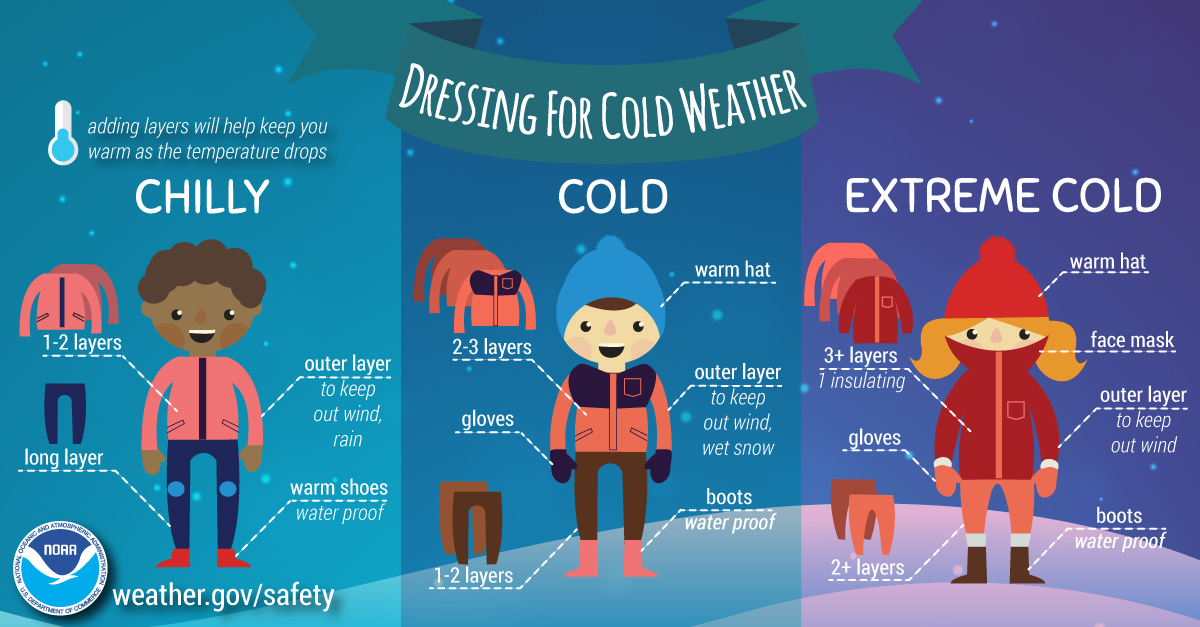
    Use caution while traveling outside. Wear appropriate clothing, a
    hat, and gloves.
    
    Keep pets indoors as much as possible.
    
    Make frequent checks on older family, friends, and neighbors. Ensure
    portable heaters are used correctly. Do not use generators or grills
    inside.

    Extreme Cold Warning vs Watch and Cold Weather Advisory

    • Extreme Cold Warning: Take Action! An Extreme Cold Warning is issued when dangerously cold air temperatures or wind chill values are expected or occurring. If you are in an area with an Extreme Cold Warning, avoid going outside. If you have to go outside, dress in layers, cover exposed skin, and make sure at least one other person knows your whereabouts. Update them when you arrive safely at your destination.
    • Extreme Cold Watch: Be Prepared. An Extreme Cold Watch is issued when dangerously cold air temperatures or wind chill values are possible. As with a Warning, adjust your plans to avoid being outside during the coldest parts of the day. Make sure your car has at least half a tank of gas, and update your winter survival kit.
    • Cold Weather Advisory: Be Aware. A Cold Weather Advisory is issued when seasonably cold air temperatures or wind chill values, but not extremely cold values, are expected or occurring. Be sure you and your loved ones dress appropriately and cover exposed skin when venturing outdoors.

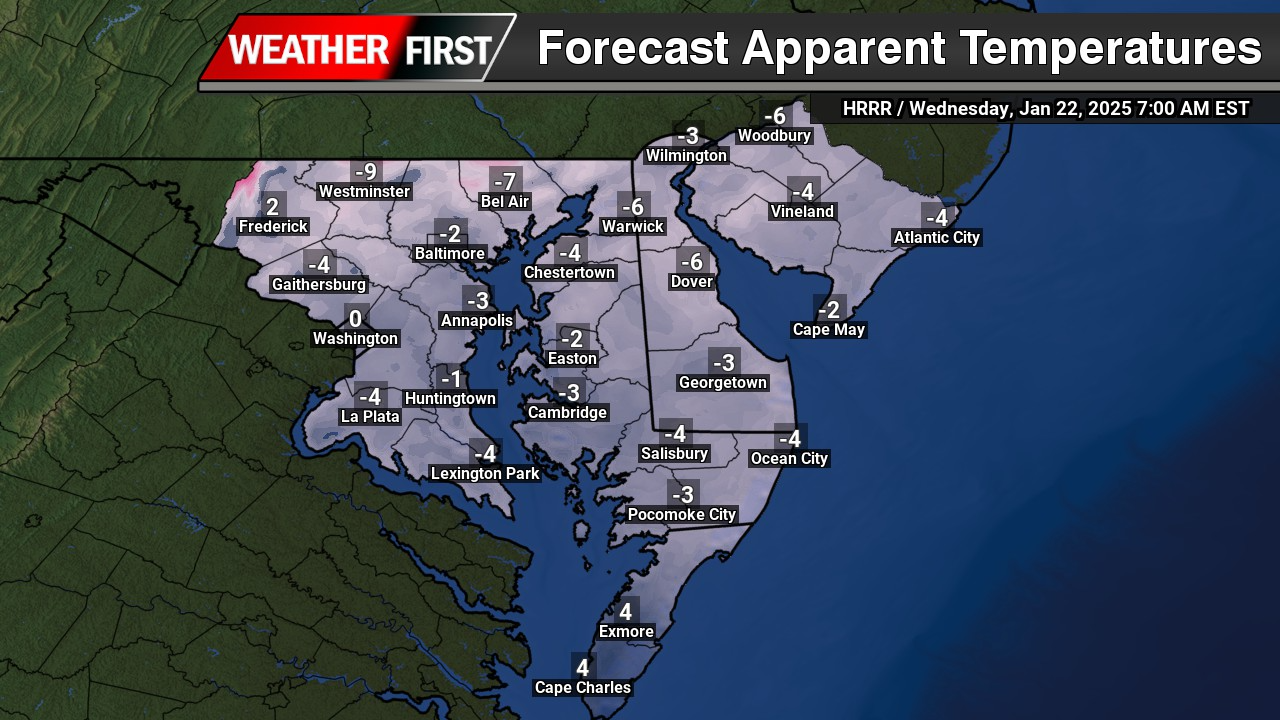
    Dangerous wind chills dropping down below zero are expected for the next few nights here on Delmarva as winds will be gusting 20-30 mph. Temperatures dropping down to the single digits making it the coldest nights we have seen in the last several years.

    Extremely cold air comes every winter into at least part of the country and affects millions of people across the United States. The arctic air can be dangerous. Combined with brisk winds, dangerously cold wind chill values can result. People exposed to extreme cold are susceptible to frostbite and can succumb to hypothermia in a matter of minutes. Areas most prone to frostbite are uncovered skin and the extremities, such as hands and feet. Hypothermia occurs when the body loses heat faster than it can produce it.

    Prepare for Cold Weather

    The way to avoid frostbite and hypothermia is to plan for extreme cold before it arrives. Don’t get caught unprepared.

    • Check the Forecast at weather.gov or your favorite weather app, station, etc.: Make checking the forecast part of your regular routine so you’ll know when to expect cold weather.
    • Adjust Your Schedule: If possible, avoid being outside during the coldest part of the day, typically the early morning. Try to find a warm spot for your children while waiting for the school bus outside.
    • Protect Your Pets, Livestock and other Property: If you have pets or farm animals, make sure they are not overly exposed to extreme cold and have plenty of food and water that has not frozen.Take precautions to ensure your water pipes do not freeze. Know the temperature thresholds of your plants and crops.
    • Fill up the tank: Make sure your car or vehicle has at least a half a tank of gas during extreme cold so that you can stay warm if you become stranded.
    • Dress for the outdoors even if you don’t think you’ll be out much.
    • Update Your Winter Car Survival Kit: Make sure your car survival kit has the following:
      • Jumper cables: flares or reflective triangle are great extras
      • Flashlights: Replace the batteries before the winter season starts and pack extras
      • First Aid Kit: Carry essential medications with you in a purse or bag
      • Baby gear: Diapers and any special formula or food
      • Medical supplies: Materials for any special medical needs.
      • Food: Non-perishable food such as canned food and a can opener, dry cereal and protein rich foods like nuts and energy bars
      • Water: At least 1 gallon of water per person a day for at least 3 days
      • Basic toolkit: Pliers, wrench, screwdriver
      • Pet supplies: Food and water
      • Radio: Battery or hand cranked
      • Cat litter or sand: For better tire traction
      • Shovel: To dig out snow
      • Ice scraper: Have one in the car even if you usually park in a garage
      • Clothes: Dress for the weather in warm clothes, gloves, hat, sturdy boots, jacket and an extra change cold weather of clothes
      • Warmers: For body, hands and feet
      • Blankets or sleeping bags: If you get stranded you’ll be glad to have it.
      • Charged Cell Phone: And keep a spare charger in your car 

    Essential Tasks After it Warms Up

    • Check Your Pipes: Your pipes may be frozen. Water pipes on exterior walls and in places that are subject to cold, like in the basement, attic, and under kitchen cabinets, freeze most often. Water expands as it freezes, causing pipes to burst. If they are frozen, first turn on the faucet. Water will drip as you warm the pipes. Heat the pipes using a space heater, heating pad, electric hair dryer, or hot water on a cloth. Never use an open flame. Continue until water pressure returns to normal or call a plumber if you have more issues.
    • Salt Your Walkways: Once it warms up enough to go out, it’s important to shovel the snow from your sidewalks and driveway or sprinkle salt if there is ice. If there is a thick layer of snow on the ground that you cannot move, salt the area so that the snow melts. You should also put down salt if there is ice on the stairs leading into your house – less than a quarter inch of ice can be dangerous!
    • Call Your Neighbors: Check to see that your neighbors are okay, particularly seniors, disabled persons, or others living alone. Carbon monoxide poisoning is one of the leading causes of death after extreme cold, particularly if there are power outages. Cases of frostbite and hypothermia are also common for elderly people who were stuck in their homes.
    • Refill Your Supplies: This cold event may be over, but there might be another one soon. It is important to always be prepared.
  • Dangerous Cold Invades The Lower 48 Next Week: Coldest Outbreak In Several Years

    Dangerous Cold Invades The Lower 48 Next Week: Coldest Outbreak In Several Years

    🚨 Severe Cold Weather Alert: An Arctic air mass is forecasted to sweep across a significant portion of the United States this weekend! 📉 From the Rockies to the Great Plains, this frigid air will reach the Gulf Coast by Saturday night and move towards the Eastern Seaboard by Sunday evening.  

    ❄️ Extremely Low Wind Chills: The Rockies, northern Plains, and Upper Midwest are expected to experience dangerous wind chills as low as -30°F or even lower from Saturday through Tuesday. This extreme cold poses serious risks of hypothermia and frostbite for individuals exposed to these conditions. If you plan to travel, ensure you have a cold weather survival kit prepared for your safety.  

    🌬️ Furthermore, below-zero wind chills are anticipated to extend into the southern Plains and the Ohio Valley from Sunday night through Tuesday. The hazardous cold is likely to persist along the Gulf Coast and across the Southeast U.S. for much of the following week. Stay warm and take all necessary precautions during this severe cold snap! 🥶

  • Wintry Valentines Day Weekend Ahead

    Wintry Valentines Day Weekend Ahead

    Get ready for another extreme weather day here on Delmarva where we are going from spring like warmth straight back to winter in a matter of 12-24 hours. Although snow is in the forecast, we are not expecting anything substantial at all to ruin those holiday plans on Sunday.

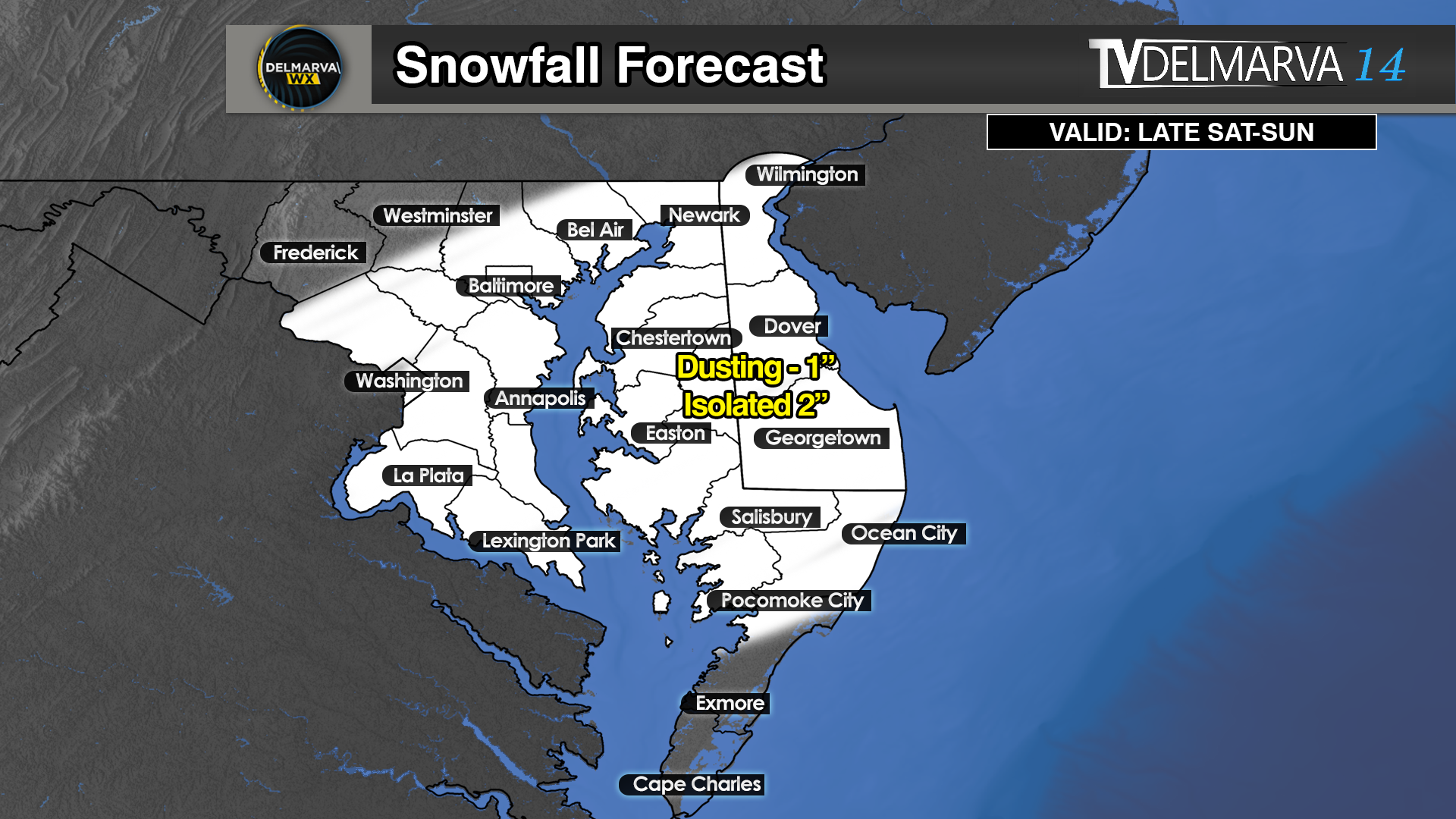
    With temperatures rising into the mid 60’s on Saturday, a strong arctic front will be moving into the region during the overnight hours allowing temperatures to plummet down to sub-freezing by 7am Sunday. With the interaction of the front, a strong jet stream, and an area of low pressure developing well off the coast will cause a round of snow to develop in the Mid-Atlantic. Depending on the speed and intensity of the precipitation, a Dusting to an inch isn’t out of the question. Now some areas may get 2 inches if they are lucky. By the afternoon hours, snow will move out of the picture with even colder conditions that night.

    Surprisingly, we have decent agreement among the model guidance showing rain transitioning over to a period of snow Sunday morning. Some a little heavier solutions but given the warmer ground we will see a little bit of melting. Regardless, we will keep adding to our above average snowfall totals for the season.

  • Snowfall Forecast Thursday 1/20/2022

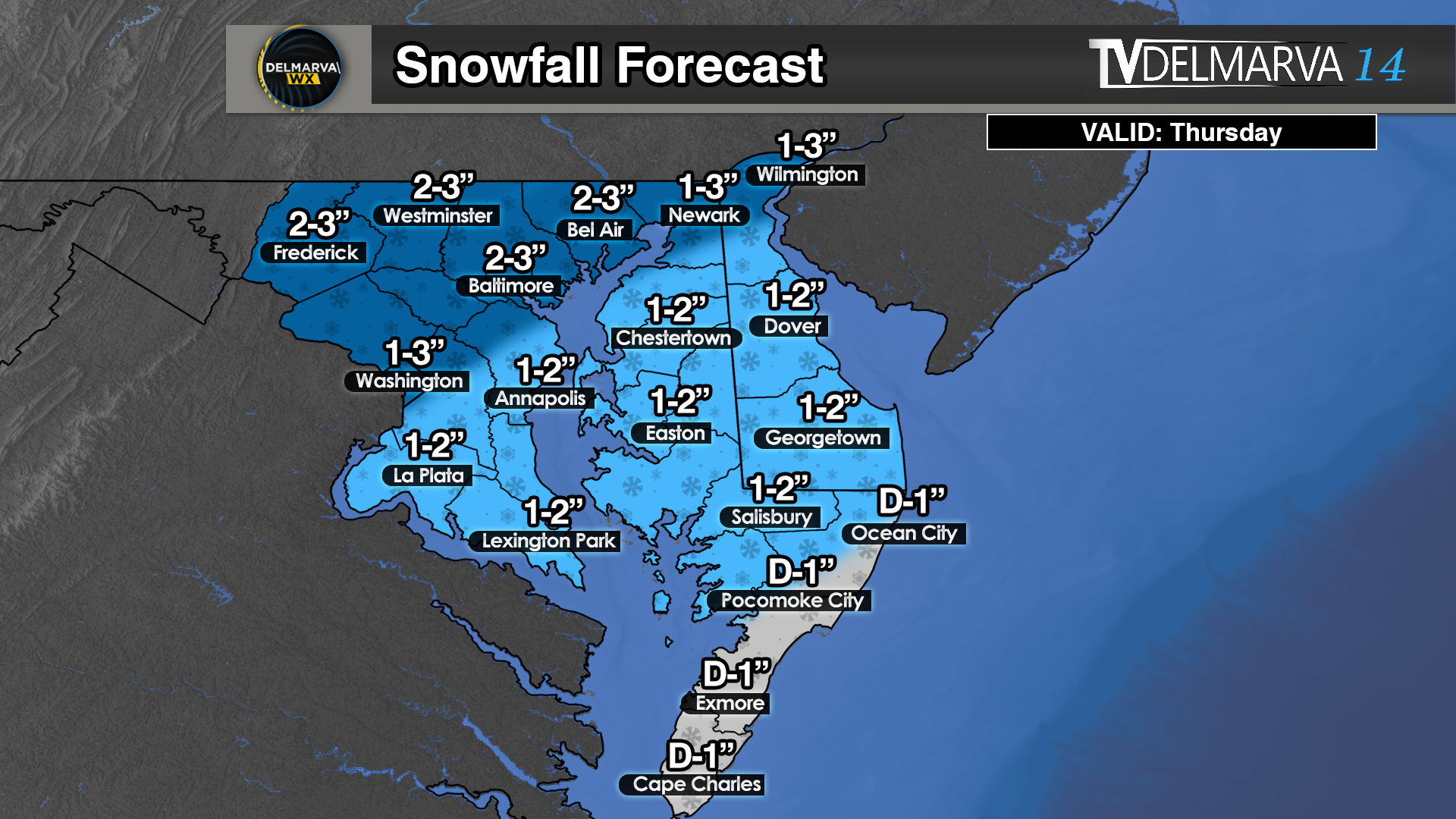
    Snowfall Forecast Thursday 1/20/2022

    We are looking at a light snow event right along a arctic frontal boundary during the daytime hours on Thursday. We will begin the morning with temperatures well into the 30’s to near 40 degrees but will be quickly dropping throughout the day. Most locations will start off with some rain showers before transitioning over to snow by the mid morning hours. Temperatures will kick down sub freezing and a light accumulation snow is in the forecast. The greatest accumulations will be across north and western Maryland where as much as 3 inches is possible. Across areas of Delmarva a nice swaft of 1-2 inches is not out of the question. Further south in the Virginia counties will see a dusting to a inch where rates will be on the light side. For those down there you will have to wait until Saturday for a more substantial snow ahead.

  • Winter’s 1-2 Punch To Finish Out The Week

    Winter’s 1-2 Punch To Finish Out The Week

    HRRR Futurecast Only Until 7am Thursday

    Let’s first begin with the snow threat going into Thursday morning. We will be having a arctic front that will be slowing sinking southward across the Mid-Atlantic taking temperatures in the 40’s down to subfreezing. In addition with a transition of rain to snow behind that front with a weak disturbance riding along this front. Some of the high resolution model guidance have a good agreement that a changeover is expected during the morning hours Thursday.

    Now i don’t expect anything significant regarding accumulations with this one but some could pick up a light accumulation. Especially those further north on the shore. We could be looking at some slippery travel in the area during the morning commute Thursday. Colder temperatures will continue to plummet throughout Thursday into Friday just in time for the second and maybe even more significant threat.

    Arctic Front Settling Thursday-Friday

    When the passes through we are going to see a fresh supply of arctic air with temperatures dropping down into the teens Thursday night and really struggling to get anywhere near 30 on Friday. This is setting up the stage for round number 2.

    Now this is where the really messy situation begins. Unlike the last bigger snow threat to Delmarva, we have some of the best model consensus I have seen in quite some time which made it easy. Well it’s back to the confusing nightmare once again. So let’s break things down into groups.

    ECMWF/ECMWF ENSEMBLES/UKMET/NAM

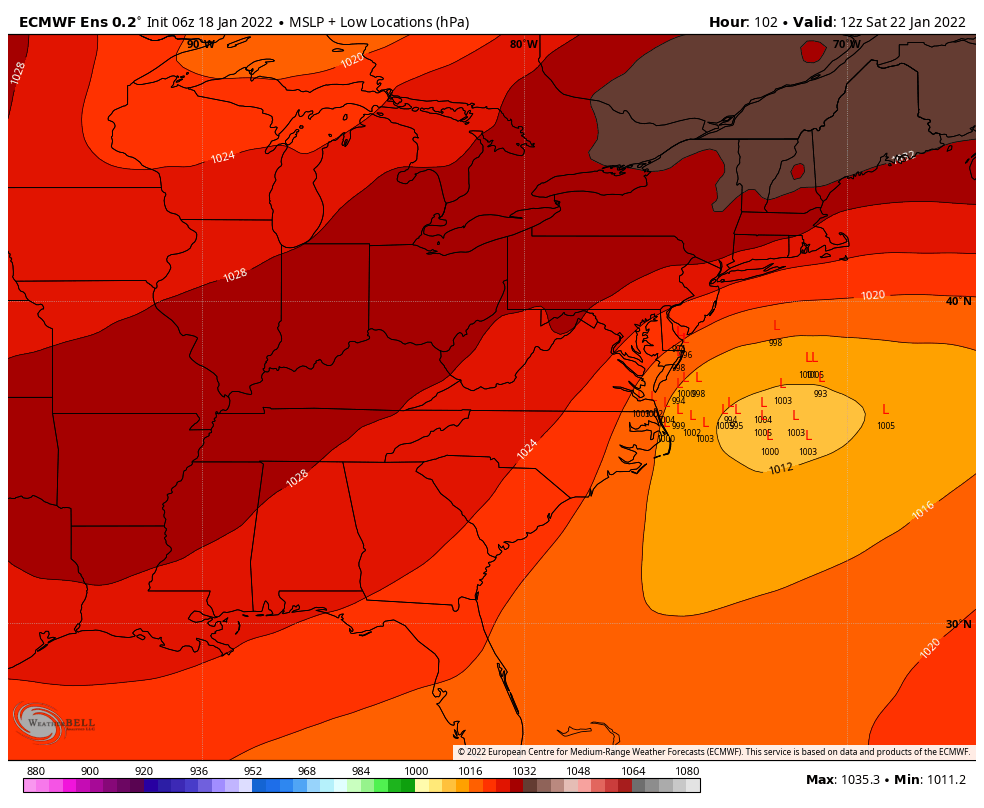
    This group is the very aggressive solutions where we are showing a January 3rd snowstorm repeat across much of the region. Snow and a lot of it too. With the phasing of two jet streams allowing for a low to develop down in the Gulf Of Mexico and move off the Carolina coast. With a strong 1038mb high to north keeping that fresh arctic air locked in. This is a snow lovers dream with a textbox major snowstorm for the Mid-Atlantic. The EURO model has been very persistent with this solution for the last several days but for awhile it was alone in that matter. The recent NAM model even though its not out far enough to really see the impacts, but its very aggressive and further northwest. UKMET has a limited amount of products we have access too but its also following the more northwest solution. Now going into the ensembles, there is a very tight agreement in low placements with the 52 members of this model. With some heavy hitting more reliable models getting on board with this solution, it’s something to take note of for sure.

    Messy Solution With Multiple Energy Pieces Not Phasing

    GFS/RGEM/CMC

    Now this group of models keeping all the pieces of energy separate with a much weaker and suppressed solution. We are going to have model runs like because there is so many different pieces these models are going to have to figure out what to do with them. Not 1, or 2, but 3 vort maxes in play. I’m going to be honest especially with the GFS model, It’s creating some very unrealistic movements with that northern piece of energy near Ohio by ejecting that straight east even though its pashing with that southern one near the Gulf States. Can that still happen? Of course but it’s on the low end of my scale right now. We really need a aircraft to sample the upper atmosphere in the next day or so to be ingested to these models so we can get a bit of better censuses. They did this for the storm occurring for MLK day and that’s why we had a major shift in the track to being much more inland.

    Overall Thoughts

    As it stands now for Friday into Saturday, we have a lot time to work out the kinks and we are going to be seeing some back and forth movement with solutions until we get these pieces of energy into range of observational data and or a aircraft to do research into the atmosphere the next 24 hours. I will be keeping a very close eye on this one that’s for sure.

  • Polar Plunge To Finish Out January

    Polar Plunge To Finish Out January

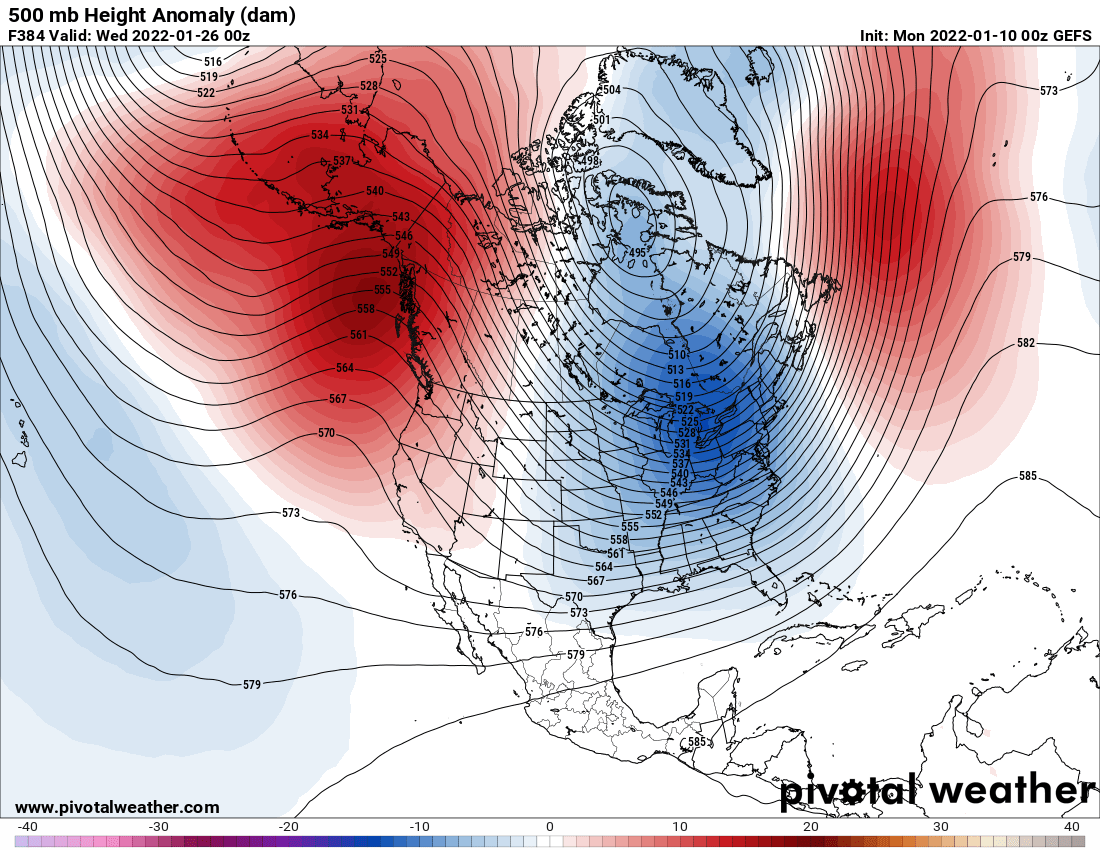
    Large Trough Across The Eastern US

    We went from a extremely warm month of December, to now a January with a vengeance. With 2 snow events in our books and one being the biggest snowstorm in 4 years. We are not going to be done with those snow chances to finish out the month of January. The tropospheric polar vortex will remain quite dominate across Canada with a constant serious of troughs throughout the eastern half of the nation. With the polar vortex hanging around the Hudson Bay, this will allow several short waves to dip down from the Northern Plains all the way to the East Coast.

    ECMWF EPS 500mb Heights

    We are looking at a text book setup for cold and stormy across the eastern half of the nation. Strong ridging across the Pacific Northwest. Ridging over Greenland to act as a block for the persistent troughing across the Eastern US. This created the perfect Rossby Wave pattern for those who love the cold and snow. What is a Rossby Wave anyway? Rossby waves, also known as planetary waves, naturally occur in rotating fluids. Within the Earth’s ocean and atmosphere, these waves form as a result of the rotation of the planet.

    Two sets of Omega Blocks across the Northern Hemisphere pattern. (Omega blocks get their name because the upper air pattern looks like the Greek letter omega (Ω). Omega blocks are a combination of two cutoff lows with one blocking high sandwiched between them.) This keeps these patterns locked in for an extended period of time. Like in this instance for the rest of the month. Get ready to see more arctic outbreaks and snow chances this month going forward. Several storm signals are becoming apparent beginning the 15th through the 26th.

  • Snowfall Forecast For Monday (Updated (9:30pm)

    Snowfall Forecast For Monday (Updated (9:30pm)

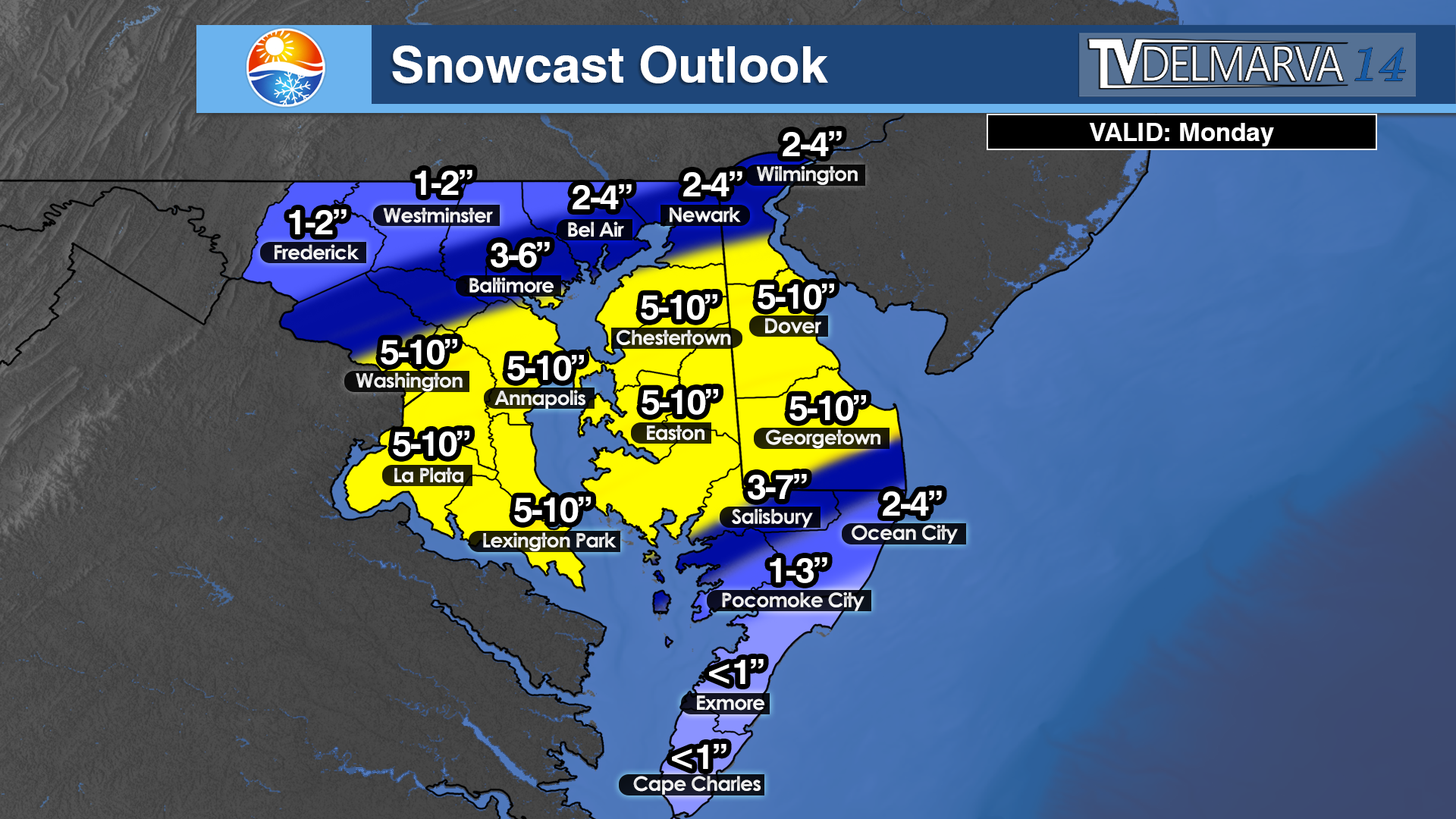
    Snowfall Forecast Valid For Monday (Subject To Change)

    Do not let these warm conditions fool you of the arctic snap that’s on our doorsteps today. With a very significant shift in the forecast trending towards the potential biggest storm in the region since 2019. Around this time in 24 hours, we will see a 30-35 degree temperature drop once the arctic front settles in from the north to the region.

    Futurecast Radar

    The main focus mechanism will be a lobe breaking off from the Sub-Tropical Jet Stream that will begin to interact with the stalling out arctic front. The thermodynamic difference along this front will help generate a strong baroclinic forcing. An area of low pressure will begin to intensify later this evening and track just off the coast of the Carolinas. Moisture will then start running into the arctic air mass (overrunning) creating a fairly narrowband of moderate snow to overspread areas from central Virginia into the Delmarva region.

    500mb Vorticity Forecast ECMWF

    For a rare set of parameters, there has been exceptional agreement between ALL model guidance regarding several inches of snow to the region. Some big contenders like the ECMWF (European model) showing some fairly significant snow to the region. GFS being the most robust out of all them showing a foot plus. Although that’s being really extreme and not likely at this time, but we have a great average of 4-8 blend with all the guidance at this time. Subject to chance of course for the difference in small fluctuations on axis and location.

    Winter Storm Warnings / Winter Weather Advisories

    I get a lot of questions and concerns when it comes to the sudden temperature drop and ground temperatures. On the first onset of precipitation, intensity will be key. Just because we were in the 60’s the last few days, falling snow can quickly cool off ground temperatures with the heavier intensity of snowfall. Same with roadways. Snow will be beginning to fall during the pre dawn hours and continue into the afternoon hours.

    Let’s not forget the night after if we have snow cover on the ground. With the arctic air mass settling in and fresh snow cover, temperatures will tank significantly during the overnight hours with clear skies. The snow will act as a blanket keeping the ground temperatures from warming the surface air temperature. Think of it like a cooler with ice in it, the air above the ice is extremely cold but underneath is above freezing. Depending on snow depth covering the ground, temperatures could drop down into the single digits.

    We will continue to provide updates on this potential winter storm going into tomorrow.