Tag: arctic blast

  • Dangerous Arctic Cold Targets Delmarva Early Next Week

    Dangerous Arctic Cold Targets Delmarva Early Next Week

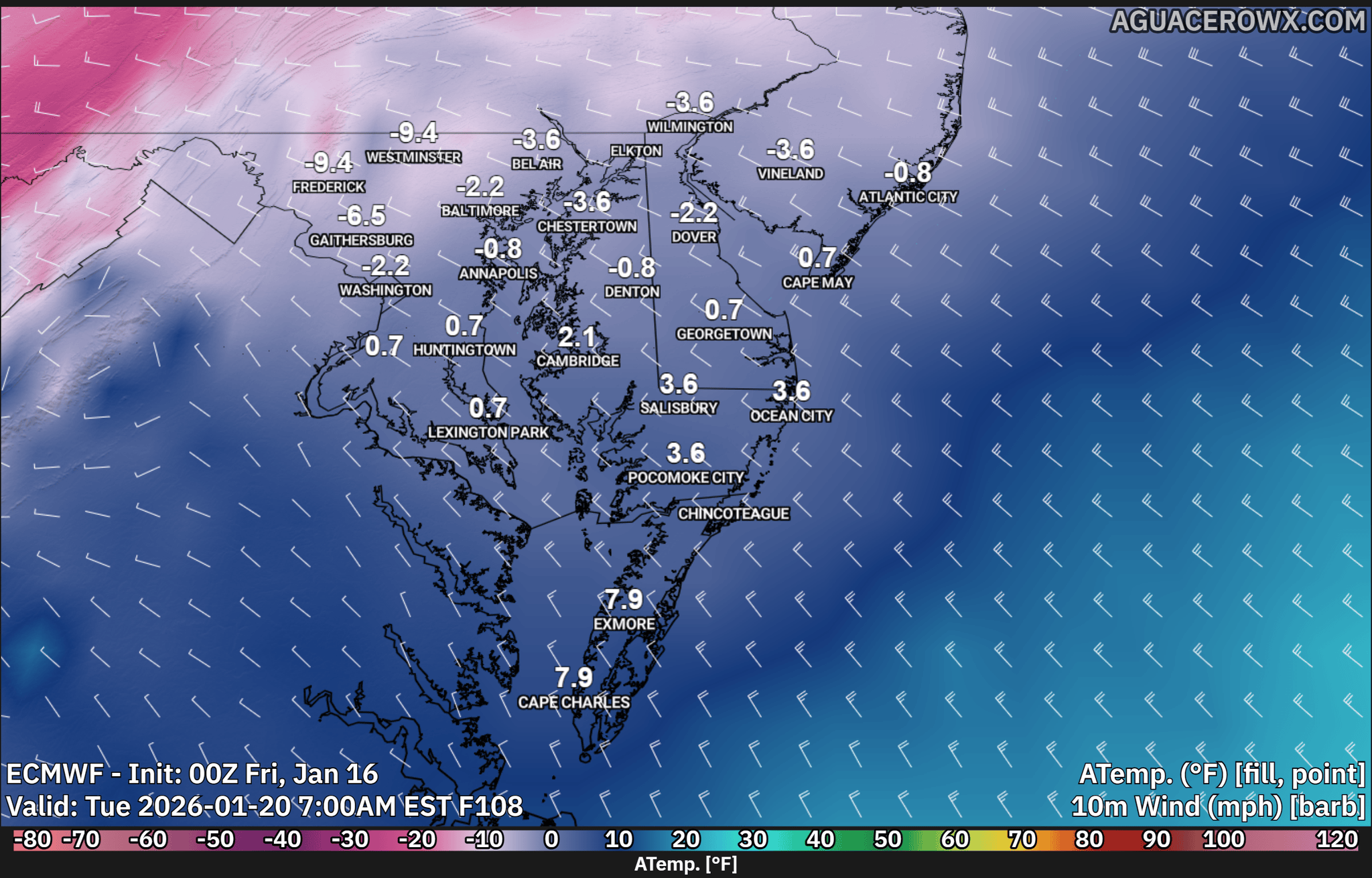
    A prolonged stretch of below normal temperatures is expected to grip the Delmarva region beginning Sunday and lasting through the middle of next week, with the most dangerous cold arriving Monday night into Tuesday.

    A deep upper level trough will settle over the eastern United States, allowing an arctic air mass to surge southward into the Mid Atlantic. At the surface, strong high pressure will dominate the region, keeping conditions dry but doing little to prevent temperatures from falling sharply.

    Cold air will steadily build into the region starting Sunday, with daytime temperatures remaining well below average through at least Wednesday. The core of the arctic air mass is expected to be centered over Delmarva Monday night through Tuesday night, when the cold will be at its most intense.

    During this time, overnight wind chill values are expected to fall into the single digits and potentially below zero, especially during the overnight and early morning hours. Current indications suggest Monday night will be the coldest period, with slightly less extreme conditions expected Tuesday night.

    Daytime temperatures on Tuesday are also trending colder, with highs forecast to struggle into the upper teens to low 20s across much of Delmarva. These values are well below normal for mid January and could pose risks to anyone spending extended time outdoors.

    Given the severity of the cold, cold weather advisories or warnings may be issued for one or both nights. Residents are encouraged to prepare now by limiting outdoor exposure, protecting pets, and ensuring vulnerable pipes and plumbing are properly insulated.

    Temperatures are expected to gradually moderate later in the week as the upper level trough begins to lift, allowing readings to trend closer to seasonal averages by Thursday.
  • Bitter Cold Wind Chills To Finish Out The Work Week

    Bitter Cold Wind Chills To Finish Out The Work Week

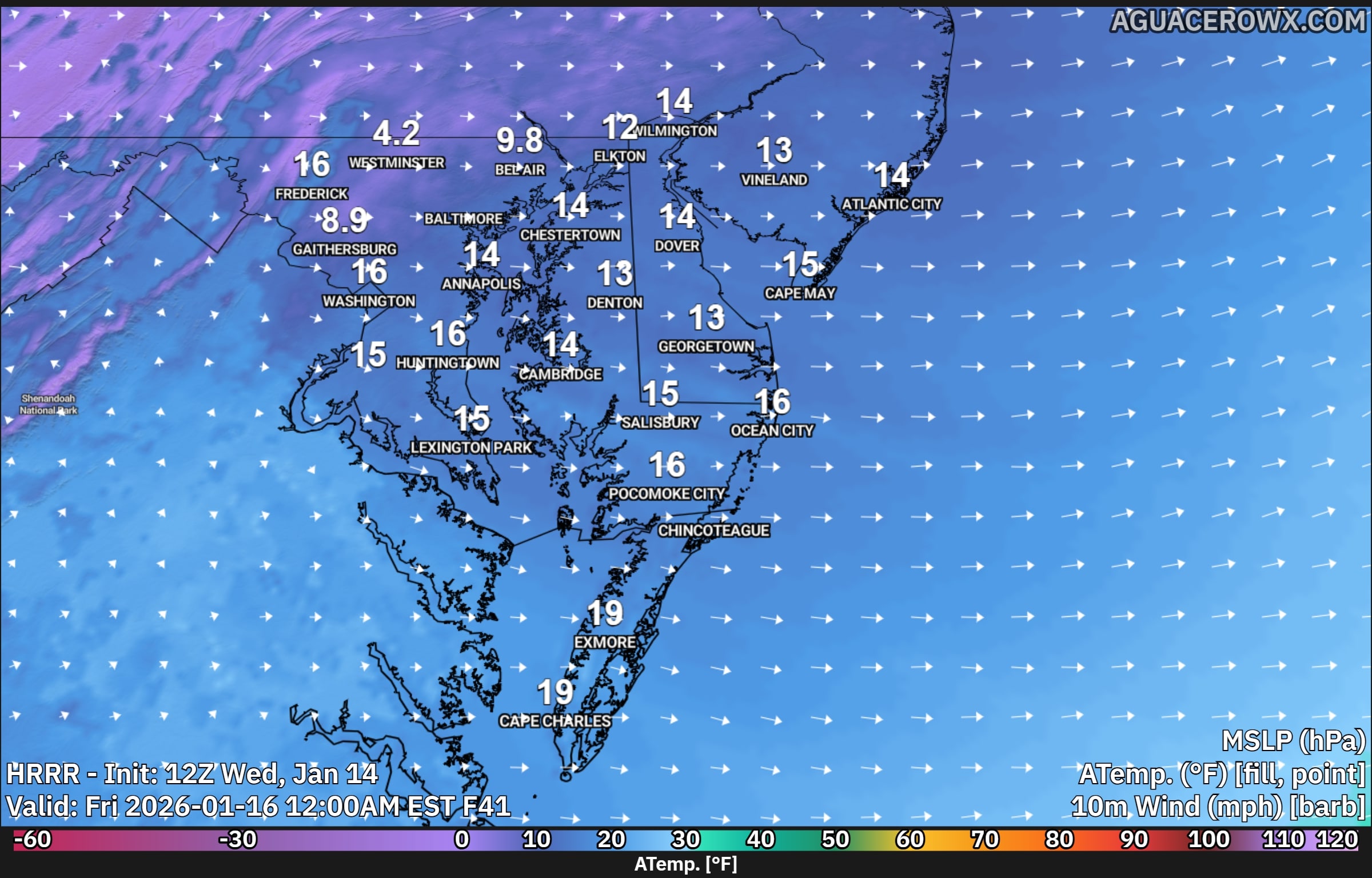
    A surge of colder air behind a cold front will bring sharply colder temperatures and strong winds to the region late Thursday into Friday, creating dangerously cold wind chills.

    After the cold front moves through Thursday morning, strong cold air will continue to pour into the area through Friday morning. Afternoon temperatures on Thursday are expected to remain stuck in the low to mid 30s, while west winds increase to 15 to 20 mph with gusts reaching 30 to 35 mph. These gusty winds will make it feel much colder, with wind chills struggling to climb out of the upper teens and lower 20s during the day.

    As temperatures fall Thursday night, most locations will drop into the mid teens to near 20 degrees by early Friday morning. Although winds will ease slightly overnight, steady west winds of 10 to 15 mph will persist. This combination of cold air and lingering wind will cause wind chills to fall into the single digits across much of the area by daybreak Friday, with below zero wind chills possible in the higher elevations of the southern Poconos.

    By Friday morning, the strongest push of cold air will begin to ease, allowing winds to turn more southwesterly and temperatures to slowly recover. Afternoon highs on Friday will range from the upper 20s to the mid 30s. However, continued breezy conditions will keep wind chills in the 20s for much of the day, making it feel colder than the actual temperatures suggest.

    Residents are encouraged to dress in layers, limit prolonged exposure to the cold, and take precautions to protect pets, pipes, and vulnerable populations during this stretch of cold and windy weather.

  • Flash Freeze Risk Thursday Morning as Arctic Front Sweeps Through

    Flash Freeze Risk Thursday Morning as Arctic Front Sweeps Through

    A rapidly moving arctic cold front will create dangerous flash freezing conditions early Thursday morning, posing a significant hazard for travel across the region.

    Temperatures are expected to fall sharply from the 50s into the 20s in just a few hours as the front passes. Rain will transition to snow during this time, but the most serious concern will be the sudden freeze of wet roadways, sidewalks, and bridges.

    As colder air rushes in behind the front, any standing water from earlier rainfall will freeze almost instantly. This can lead to a thin but extremely slippery layer of ice forming with little to no warning. Bridges, overpasses, untreated roads, and shaded areas will be especially vulnerable to rapid icing.

    The timing of the temperature drop may coincide with the Thursday morning commute, increasing the risk for accidents and hazardous travel conditions. Even areas that see minimal snowfall could experience dangerous conditions due to ice forming faster than road crews can treat surfaces.

    Gusty winds behind the front will reinforce the cold air and cause wind chills to drop quickly, making conditions feel even colder by daybreak. Any snow that does fall will be brief, but it may further reduce visibility during the transition.

    Residents are urged to use caution if traveling early Thursday morning. Slowing down, allowing extra stopping distance, and remaining alert for icy patches will be critical. If possible, delaying travel until conditions improve later in the morning is strongly advised.

    Conditions are expected to stabilize later Thursday as precipitation ends, but cold temperatures will persist through the day.

  • Colder Pattern Looks to Take Hold Across the Eastern U.S. Through Late January

    Colder Pattern Looks to Take Hold Across the Eastern U.S. Through Late January

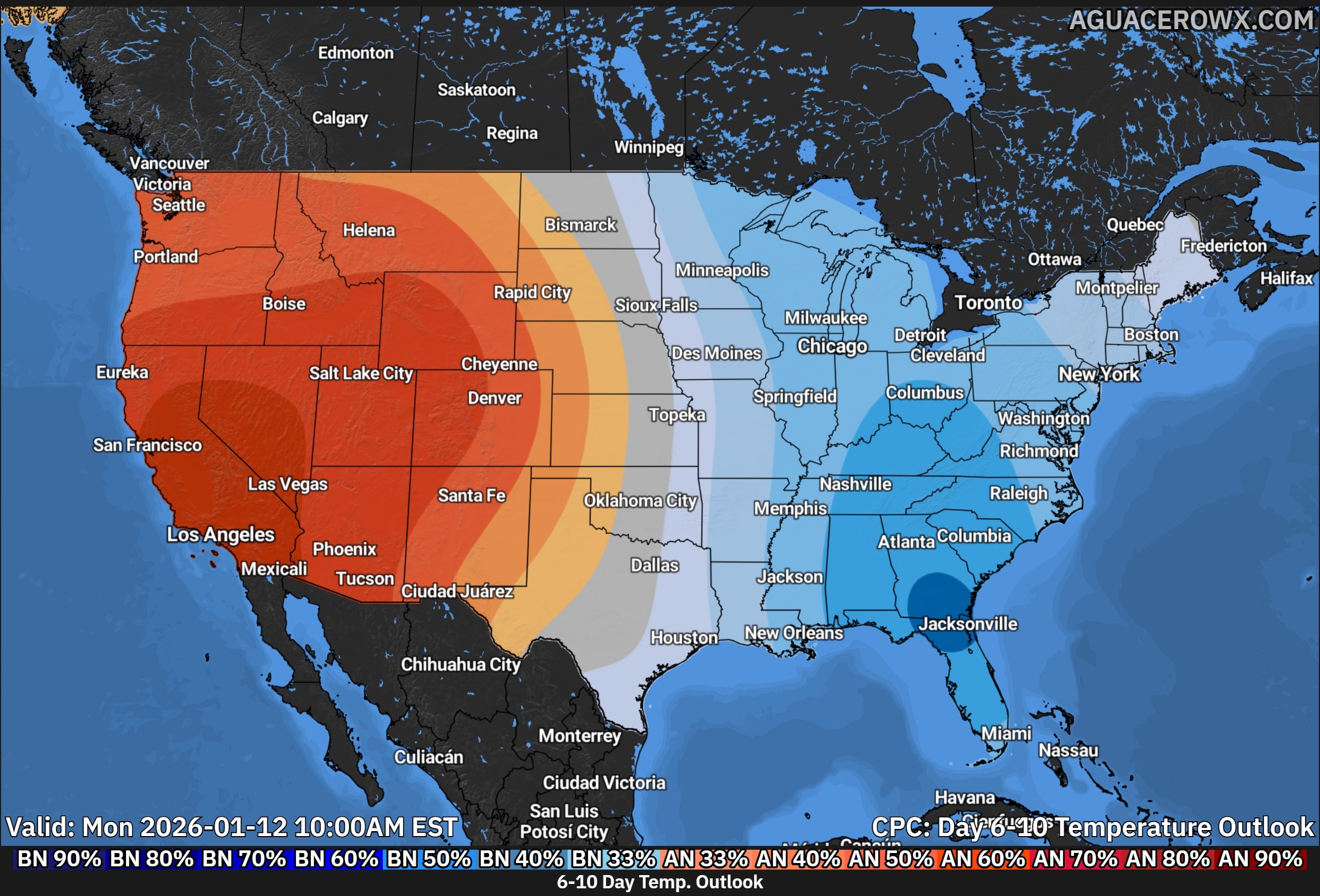
    A noticeable shift toward colder than average temperatures is expected to develop across much of the eastern United States over the next few weeks, according to the latest temperature outlooks from the Climate Prediction Center. Multiple forecast periods show increasing confidence that below average temperatures will dominate the East, including the Mid Atlantic and Delmarva region.

    6 to 10 Day Outlook: Cold Begins to Push East

    During the 6 to 10 day period, colder air is forecast to expand across much of the eastern half of the country. Below average temperatures are favored from the Midwest through the Ohio Valley and into the Mid Atlantic and Southeast. The Delmarva Peninsula falls within this colder zone, signaling a transition away from recent mild conditions.

    While the strongest cold anomalies are centered farther west early on, the overall pattern supports repeated intrusions of cooler air into the region. Daytime highs are expected to trend several degrees below normal, with overnight lows becoming more seasonable to colder than average.

    8 to 14 Day Outlook: Below Average Temperatures Become More Established

    Confidence increases during the 8 to 14 day period as below average temperatures become more firmly established across the eastern United States. The cooler air mass expands and deepens, covering much of the Mid Atlantic, Northeast, and Southeast.

    For Delmarva, this period favors a sustained stretch of cooler conditions, especially during nighttime hours. Persistent northwest flow behind passing systems may keep temperatures suppressed for several days at a time.

    Weeks 3 to 4: Colder Pattern Persists

    Looking ahead into weeks 3 and 4, the temperature outlook continues to favor below average conditions across much of the eastern United States. While forecast confidence naturally decreases at longer ranges, the signal remains consistent for a cooler than normal pattern.

    Across Delmarva, this suggests limited warm ups and continued winterlike temperatures heading into late January. Brief periods of moderation may occur, but cooler air is expected to return frequently as the broader pattern remains favorable for below average temperatures.

    What This Means for Delmarva

    For residents across Delaware, Maryland’s Eastern Shore, and Virginia’s Eastern Shore, the next few weeks are expected to feature a noticeable chill compared to normal January conditions. While temperatures will fluctuate, the overall trend points toward a colder pattern settling in across the region.

    Overall, the outlook supports a sustained period of below average temperatures across the eastern United States, with Delmarva remaining solidly within the cooler regime through much of the remainder of January.