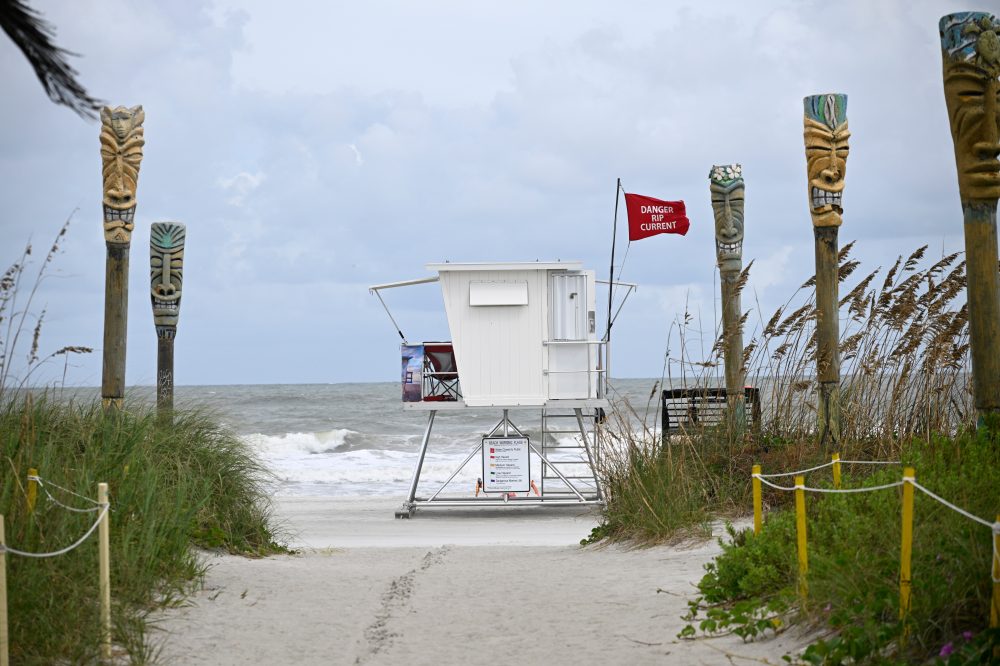

Being dragged away from shore by a rip current is a terrifying experience — but lifeguards say the best thing you can do is stay calm, roll onto your back, and float. That advice might sound simple, but it could save your life.
Rip currents rank among the most dangerous hazards at any beach, responsible for more rescues than any other coastal threat. According to the United States Lifesaving Association, roughly 100 people lose their lives to rip currents at U.S. beaches every year, and more than 80% of all beach rescues are rip current-related. The National Weather Service reports that at least 21 people have already died from rip currents in U.S. waters so far this year.
So what exactly is a rip current? It’s a narrow, fast-moving channel of water that rushes away from the shoreline. Unlike what many people believe, rip currents don’t pull swimmers underwater — but they can carry a person a significant distance from shore very quickly.
San Diego Lifeguard Marine Safety Lt. Charlie Knight put it this way: “A rip current is like a river that pulls out to sea. So when the waves come into the beach, it needs somewhere to go. And so it takes these little channels out that we call rip currents to put all that water back into the ocean.”
These dangerous channels most commonly develop in low-lying areas of the beach or near structures like jetties and piers. While stormy conditions can trigger them, rip currents can also form on perfectly sunny days — and they’re easy to miss because the water surface above them often looks deceptively calm. According to the National Oceanic and Atmospheric Administration, rip currents can move as fast as 8 feet — or about 3.2 meters — per second, a speed that even the strongest swimmers cannot overcome.
Beach rescue teams and weather forecasters widely recommend following what’s known as the “flip, float and follow” approach. Rolling onto your back to float helps you stay relaxed, saves your energy, and keeps your airway clear while the current has you in its grip. Fighting the current head-on is almost always a losing battle, and many swimmers get into serious trouble by exhausting themselves trying to swim straight back to shore.
“People tend to panic when they can’t get into the beach, and that’s when we have problems,” Lt. Knight said. “So if you are caught in a rip current, the biggest thing is don’t panic, stay calm, flip over onto your back, float and allow the rip current to take you out.”
Once the current weakens and releases you, you may find yourself in deeper water farther from shore. At that point, lifeguards advise raising one arm in the air to signal that you need assistance.
When you arrive at the beach, pay close attention to the colored warning flags posted near the water. Red flags signal a high-hazard situation, yellow means moderate risk, and green indicates low danger. A purple flag warns of hazardous sea life such as jellyfish, while two red flags together mean the beach is completely closed.
The National Weather Service tracks rip current risks along U.S. coastlines and has built a forecasting model capable of predicting dangerous conditions up to six days ahead for the East and Gulf Coasts, Puerto Rico, Hawaii, and Guam. You can check those forecasts on the agency’s website before heading to the beach.
Whenever possible, choose to swim in areas monitored by lifeguards. And if you spot someone struggling in a rip current, officials caution against jumping in yourself — would-be rescuers frequently end up in danger too. Instead, alert a lifeguard immediately or call 911.