
As soccer enthusiasts across the globe celebrate and commiserate over World Cup games throughout North America, public health authorities are maintaining vigilant watch for potential disease outbreaks.
While extreme heat presents the most apparent health risk, contagious illnesses can rapidly transmit through large crowds. Health experts are closely monitoring sewage systems, emergency room data, and social media platforms to detect early indicators of possible disease transmission.
The highly transmissible measles virus tops the list of health concerns, prompting an alert this week from the Pan American Health Organization. With nearly six weeks of crowded stadiums, entertainment venues, and tourist attractions across 16 cities, authorities are tracking numerous potential infections, including norovirus and mosquito-transmitted dengue fever.
“This is truly a marathon,” said Palak Raval-Nelson, Philadelphia’s health commissioner.
These large-scale events occur during a challenging period for financially constrained health agencies nationwide. The Centers for Disease Control and Prevention, significantly impacted by staffing reductions during the Trump administration, is simultaneously managing an expanding Ebola outbreak in central Africa and a cruise ship hantavirus situation. Although CDC officials have provided guidance to state and local health departments, their anticipated World Cup disease monitoring dashboard remained “in final development” just days before competition started, according to the Department of Health and Human Services.
“Our public health professionals are pretty stretched,” said global health specialist Rebecca Katz of Georgetown University, who is leading an unusual new hub to help.
The Health Security Operations Center, a collaborative initiative between Georgetown and MedStar Health, is examining information from nationwide sources to notify health officials and emergency departments about potential warning signs. This facility distributes daily situation updates regarding disease patterns near World Cup venues and team training facilities to hundreds of local and federal health organizations, emergency coordinators, hospital administrators, and other registered recipients.
“It’s important that we don’t become alarmist,” said MedStar emergency medicine specialist Dr. Shane Kappler. “We’re trying to be the insurance policy.”
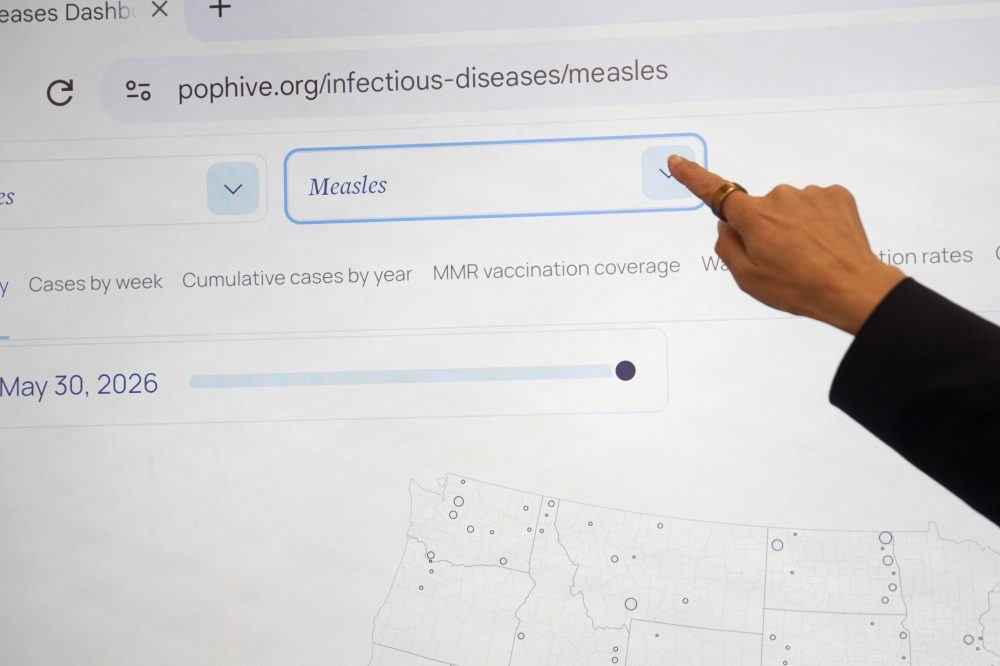
More than 2,000 Americans have contracted measles this year, approaching the total count from the previous year, CDC data shows. Infected individuals can transmit measles before developing the characteristic rash and recognizing their illness. Previously, the United States rarely encountered measles cases except through international travel by unvaccinated individuals.
Currently, with regular domestic outbreaks occurring, “actually a lot of our international partners are worried about measles being exported to them after the games,” said Georgetown’s Katz.
Canada is also experiencing measles transmission, while Mexico has recorded over 11,000 cases, according to PAHO. The organization encourages soccer fans to verify their vaccination status through a health initiative warning that one measles patient can infect up to 18 vulnerable individuals.
Brown University’s Dr. Craig Spencer, who recovered from Ebola during his work in the West Africa outbreak more than a decade ago, noted frequent inquiries about Ebola risks during the World Cup — but “for me, Ebola is not the No. 1 or No. 2 or even No. 3 threat.”
“I am concerned about importation of measles, I am much more concerned about the importation of other infectious threats that may not seem as scary to us as Ebola,” Spencer said.
Most health professionals concur that Ebola transmission risk in the United States remains minimal. This assessment stems partly from government travel screening procedures and restrictions on individuals recently present in outbreak zones. Additionally, Ebola spreads through contact with infected bodily fluids from symptomatic patients, rather than airborne transmission like measles or respiratory infections.
“One fortunate thing about this virus is you’re most contagious when you’re really quite ill. It’s not like COVID, where you could be sitting next to someone who doesn’t even know they’re infected and perhaps contract the virus,” said Jennifer Nuzzo, director of Brown’s Pandemic Center.
Individuals carrying certain viral or bacterial infections release genetic traces detectable through advanced sewage testing, creating an early alert system. For instance, measles evidence can emerge in wastewater several days before emergency departments encounter initial patients.
Current surveillance updates from Katz’s center indicate that recent wastewater analysis identified diarrhea-causing rotavirus, hepatitis A, and norovirus in various U.S. regions — developments worth monitoring as soccer audiences gather.
Dallas authorities have intensified wastewater monitoring, including at the international airport, employing broad screening rather than targeting specific diseases, explained Dr. Phil Huang, director of Dallas County Health and Human Services.
His department is also expanding routine mosquito surveillance, testing not only for West Nile virus commonly found domestically but also for infections more prevalent in other nations like dengue and chikungunya.
Health officials have spent months preparing, Philadelphia’s Raval-Nelson explained, conducting practice emergency exercises and establishing communication networks with colleagues nationwide.
“I don’t want to send a message that there’s one key thing,” she said. “We have the frameworks in place to carry out what we need to.”