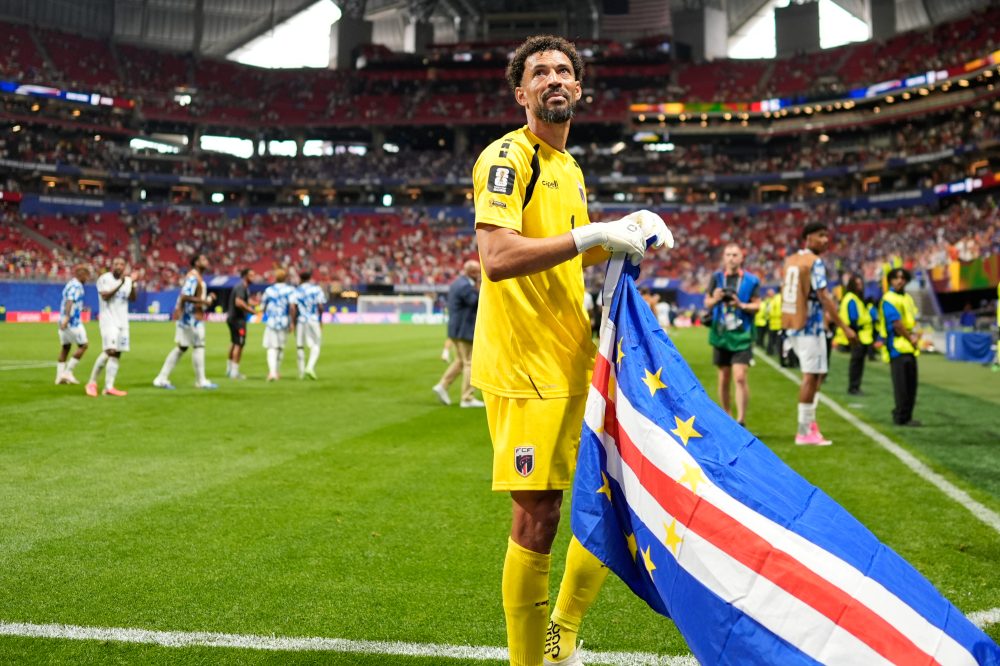

GUADALAJARA, Mexico — When a reporter showed Cape Verde goalkeeper Vozinha just how many new Instagram followers he had picked up after his team’s jaw-dropping 0-0 tie against Spain, the 40-year-old shot stopper gasped and broke into laughter, clearly stunned by what he was seeing.
The reaction came just after Monday’s remarkable draw in Atlanta, where Vozinha had watched his follower count climb from roughly 50,000 to over one million. By the time less than a day had passed since the final whistle, that number had exploded to nearly 10 million — surpassing the Instagram audiences of NBA star Victor Wembanyama, who has 6.2 million followers, and NFL quarterback Patrick Mahomes, who has 6.4 million.
“Crazy, that’s crazy,” Vozinha told Brazilian YouTube channel CazéTV following the match that made him the breakout name of the World Cup so far.
CazéTV, the only channel in Brazil holding broadcast rights to all 104 World Cup matches, is spearheaded by popular Brazilian streamer Casimiro Miguel, widely known as Cazé. The channel boasts more than 31 million YouTube subscribers and has built its reputation on a casual, fan-friendly style of sports coverage. During the broadcast of Vozinha’s standout performance, Cazé noticed the goalkeeper’s modest social media following and made a direct appeal to his viewers.
“Normally we ask for subscribers,” Cazé said. “We are not going to ask for subscribers today, we are going to ask for followers. For Vozinha. He is stopping Spain. He is shocking the world. He is the standout player of the first half. Why not show him some love?”
Spain, widely considered one of the favorites to win the tournament, was fully expected to roll past the World Cup newcomers. Instead, the European champions were repeatedly turned away by Vozinha and a determined Cape Verde defense that refused to crack. Vozinha, who didn’t begin his professional career until age 25, is among the rare players at this tournament who are 40 or older. He made several critical stops against Spain’s attack and was awarded man of the match honors.
The scoreless result set off celebrations across Cape Verde, an island chain situated off the western coast of Africa with a population of roughly half a million people. Cape Verde ranks as the third-smallest nation by population ever to qualify for the World Cup.
Adding an emotional dimension to the story, Vozinha revealed after the match that his mother was unable to travel to the United States to see him play due to difficulties obtaining a visa.
In Washington, the U.S. State Department said it had no record of her ever submitting a visa application, but indicated it was working with Cape Verde officials to address the matter. The department also noted that it had informed all players from World Cup nations subject to a $15,000 visa bond requirement that both they and their family members would be exempt from that requirement.
“All relatives of players are eligible for visa bond waivers, and the department is actively reaching out to this player’s family to assist with visa services,” the department stated.
A source with knowledge of the situation, speaking on condition of anonymity due to the confidential nature of visa proceedings, said the State Department believes Vozinha’s mother had not applied for a visa because she lacked a valid Cape Verde passport, but that she is now in the process of obtaining one. A request for comment was sent to the team Tuesday afternoon. Cape Verde’s next World Cup match is scheduled for Sunday.
Vozinha’s viral moment echoes a similar story from last month involving New Zealand defender Tim Payne, who was thrust into the spotlight after an Argentine social media influencer known as El Scarso — also called Valen Scarsini — identified the 32-year-old as the least-followed player at the tournament and encouraged fans to rally around him. Payne’s Instagram following jumped from about 4,700 to more than one million almost immediately, and by Tuesday had grown to nearly 6 million.
FIFA has been actively working to draw younger fans into the World Cup experience by expanding digital access to matches. For the 2026 tournament, the organization struck what it called a record number of agreements with broadcast partners running digital-only platforms, and teamed up with TikTok and YouTube to let users watch portions of games in real time.
Brazil has long ranked among the most digitally engaged nations in the world when it comes to sports. FIFA took note of that energy four years ago and gave CazéTV a trial run following Cazé’s success on Twitch. He covered 22 matches during the 2022 World Cup in Qatar, which led to a larger arrangement for this year’s event.
“Thank you,” Vozinha told CazéTV. “The Brazilians have always supported us. We felt it during our campaign to qualify for the World Cup and now we are feeling it again at the biggest stage. We are thankful for it.”